Obama Honors Jesse Jackson: ‘Send Me’ Spirit Inspires
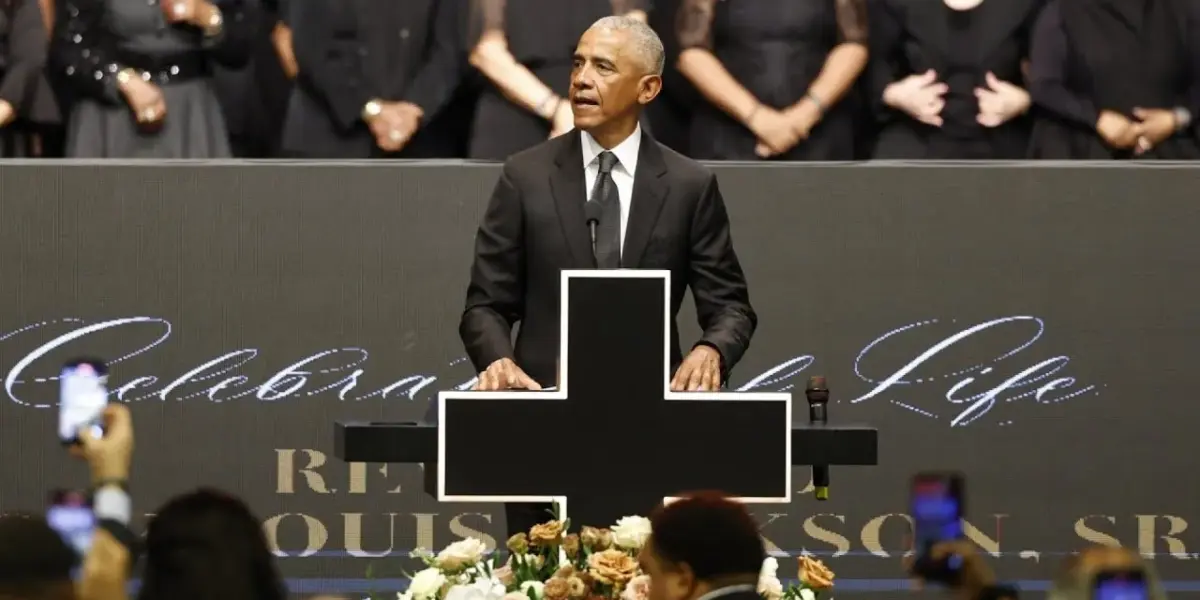
Barack Obama delivered a powerful tribute to Reverend Jesse Jackson, celebrating his lifelong fight for civil rights and social justice. Obama highlighted Jackson's consistent willingness to answer the call for change, embodying the spirit of "Send me," and how his activism paved the way for future leaders and inspired a generation.

Obama Honors Jesse Jackson: ‘Send Me’ Spirit Inspires
In a heartfelt tribute, former President Barack Obama lauded Reverend Jesse Louis Jackson Sr. as a pivotal figure in American civil rights and social justice, emphasizing his lifelong commitment to answering the call for change. Speaking at an event celebrating Reverend Jackson, Obama drew parallels between Jackson’s unwavering dedication and the biblical call of Isaiah, highlighting how Jackson consistently stepped forward, saying “Here I am, Lord, send me” whenever the marginalized and the nation needed a champion.
A Life Forged in Adversity
Obama recounted Jackson’s early life, marked by the profound challenges of segregation. Born to a teenage mother and growing up in a world of “separate and unequal” facilities, young Jesse experienced firsthand the limitations imposed by a discriminatory society. He recalled the poignant image of Jackson’s mother returning home with Thanksgiving leftovers from a job serving others, a stark reminder of the economic and social barriers of the time. Yet, Obama noted, “Young Jesse refused to accept that verdict.” His innate leadership qualities, evident in his athletic and academic achievements, could have led to a comfortable life within the existing confines. However, inspired by the Montgomery Bus Boycotts, Jackson, like many of his generation, understood that individual success was hollow without collective freedom.
From Library Protests to Operation PUSH
Obama detailed Jackson’s early acts of defiance, including leading seven Black students into a whites-only library and being arrested for the act of reading. This pivotal moment, which led to the library’s temporary closure and eventual reopening to all, exemplified Jackson’s strategy: “Send me,” even as a young man, and the world would improve. After attending the Chicago Theological Seminary, Jackson became the youngest member of the Southern Christian Leadership Conference (SCLC) to lead Operation Breadbasket in Chicago. It was in the post-Martin Luther King Jr. era, a time of fading optimism and fractured leadership, that Jackson’s influence grew. He rose above despair to keep the “righteous flame alive” through Operation PUSH.
Championing Economic Justice and Global Causes
Under Operation PUSH, Jackson spearheaded boycotts and challenged corporate hiring and contracting practices, recognizing that civil rights were incomplete without economic justice. He supported union organizing and fair wage campaigns, advocating for the “have-nots” and “have-little-bits” to unite across racial lines. His work extended globally, fighting apartheid in South Africa and freeing hostages. Obama highlighted Jackson’s 1984 presidential campaign as a defining moment. “We’ve been there before,” Obama stated, referencing a time when hard-won progress was being rolled back and greed was celebrated. Jackson’s decision to run for president, he argued, was another powerful “Send me” moment.
“He stepped forward once again. And said, ‘Send me.’ He ran for the presidency of the United States of America.”
A Presidential Campaign That Redefined Possibilities
Obama shared his personal experience as a 22-year-old, struggling with student loans and uncertain about his own path toward social justice. He recalled watching Jackson’s 1984 Democratic primary debate against Walter Mondale and Gary Hart on a small, black-and-white television. Despite widespread skepticism, even within the Black community, Obama witnessed Jackson not just holding his own, but “owning that stage.” This performance sent a profound message to a young, outsider like himself: that there was no place they didn’t belong. The Rainbow Coalition, launched in 1984 and again in 1988, was a testament to this inclusive vision, speaking to and uplifting Black people, white people, Latinos, Asian Americans, Native Americans, farmers, environmentalists, LGBTQ+ activists, and blue-collar workers alike.
Paving the Way for Future Leaders
While Jackson’s presidential bids ultimately fell short in delegate counts, Obama stressed their monumental impact. “He paved the road. For so many others to follow.” He credited Jackson’s campaigns with changing the Democratic Party’s rules on delegate allocation, enabling future outsiders like Bill Clinton and Bernie Sanders to remain competitive. This paved the way for Obama himself, a “young Black senator from Chicago’s South Side,” to be taken seriously as a presidential candidate two decades later. Obama also noted how Jackson’s campaigns drew him to Chicago, where he worked as a community organizer and learned from local leaders and preachers.
Lessons from Saturday Mornings at PUSH
Obama reminisced about attending Saturday morning meetings at PUSH headquarters, describing them as master classes in economics, American history, and politics. He recalled Jackson’s unique ability to make complex issues plain, weaving stories that could evoke laughter and tears. “Whether you were a bus driver or a teacher or a business leader. Or a young organizer. You came away from those meetings with a better understanding of how the world worked, how power worked, and more importantly, he made you believe that if we came together, we could make the world work better.” Obama emphasized Jackson’s core message: “We are somebody. I am somebody.” This affirmation was not just for Black boys and girls but for everyone who felt left out, forgotten, unseen, or unheard, embodying the very essence of American democracy.
An Enduring Legacy of Hope in Challenging Times
Obama acknowledged the immense personal sacrifices Jackson and his family made, enduring hatred, setbacks, betrayals, and death threats. He spoke of Jackson’s unwavering faith and conviction, which persisted even as his health declined. Recounting a recent visit, Obama described how, even when physically frail, Jackson was still strategizing, proposing initiatives, and offering insights, demonstrating a spirit that refused to be dimmed. “Listening to him, I couldn’t help smiling because it took me back,” Obama said, remembering how Jackson’s acknowledgment in those meetings made people stand a little straighter, knowing they had a contribution to make.
An Inspiration to ‘Take a Harder Path’
Concluding his address, Obama drew a stark contrast between the current turbulent times—marked by “assaults on our democratic institutions,” the denigration of science, and the celebration of greed and bigotry—and the enduring spirit of hope. He stated, “We are living in a time when it can be hard to hope.” In such moments, it is tempting to succumb to cynicism or compromise. “But this man. Reverend Jesse Louis Jackson, inspires us to take a harder path.” Obama urged everyone to be “heralds of change, to be messengers of hope, to step forward and say, ‘Send me'” in their communities, workplaces, and neighborhoods. He concluded by expressing profound gratitude for Jackson’s legacy, stating, “What a great debt we owe to him.”
Source: Obama: Rev. Jesse Jackson 'inspires us to take a harder path' (YouTube)

Related Articles
Al Sharpton Honors Jesse Jackson’s Legacy, Warns Against “Negro Amnesia”
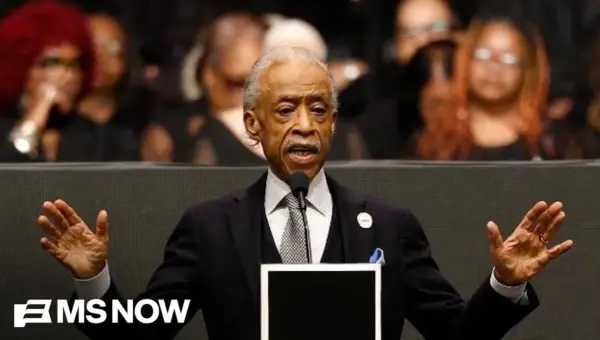
Rev. Al Sharpton honored his mentor Rev. Jesse Jackson, urging attendees to translate mourning into action. He warned against "Negro amnesia," a forgetting of history and struggles, which he believes makes progress vulnerable to reversal.

Obama Honors Jesse Jackson: A Champion of Power for the People
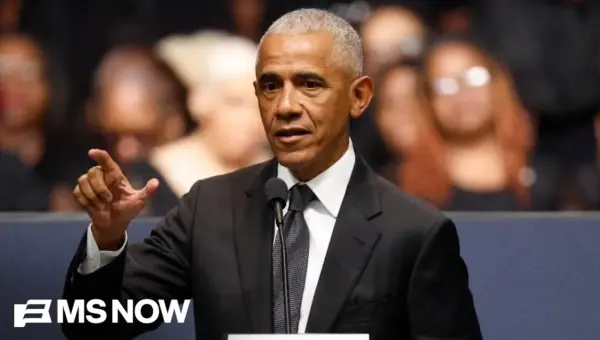
Barack Obama honored Reverend Jesse Jackson at a memorial, celebrating his lifelong fight for civil rights and economic justice. Obama highlighted Jackson's ability to inspire belief in individual power and collective action, particularly recalling his 1984 presidential run as a pivotal moment for those who felt like outsiders. The tribute served as a call to service, urging listeners to embody Jackson's spirit in contemporary challenging times.

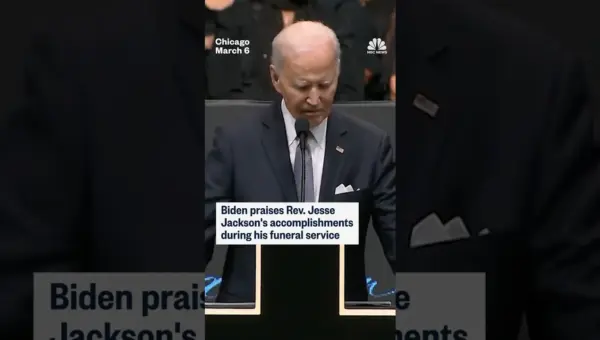
Biden Honors Jesse Jackson’s Legacy at Funeral Service
President Joe Biden honored the Rev. Jesse Jackson at his funeral service, remembering him as an "optimist at his core" who refused to let the nation off the hook. Biden lauded Jackson's lifelong dedication to justice and his ability to inspire hope across generations. The service marked a moment of national reflection on the civil rights icon's profound impact.