Obama Honors Jesse Jackson: A Champion of Power for the People
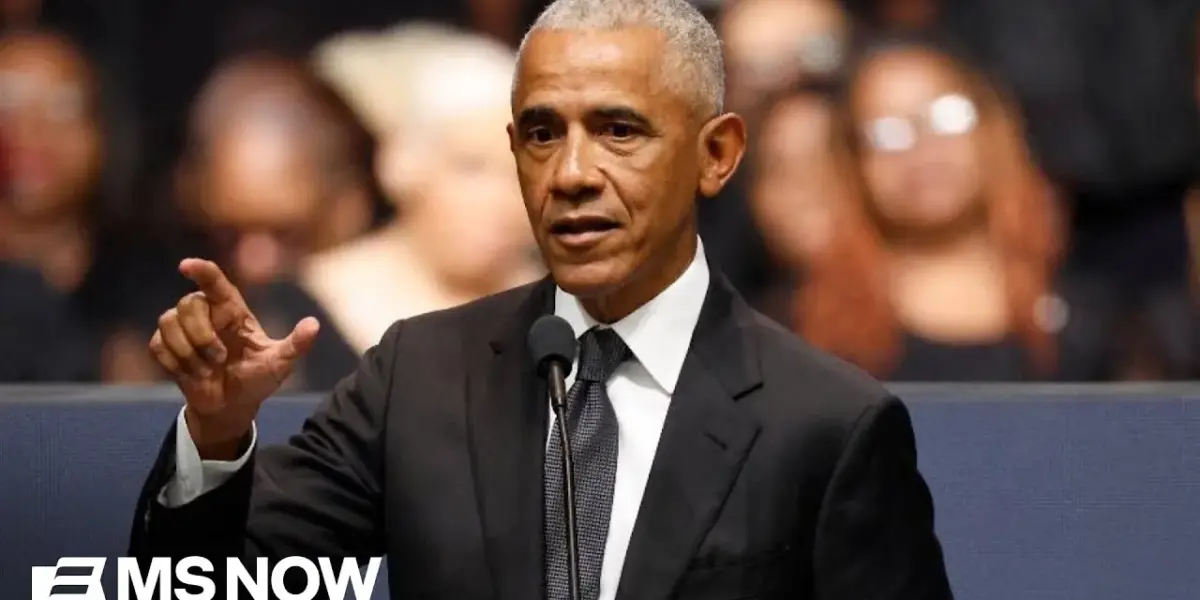
Barack Obama honored Reverend Jesse Jackson at a memorial, celebrating his lifelong fight for civil rights and economic justice. Obama highlighted Jackson's ability to inspire belief in individual power and collective action, particularly recalling his 1984 presidential run as a pivotal moment for those who felt like outsiders. The tribute served as a call to service, urging listeners to embody Jackson's spirit in contemporary challenging times.

Obama Honors Jesse Jackson: A Champion of Power for the People
Former President Barack Obama delivered a heartfelt tribute to the late Reverend Jesse Jackson at a memorial service, celebrating his lifelong dedication to civil rights, economic justice, and empowering marginalized communities. Speaking at the service, Obama lauded Jackson not just as a leader, but as a profound inspiration who embodied the spirit of service and the belief in the inherent power of every individual.
From Segregation to the National Stage: Jackson’s Unwavering Call to Service
Obama began by invoking the biblical story of Isaiah, drawing a parallel to Reverend Jackson’s consistent willingness to answer the call for service. “Whom shall I send? And who will go with us. To which Isaiah replies, ‘Here I am Lord send me.'” Obama stated, “Reverend Jackson’s immense gifts were apparent at an early age, even if his circumstances conspired to try to hold him back.” Born into poverty and segregation, Jackson, as a young Black man, faced a world designed to limit his aspirations. Yet, as Obama highlighted, “Young Jesse refused to accept that verdict.” He was a natural leader, excelling in academics and athletics, but crucially, he understood that individual success was meaningless without collective freedom.
“He instinctively understood that individual success meant nothing unless everybody was free.”
Obama recounted Jackson’s early acts of defiance, including leading Black students into a whites-only library in protest, an act that led to its eventual desegregation. This early commitment to justice, Obama noted, set the stage for a career marked by unwavering advocacy.
Operation Breadbasket and PUSH: Forging Economic Justice
Transitioning to Jackson’s national impact, Obama detailed his pivotal role in the Civil Rights Movement, particularly after the assassination of Dr. Martin Luther King Jr. During a period of fading optimism and fracturing leadership, Jackson, through Operation Breadbasket and later Operation PUSH, kept the flame of justice alive. Obama emphasized Jackson’s understanding that civil rights were intrinsically linked to economic empowerment. “He recognized that civil rights without economic justice was an empty promise.” Jackson’s work involved challenging corporate hiring and contracting practices, supporting unions, and advocating for fair wages, all aimed at uniting the disadvantaged across racial lines for mutual benefit.
A Presidential Bid That Redefined Possibilities
Perhaps one of the most resonant parts of Obama’s tribute focused on Jesse Jackson’s 1984 presidential campaign. Obama shared his personal experience as a 22-year-old, struggling with self-doubt and uncertain of his own path toward social justice. He recalled watching Jackson’s performance in a presidential debate, admitting, “Even if they didn’t want to admit it… Jesse hadn’t just held his own. He had owned that stage.” This moment was transformative for Obama, sending a powerful message that individuals, regardless of background, could aspire to and belong on the highest stages. “The message he sent to a 22-year old child of a single mother with a funny name, an outsider, was that maybe there wasn’t any place, any room where we didn’t belong.”
Obama underscored that Jackson’s campaigns, though falling short in delegate counts, fundamentally altered the political landscape. He paved the way for future leaders, including himself, and influenced the Democratic Party’s rules, making it more inclusive for underdogs and outsiders.
The Enduring Legacy: Inspiring Hope in Challenging Times
Drawing a parallel to contemporary challenges, Obama reflected on the current climate of division, cynicism, and assaults on democratic institutions. He stated, “We are living in a time when it can be hard to hope.” In this context, Obama asserted that Reverend Jackson’s life and work offer a crucial antidote. Jackson’s message, “We are somebody,” was not just for the marginalized but a universal call to recognize the value and potential within everyone. He consistently championed the ideal that America, at its core, is a family where all are endowed with inalienable rights and the obligation to contribute to making wrongs right.
“He invited us to believe. He invited us to believe in our own power to change America for the better.”
Obama concluded by emphasizing the sacrifices Jackson and his family made, enduring hatred, setbacks, and threats. He urged the audience to embrace Jackson’s legacy by answering the call to service in their own lives, whether in schools, workplaces, or communities. “This man, Reverend Jesse Lewis Jackson, inspires us to take a harder path. His voice calls on each of us to be heralds of change, to be messengers of hope, to step forward and say, ‘Send me.'” The tribute ended with a profound acknowledgment of gratitude for Jackson’s life and the immense debt owed to his enduring impact.
Looking Ahead
As the nation continues to grapple with issues of justice, equality, and political division, the enduring message of Reverend Jesse Jackson, as articulated by President Obama, serves as a potent reminder of the power of collective action and the unwavering pursuit of a more just and equitable society. The challenge now lies in carrying forward his spirit of hope and service.
Source: 'He invited us to believe in our own power': Obama remembers late Rev. Jesse Jackson at memorial (YouTube)

Related Articles
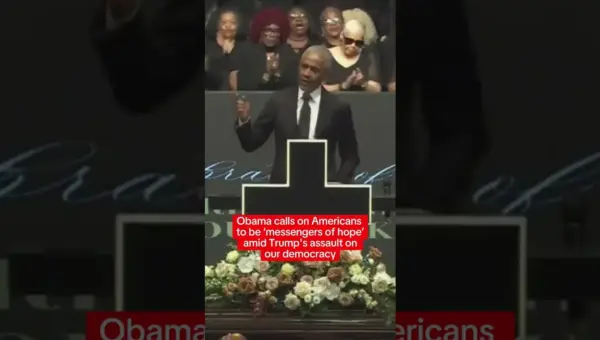
Obama’s Fiery Rebuke: Democracy Under Siege, Hope Endures
Barack Obama delivered a powerful tribute to Jesse Jackson, sharply criticizing the current political climate. He decried daily assaults on democracy and decency, contrasting them with Jackson's legacy of hope and action.

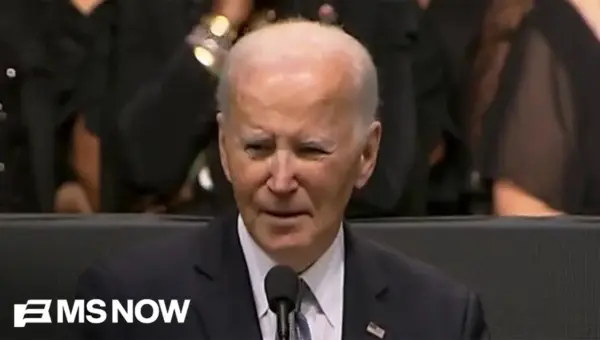
Biden Honors Rev. Jesse Jackson’s Legacy of Unity
President Joe Biden delivered a moving tribute to Reverend Jesse Jackson, celebrating the civil rights icon's legacy of unity and his dedication to "redeeming the soul of America." Biden shared personal reflections, emphasizing Jackson's ability to find common ground and inspire hope through decades of advocacy.

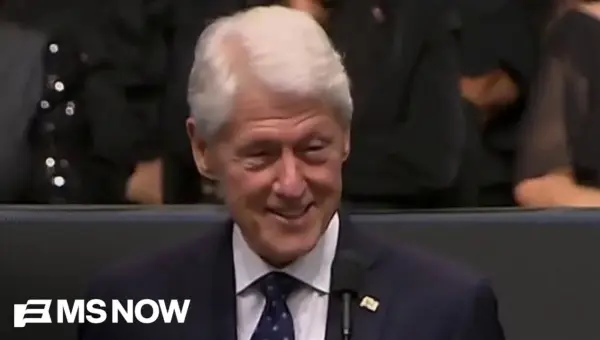
Clinton Recalls ‘Deep Love’ for Jesse Jackson, Cites ‘Brilliant’ Line
Former President Bill Clinton shared a deeply personal tribute to civil rights leader Jesse Jackson, recalling their shared background and a "brilliant" quote that profoundly impacted him. Clinton stated that Jackson made him a better president.