NYT Columnist Warns Against Iran War, Cites ‘Real Risks Ahead’
New York Times columnist Nicholas Kristof warns against U.S. military action in Iran, citing historical failures of similar interventions and significant risks. He advocates for diplomatic and informational strategies over bombing campaigns, emphasizing the need for realistic objectives and consideration for the Iranian people.

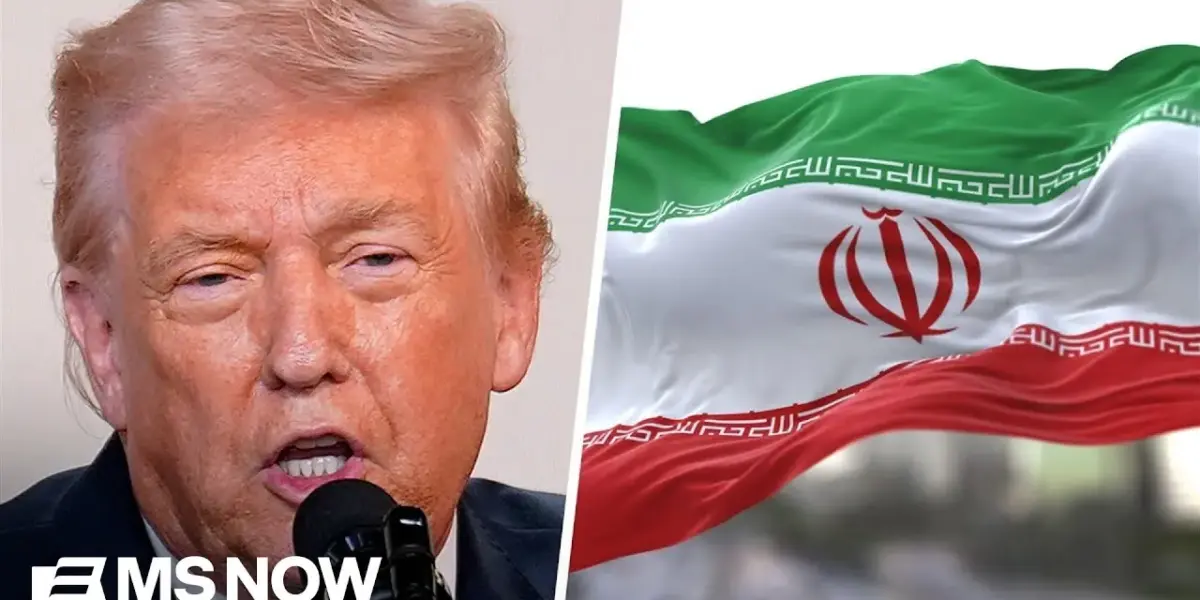
Kristof Questions Military Intervention in Iran
New York Times columnist Nicholas Kristof has issued a stark warning against the United States pursuing military action against Iran, arguing that such a course is unlikely to achieve its objectives and carries significant risks. In a recent analysis, Kristof contended that the tendency to opt for military solutions in complex international situations, as seen historically in Vietnam and Iraq, has often proven tactically powerful but strategically unsuccessful in attaining long-term goals.
Kristof specifically questioned the efficacy of air campaigns aimed at regime change, noting that such efforts have traditionally yielded limited success. He drew a parallel to the substantial financial and political investment by both the Trump and Biden administrations in attempting to counter the Houthi rebels in Yemen, a significantly weaker force, without achieving their desired outcome. While acknowledging that the Iranian regime may be weakened, Kristof suggested that a more probable outcome of conflict would be the consolidation of power by the hardline IRGC (Islamic Revolutionary Guard Corps) or a descent into civil war, rather than a transition to democracy.
“I think historically when we’ve come into a naughty international problem, as we had in Vietnam, as we had in Iraq and as we now have with Iran, the tendency is to reach for military solution. And what we’ve seen is that they tend to be tactically powerful, but strategically not very successful in achieving long-term objectives.”
Assessing the Costs and Potential Outcomes
The potential costs of military engagement, Kristof detailed, are already being felt, including American casualties, rising prices, and the deaths of Iranian civilians, including young women. He critiqued the notion of initiating a war based on optimistic, best-case scenarios, emphasizing that such a strategy is a flawed foundation for foreign policy decisions.
Kristof also addressed the idea of replicating a U.S. intervention strategy, drawing a comparison to Venezuela. However, he highlighted the vast differences in size and culture between Iran and Venezuela, questioning the U.S. ability to identify compliant leadership within Iran that would align with American demands. While acknowledging the existence of reformist elements within Iran, such as the grandson of Ayatollah Khomeini, Kristof cautioned that the situation could also worsen, leading to an even more hardline ruler or complete instability.
“I think that hope is not a good basis to attack a foreign country and start a war that it keeps expanding by the moment,” Kristof stated, underscoring the unpredictable and escalating nature of military conflict.
Examining the Iranian People’s Situation
Reflecting on his past reporting from Iran, Kristof expressed doubt that the Iranian people are currently safer or more free, particularly with the continued rule of the Ayatollah and much of his leadership. He noted that while some Iranians may harbor hope for change, the country is fiercely nationalistic and deeply suspicious of foreign intervention. Many Iranians, he observed, are frustrated with external actions, such as the intervention in Libya, and while outcomes can vary, the path forward for Iran is fraught with uncertainty.
“I feel for the Iranians because they, I mean, they’ve just suffered these brutal massacres. But it’s not at all obvious to me that a war with Iran is going to improve things for those Iranians.”
Alternative Strategies for Engagement
Beyond military action, Kristof advocated for alternative approaches that could genuinely aid the Iranian people and mitigate threats. He suggested that focusing solely on military options overlooks other viable tools.
Regarding the nuclear issue, Kristof pointed out that nuclear negotiations have shown promise, with Iran appearing willing to suspend enrichment for several years and maintain very low levels of activity. More broadly, he looked to historical precedents for regime change, citing the 1979 Iranian Revolution, which was fueled by cassette tapes of sermons and songs, not military intervention. Similarly, the fall of communism in Eastern Europe and uprisings in the Philippines were driven by popular movements and the refusal of troops to fire on their own people.
Kristof proposed that the U.S. could have been more effective by focusing on facilitating access to technologies like Starlink terminals within Iran and utilizing intelligence resources to expose the regime’s corruption and hypocrisy. While acknowledging that these methods might not guarantee specific results, he argued they would likely be more effective and considerably less risky than a campaign of bombing.
“I think that if the U.S. had focused more on getting Starlink terminals inside Iran, on using the intelligence community to to broadcast the corruption, hypocrisy of the regime. You know, I think that would have been helpful,” Kristof concluded.
Looking Ahead
Kristof’s analysis provides a critical counterpoint to the potential for military escalation with Iran, emphasizing the historical failures of such interventions and the significant risks involved. As tensions remain high in the region, his insights suggest a need for careful consideration of diplomatic and non-military strategies that prioritize the well-being of the Iranian people and aim for sustainable, long-term solutions over potentially disastrous military adventures.
Source: 'Certainly real risks ahead': NYT Columnist analyzes threat of U.S.-Iran conflict (YouTube)

Related Articles
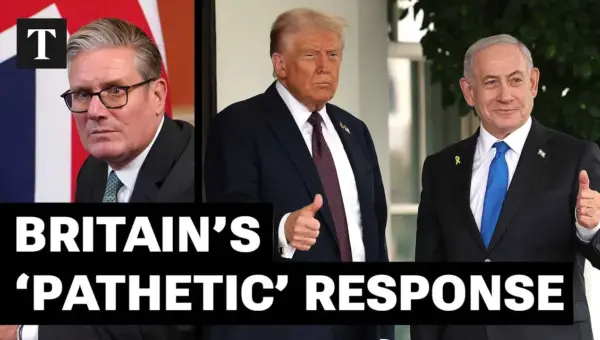
UK ‘Sidelined’ in US-Israel Iran Standoff, Says Ex-Minister
Former Defence Secretary Liam Fox has strongly criticized the UK's "pathetic" response to the escalating US-Israel confrontation with Iran, arguing the nation has been "sidelined." He called for greater British involvement and support for allied actions, highlighting the perceived weakness of the current government.
Trump Warns of Escalating Iran Conflict, Vows Unyielding Response
President Donald Trump declared that the "big wave of attacks" against Iran has not yet begun, warning of potential U.S. casualties as military operations continue. He outlined the objectives of "Operation Epic Fury" to dismantle Iran's military and nuclear capabilities, projecting a 4-5 week timeline but acknowledging it could extend.
Trump’s Iran War: Public Outcry Meets GOP Defense
A new poll shows low public support for U.S. military action in Iran, fueling a debate over whether these are "strategic strikes" or an "unlawful war." Congressional efforts to assert oversight face strong Republican opposition, exposing deep partisan divides on presidential war powers and the justification for conflict.