Nvidia’s DLSS 5 Sparks Gamer Outrage
Nvidia's latest DLSS 5 announcement has sparked controversy, with gamers questioning the shift in focus from performance to 'cinematic gap' tools. The community fears a deviation from the core benefits that made previous DLSS versions so popular.


Nvidia’s DLSS 5 Unveiled, Ignites Gamer Backlash
Nvidia, the titan of graphics technology, has once again thrown a curveball at the gaming community with the announcement of DLSS 5. While the company touts advancements, early reactions suggest a significant disconnect between Nvidia’s vision and what many gamers desire. The core of the controversy lies in Nvidia’s ambitious push to “bridge the cinematic gap,” a feature aiming to empower developers with enhanced tools for relighting and reshading game scenes. However, for a gaming audience accustomed to tangible performance gains and visual fidelity improvements, this new direction has been met with confusion and, in many circles, outright dismay.
The “Cinematic Gap” Conundrum
Nvidia’s latest iteration of its Deep Learning Super Sampling (DLSS) technology, DLSS 5, is positioned as a leap forward in visual realism. The headline feature, the “cinematic gap bridging” initiative, focuses on providing game developers with sophisticated tools to dynamically relight and reshade scenes in real-time. The idea is to bring in-game visuals closer to the fidelity and artistic intent of pre-rendered cinematics, offering a more immersive and visually stunning experience. This involves leveraging AI to analyze scenes and apply advanced lighting and shading techniques that were previously computationally prohibitive for real-time rendering.
While the technical ambition is undeniable, the gaming community’s reception has been far from enthusiastic. For years, DLSS has been synonymous with performance boosts, enabling players to achieve higher frame rates or enable demanding graphical settings like ray tracing without crippling their hardware. The introduction of DLSS 5, with its primary focus shifting from raw performance enhancement to offering development tools for enhanced visual effects, has left many gamers questioning the value proposition. The sentiment is that Nvidia might be straying from what made DLSS a must-have technology for PC gamers.
A Step Backwards from DLSS 4.5?
The timing of this announcement is particularly perplexing given the widely positive reception of its predecessor, DLSS 4.5. The previous iteration of DLSS was lauded for its refined upscaling algorithms, offering a noticeable improvement in image quality and performance. Gamers appreciated the subtle yet impactful enhancements that allowed for smoother gameplay and sharper visuals, especially in demanding titles. The success of DLSS 4.5 set a high bar, making the perceived pivot with DLSS 5 all the more confusing for the end-user.
Many players expressed their bewilderment on forums and social media, asking, “Why is Nvidia changing what wasn’t broken?” The core functionality of DLSS has always been about rendering games at a lower resolution and intelligently upscaling them to a higher resolution, thereby improving performance. While advanced lighting and shading are crucial for visual fidelity, the emphasis on developer tools over direct user-facing performance enhancements has created a rift. The question on many gamers’ minds is whether DLSS 5 will still offer the substantial frame rate improvements they’ve come to expect, or if the focus on cinematic tools will come at the expense of raw gaming performance.
Who Should Care and Why?
At present, the primary audience Nvidia seems to be targeting with DLSS 5’s advanced features are game developers and potentially content creators who prioritize photorealism and cinematic presentation. For these groups, the new tools could unlock unprecedented levels of visual artistry and immersion within games. Developers might find it easier to achieve a specific aesthetic, and players who crave the most visually stunning experiences might see games that look more like interactive movies.
However, the vast majority of PC gamers, whose primary concern is smooth and responsive gameplay at high resolutions, are left waiting for clarity. Will DLSS 5 retain its core strength of boosting frame rates? Will the “cinematic gap” features be optional, allowing gamers to prioritize performance if they choose? Without these assurances, the enthusiasm for DLSS 5 remains muted among the core gaming demographic. The hope is that Nvidia will provide more concrete details on performance metrics and user-selectable options closer to the launch, demonstrating that DLSS 5 still serves the needs of the everyday gamer.
Looking Ahead: What’s Next for DLSS 5?
It’s crucial to remember that DLSS 5 is still in its development phase, and Nvidia has stated that there is time for adjustments before its official release. The company could very well refine its messaging, introduce more gamer-centric features, or provide clearer benchmarks that showcase performance benefits alongside the new visual enhancements. The gaming community will be watching closely, hoping that Nvidia can reconcile its ambition for cinematic realism with the performance demands of its dedicated player base.
Until then, the narrative surrounding DLSS 5 is one of cautious skepticism rather than outright excitement. The success of DLSS 4.5 has set a precedent, and Nvidia has a significant task ahead to convince gamers that DLSS 5 is not just a new coat of paint, but a genuine advancement that benefits them directly, both visually and in terms of playable performance.
Source: DLSS 5…why? (YouTube)

Related Articles

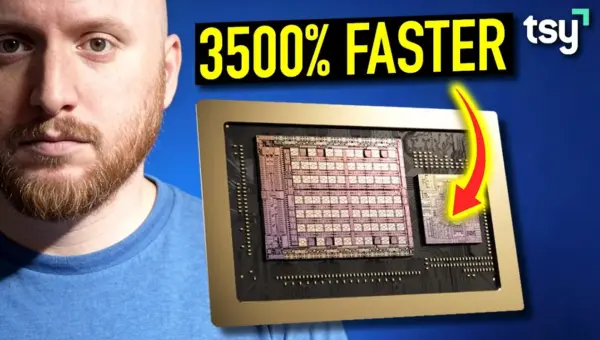
Nvidia’s New Chips Fuel AI Agent Boom, Eye $10 Trillion
Nvidia's new Vera Rubin AI platform, featuring specialized chips like the Grok LPU, is poised to revolutionize AI processing for autonomous agents. This innovation is expected to drive massive data center spending and solidify Nvidia's position as a potential $10 trillion company.


Farming Sim Town Grows: Main Street & Dairy Farm Added!
Our Farming Simulator town gets a major upgrade in episode six with the addition of a vibrant Main Street USA and a vital new dairy farm. We're expanding the community, adding shops, houses, and essential agricultural operations.


Pokémon’s Wildest Secrets Finally Revealed!
Discover the surprising secrets behind the Pokémon phenomenon! From Nintendo's early sales predictions to hidden evolutions and the inspiration behind iconic characters, this article reveals untold stories that shaped the franchise. Learn about Mew's secret origin and the innovations that made Pokémon a global sensation.