Nvidia DLSS 5 Sparks Outrage: Is It AI Slop?
Nvidia's new DLSS 5 technology is facing backlash for its "AI slop filter" look. While technically impressive, its aggressive aesthetic and demanding hardware requirements have sparked debate among gamers and critics, raising questions about its future impact.


Nvidia’s DLSS 5 Demo Ignites Controversy
Nvidia has once again pushed the boundaries of real-time graphics with the unveiling of its latest Deep Learning Super Sampling (DLSS) technology, dubbed DLSS 5. However, the initial reveal, showcased through a series of compelling demos, has sent shockwaves across the internet, with many labeling the new iteration an “AI slop filter.” The controversy stems from the technology’s aggressive approach to image reconstruction, leading to a visual style that some find uncanny and overly processed.
The “AI Slop Filter” Debate
The core of the backlash lies in the distinct aesthetic produced by DLSS 5. While aiming for hyper-realism, the technology’s output in certain character models has been described as “aggressive.” This manifests as a look that is almost, but not quite, photorealistic, creating a subtle artificiality that has deeply unsettled viewers and critics. The term “AI slop filter” has quickly gained traction, reflecting a sentiment that the AI’s intervention has resulted in an over-processed, artificial sheen rather than a natural enhancement.
One of the most striking aspects of the controversy is the visual fidelity showcased in the demos. While undeniably impressive in its technical execution, the results have been polarizing. The uncanny valley effect, where something appears almost human but is disturbingly off, seems to be a significant factor in the negative reception. Many feel that the AI’s interpretation of realistic detail has gone too far, sacrificing genuine artistry for a synthetic approximation.
Demanding Hardware Requirements
Adding to the concerns is the sheer power required to run DLSS 5. The demonstrations themselves were reportedly rendered on systems equipped with not one, but two RTX 5090 graphics cards. This astronomical hardware requirement immediately dashes hopes for widespread adoption or even casual experimentation in the near future. For the average gamer, experiencing DLSS 5 will likely remain a distant dream, raising questions about the practicality and accessibility of such cutting-edge technology.
This demanding nature suggests that DLSS 5 is not merely an iterative update but a significant leap forward in terms of computational needs. It points towards a future where the most advanced graphics technologies will be reserved for high-end enthusiasts and professional workstations, potentially widening the gap between the haves and have-nots in the PC gaming landscape.
Understanding the Technology and Its Potential
Despite the vocal criticism, it’s crucial to acknowledge the underlying technological advancements. DLSS 5 represents Nvidia’s continued commitment to leveraging artificial intelligence to enhance gaming visuals. The ability to upscale lower-resolution images to higher resolutions in real-time, coupled with advanced reconstruction techniques, is a monumental feat. The potential for DLSS 5 to reduce the performance impact of demanding graphical settings while maintaining or even improving visual quality is immense.
However, the current implementation, as seen in the demos, appears to have prioritized a certain aggressive form of detail enhancement. The presenter acknowledges this, stating, “I think this demo was a little bit too aggressive.” This suggests that Nvidia might be exploring the outer limits of its AI models, perhaps to showcase capabilities rather than offering a perfectly balanced final product for immediate consumer use. The hope remains that future iterations and game integrations will strike a more harmonious balance between AI enhancement and artistic integrity.
Who Should Care and Why?
The immediate audience for DLSS 5, at least in its current state, consists of bleeding-edge PC gamers and hardware enthusiasts who crave the absolute best visual fidelity and are willing to invest in the most powerful hardware available. Developers will also be keenly watching its progress, as implementing DLSS can significantly impact their ability to push graphical boundaries within performance constraints.
For the broader gaming community, DLSS 5 serves as an indicator of future trends in graphics technology. While the current controversy highlights the challenges of AI integration, it also underscores the direction the industry is heading. As the technology matures and hardware becomes more accessible, DLSS 5 or its successors could fundamentally change how games look and perform for everyone.
Availability and Future Outlook
Nvidia has stated that DLSS 5 is slated to ship later this year. Specific game integrations and retail availability will depend on developer adoption and hardware readiness. Given the intense hardware requirements observed in the demos, it’s likely that initial implementations will be limited to flagship GPUs. The company’s willingness to push the envelope, even if it leads to controversial results, suggests an ambitious roadmap for AI-driven graphics. The hope is that Nvidia will heed the feedback and refine DLSS 5 to offer a more universally appealing visual experience.
A Balancing Act for Nvidia
The reaction to DLSS 5 is a clear signal that while AI in graphics is powerful, the execution matters immensely. The “AI slop filter” critique is a valid concern, pointing to the need for careful calibration and artistic consideration alongside raw technological prowess. Nvidia has a delicate balancing act ahead: harnessing the incredible power of AI to create stunning visuals without alienating users with an overly artificial or uncanny aesthetic. The coming months will reveal whether Nvidia can refine DLSS 5 into a technology that is both groundbreaking and genuinely beautiful.
Specs & Key Features (Based on Demo Observations)
- Technology: Deep Learning Super Sampling (DLSS) 5th Generation
- Purpose: AI-powered real-time graphics enhancement and upscaling
- Visual Style: Aims for hyper-realism, potentially leading to an “aggressive” or “uncanny” aesthetic in current demos.
- Hardware Requirements: Extremely high; demos ran on dual RTX 5090 configurations.
- Availability: Expected to ship later this year.
Source: About that DLSS 5 Demo… (YouTube)

Related Articles

Nvidia’s New Chips Fuel AI Agent Boom, Eye $10 Trillion
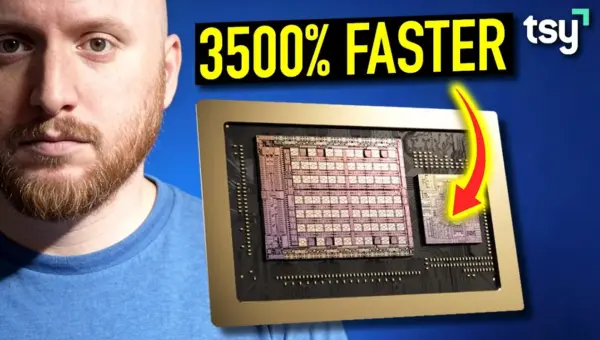
Nvidia's new Vera Rubin AI platform, featuring specialized chips like the Grok LPU, is poised to revolutionize AI processing for autonomous agents. This innovation is expected to drive massive data center spending and solidify Nvidia's position as a potential $10 trillion company.


Sony Reverses PC Strategy, Shuts Down PlayStation PC Games
Sony is reportedly halting the release of single-player PlayStation games on PC. This strategic U-turn appears driven by lower-than-expected PC sales and the growing influence of competitors like Xbox and Valve. The move emphasizes Sony's commitment to its console hardware.


Nvidia’s AI Upscaling: Game Changer or Beauty Filter?
Nvidia's AI-powered DLSS technology boosts game performance but faces criticism for altering character appearances. Gamers debate whether the "yassification" of digital faces respects artistic vision.