NTSB Reveals Runway Collision Timeline at LaGuardia
The NTSB has released details from the cockpit voice recorder of a runway collision at LaGuardia Airport. The investigation highlights a complex sequence of events involving air traffic control, a fire truck, and the aircraft's final moments. Key findings include the ASDE-X system not alerting and the combination of controller duties during the midnight shift.

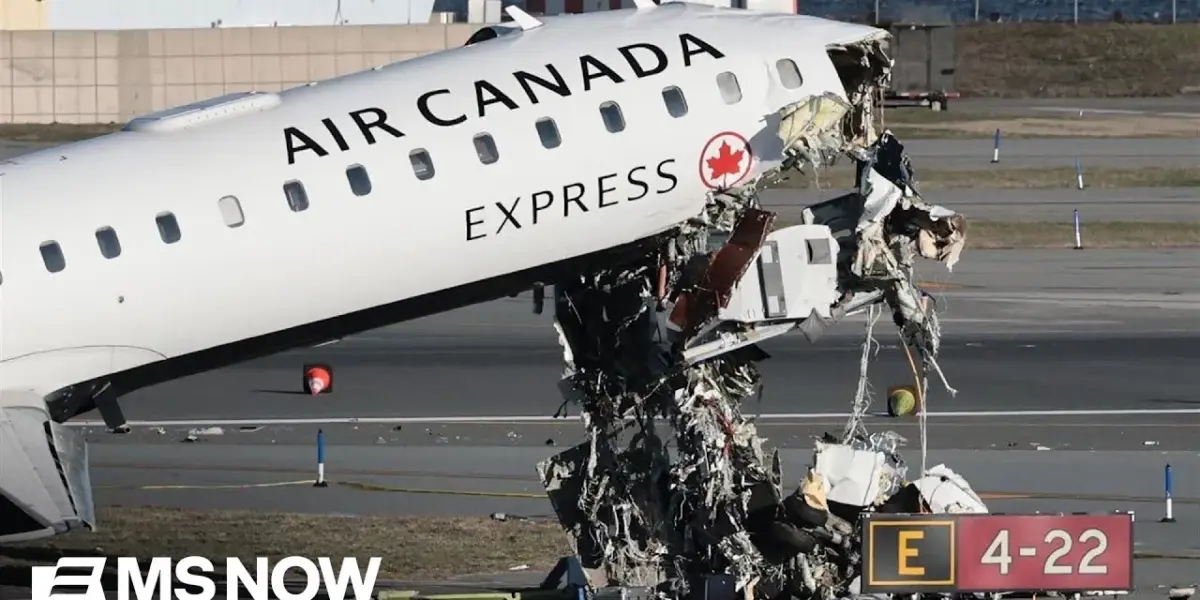
The National Transportation Safety Board (NTSB) has detailed the final moments before a runway collision at LaGuardia Airport, revealing a complex sequence of events involving air traffic control, a fire truck, and an aircraft.
Investigators Detail Crash Events
The NTSB investigation is focusing on the final three minutes of the flight’s cockpit voice recorder (CVR). The recording, which lasted over 25 hours, provided crucial audio data. The flight data recorder (FDR) captured about 80 hours of information across more than 400 parameters. These recorders were recovered early in the investigation and sent for analysis in Washington, D.C.
According to the CVR data, at three minutes and seven seconds before the recording ended, the aircraft was instructed to contact LaGuardia Tower. The flight crew then lowered the landing gear at two minutes and 45 seconds. They checked in with LaGuardia Tower at two minutes and 22 seconds.
The tower cleared the airplane to land on runway four at two minutes and 17 seconds, informing the crew they were the second aircraft landing. The flight crew set the flaps to 30 degrees at one minute and 52 seconds, and then to 45 degrees at one minute and 33 seconds.
Warning Systems and Vehicle Communication
An electronic call-out from the Enhanced Ground Proximity Warning System (EGPWS) indicated the aircraft was 1,000 feet above the ground at one minute and 26 seconds. The flight crew confirmed the landing checklist was complete at one minute and 12 seconds. A minute later, an airport vehicle made a radio transmission to the tower, but it was interrupted by another transmission from an unidentified source.
At 54 seconds before the recording ended, the flight crew acknowledged they were 500 feet above the ground and on a stable approach. The LaGuardia Tower then asked which vehicle needed to cross the runway. At 28 seconds, “Truck One” made a radio transmission to the tower.
The tower cleared Truck One and its company to cross runway four at taxiway Delta at 26 seconds. An EGPWS call-out occurred at 19 seconds, followed by altitude call-outs of 50 feet at 12 seconds and 30 feet at the same time. The tower also instructed a Frontier Airlines flight to hold position.
Final Seconds Before Impact
An EGPWS 20-foot call-out happened at 11 seconds, and a 10-foot call-out at 10 seconds. At nine seconds, the tower instructed Truck One to stop. A sound consistent with the airplane’s landing gear touching down on the runway was recorded at eight seconds.
Crucially, at six seconds before the recording ended, a pilot transfer of controls occurred. The first officer, who was flying the aircraft, transferred control to the captain. The recording ended at zero seconds.
Investigating Contributing Factors
The NTSB is examining several potential contributing factors. Aircraft Rescue and Firefighting (ARFF) units were responding to a different United Airlines flight experiencing two aborted takeoffs, with reports of fumes in that cabin. This response may have impacted their immediate availability.
Truck One, which collided with the aircraft, did not have a transponder, a device that broadcasts a plane’s identity and altitude. This lack of a transponder meant it appeared only as a radar target, making it harder for controllers to track precisely. Other vehicles were behind Truck One but did not attempt to cross the runway.
Air Traffic Control and Staffing
The investigation into air traffic control has revealed conflicting information regarding the number of certified controllers on duty. At the time of the collision, there were two people in the tower cab: the local controller and the controller in charge. The local controller manages active runways and surrounding airspace, while the controller in charge is responsible for overall safety.
The local controller had signed in at 10:45 a.m., with their shift ending at 6:45 a.m. The controller in charge had signed in at 10:30 p.m. the previous night, with their shift ending at 6:30 a.m. The controller in charge was also handling duties for clearance delivery, which provides pilots with departure instructions.
It remains unclear who was performing the duties of the ground controller, who manages aircraft and vehicle movements on taxiways. Information suggests this role may have been combined with another position. Combining controller positions, especially during the midnight shift, has been a concern raised by the NTSB in previous investigations due to potential fatigue issues.
Runway Safety System Performance
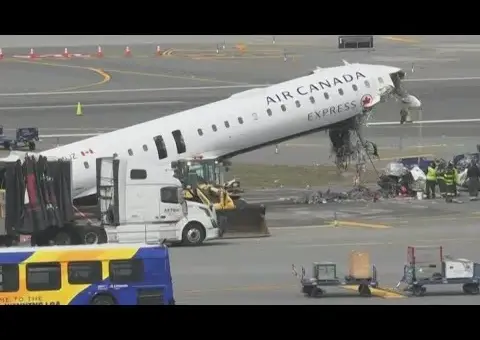
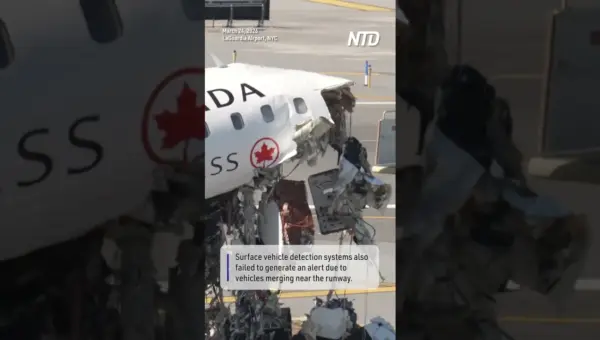
LaGuardia Airport is equipped with ASDE-X, a runway safety system designed to track aircraft and vehicle movements. However, analysis shows the ASDE-X system did not generate an alert during the incident. The system’s analysis stated: “ASDE-X did not generate an alert due to the close proximity of vehicles merging and unmerging near the runway, resulting in the inability to create a track of high confidence.”
The replay showed two radar targets on taxiway Delta, appearing as “blobs” due to the lack of transponders on the vehicles. The runway status lights were reportedly functioning, but this needs further verification.
Broader Implications and Future Steps
The NTSB emphasized that major accidents rarely result from a single failure. They highlighted that aviation safety relies on multiple layers of defense, and when an accident occurs, it often means many things have gone wrong.
The agency plans to conduct further interviews, including with the local controller. They are also working to rectify inconsistencies found in air traffic control logs. The NTSB has repeatedly recommended the implementation of ASDE-X at more airports, noting its potential to prevent collisions.
The investigation will continue to explore potential distractions among controllers, acknowledging the high-workload environment. Questions remain about shift changes, available staffing, and other traffic the controllers were managing at the time.
The NTSB’s findings will be used to issue safety recommendations aimed at preventing similar incidents in the future. The process of analyzing all evidence, conducting interviews, and compiling a final report is expected to take time.
Source: NTSB details events around LaGuardia Airport crash (YouTube)

Related Articles
LaGuardia Runway Reopens After Deadly Crash, Safety Lapses Exposed
LaGuardia Airport's main runway has reopened after a fatal crash involving an Air Canada Express jet and a fire truck. The incident, which killed two pilots, exposed critical failures in airport safety systems, including ground surveillance and transponder use.
Air Safety Fears Soar After Deadly Crash
A fatal crash at LaGuardia Airport has triggered a national review of air safety, revealing a pattern of close calls and communication issues at U.S. airports. Investigators are examining technology and staffing, as calls grow for urgent safety upgrades.
Missing Transponder Fueled LaGuardia Near-Disaster
A fire truck lacking a crucial transponder was involved in a near-collision at LaGuardia Airport. The NTSB is investigating this and other issues, highlighting potential gaps in ground vehicle safety protocols. This incident serves as a stark reminder of the importance of technology in preventing airport accidents.