NTSB Probes LaGuardia Crash: Runway Safety System Failed
The NTSB revealed preliminary findings from the cockpit voice recorder of a recent LaGuardia Airport runway collision. Investigators confirmed the runway safety system, ASDX, failed to alert controllers due to vehicle proximity. The investigation is also focusing on air traffic control staffing and procedures during the midnight shift.

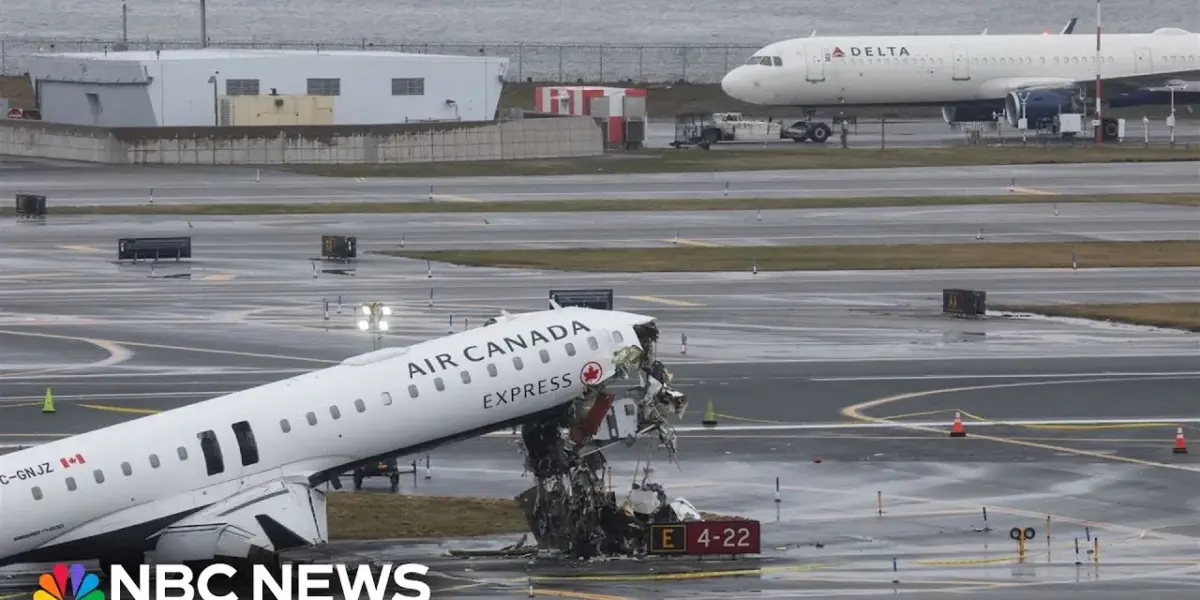
NTSB Provides Update on LaGuardia Airport Runway Collision
The National Transportation Safety Board (NTSB) is actively investigating a collision between an aircraft and a vehicle on the runway at LaGuardia Airport. NTSB Chairwoman Jennifer Hamundi provided an update on the first full day of the investigation, detailing preliminary findings from the cockpit voice recorder and discussing potential contributing factors.
Key Findings from the Cockpit Voice Recorder
Investigators have recovered and begun analyzing the cockpit voice recorder (CVR) and flight data recorder (FDR). The CVR captured the final three minutes of the flight leading up to the incident. Key events recorded include:
- 3:07 before end: Flight crew instructed to contact LaGuardia Tower.
- 2:45 before end: Landing gear lowered.
- 2:17 before end: Cleared to land on Runway 4, advised they were number two for landing.
- 1:52 before end: Flaps set to 30 degrees.
- 1:33 before end: Flaps set to 45 degrees.
- 1:26 before end: Enhanced Ground Proximity Warning System (EGPWS) call-out of 1,000 feet above ground.
- 0:54 before end: Flight crew acknowledged 500 feet above ground and a stable approach.
- 0:40 before end: LaGuardia Tower inquired about a vehicle needing to cross the runway.
- 0:25 before end: Truck One requested to cross Runway 4 at Taxiway Delta.
- 0:20 before end: Tower cleared Truck One to cross Runway 4 at Taxiway Delta.
- 0:19 before end: EGPWS call-out of 1,000 feet occurred.
- 0:14-0:11 before end: Multiple EGPWS altitude call-outs (50, 30, 20 feet).
- 0:12 before end: Tower instructed a Frontier Airlines flight to hold position.
- 0:09 before end: Tower instructed Truck One to stop.
- 0:08 before end: Sound consistent with landing gear touching down on the runway.
- 0:06 before end: Pilot transfer of controls occurred.
- 0:04 before end: Tower again instructed Truck One to stop.
- 0:00: Recording ended.
The NTSB confirmed that the first officer was flying and transferred control to the captain six seconds before the recording ended.
Runway Safety System Failure
A critical aspect of the investigation involves the Airport Surface Detection Equipment, Model X (ASDX), a runway safety system designed to track aircraft and vehicle movements. The NTSB’s analysis revealed that the ASDX system did not generate an alert during the incident.
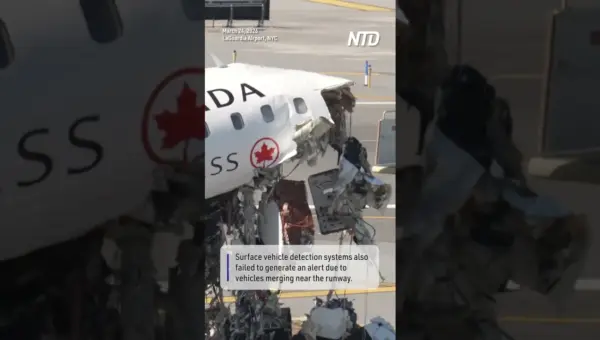
According to the analysis, “ASDX did not generate an alert due to the close proximity of vehicles merging and unmerging near the runway, resulting in the inability to create a track of high confidence.” Radar data showed two targets on Taxiway Delta, but without transponders, these appeared as indistinct “blobs” to the system. The runway status lights were functioning correctly, according to the replay, but this still needs verification.
Air Traffic Control Staffing and Procedures
The investigation is also examining the staffing and procedures in the LaGuardia tower during the midnight shift. At the time of the collision, two individuals were in the tower cab: the local controller and the controller in charge. The local controller began their shift at 10:45 p.m. and the controller in charge, who had also signed in at 10:30 p.m., was performing the duties of the clearance delivery position.
It remains unclear who was performing the ground controller duties, which manage aircraft and vehicle movements on taxiways. These positions were combined, which the NTSB noted is standard operating procedure for the midnight shift at LaGuardia and common practice nationally. However, the NTSB has previously raised concerns about fatigue related to midnight shifts in past investigations, though they stressed there is no indication fatigue was a factor in this specific incident.
Conflicting information exists regarding the logs for air traffic control, and interviews with the local controller are scheduled to begin. The NTSB is also investigating why Truck One, the vehicle involved in the collision, did not have a transponder, noting that other trucks at other airports may have them. While not an official NTSB recommendation yet, investigators believe air traffic controllers should have all necessary information, including ground vehicle movements, to ensure safety.
Contributing Factors and Broader Implications
Chairwoman Hamundi emphasized that major accidents rarely result from a single failure, stating, “When something goes wrong, that means many many things went wrong.” The investigation aims to understand how multiple layers of defense failed to prevent the collision.
The NTSB is addressing reports of distraction among controllers, cautioning against premature finger-pointing. They highlighted the high workload environment and the need to determine what other traffic and events were occurring at the time. Questions remain about shift changes and whether controllers were adequately relieved.
The complexity of the situation, including the lack of transponders on ground vehicles and the failure of the ASDX system to provide an alert, underscores the ongoing challenges in airport surface safety. The NTSB’s findings will likely lead to further recommendations for improving technology and procedures to prevent similar accidents in the future.
What’s Next
The NTSB will continue its thorough investigation, including downloading and analyzing the flight data recorder, interviewing personnel, and examining all available data. Further updates will be provided as the investigation progresses.
Source: LIVE: NTSB gives updates on LaGuardia crash | NBC News (YouTube)

Related Articles
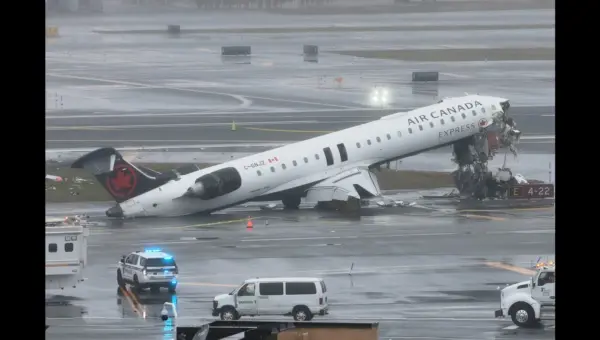
LaGuardia Runway Reopens After Deadly Crash, Safety Lapses Exposed
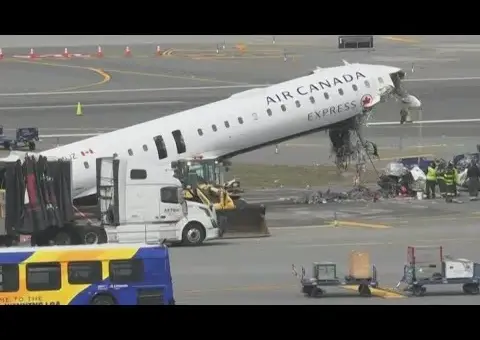
LaGuardia Airport's main runway has reopened after a fatal crash involving an Air Canada Express jet and a fire truck. The incident, which killed two pilots, exposed critical failures in airport safety systems, including ground surveillance and transponder use.
Air Safety Fears Soar After Deadly Crash
A fatal crash at LaGuardia Airport has triggered a national review of air safety, revealing a pattern of close calls and communication issues at U.S. airports. Investigators are examining technology and staffing, as calls grow for urgent safety upgrades.
Missing Transponder Fueled LaGuardia Near-Disaster
A fire truck lacking a crucial transponder was involved in a near-collision at LaGuardia Airport. The NTSB is investigating this and other issues, highlighting potential gaps in ground vehicle safety protocols. This incident serves as a stark reminder of the importance of technology in preventing airport accidents.