NTSB Probes Deadly LaGuardia Crash: “Many Things Went Wrong”
The NTSB released preliminary findings on a fatal LaGuardia Airport crash, indicating multiple failures contributed to the incident. A key finding reveals the involved ground vehicle lacked a transponder, and the airport's runway safety system failed to alert controllers to the conflict. Investigations are ongoing into air traffic control staffing and procedures.

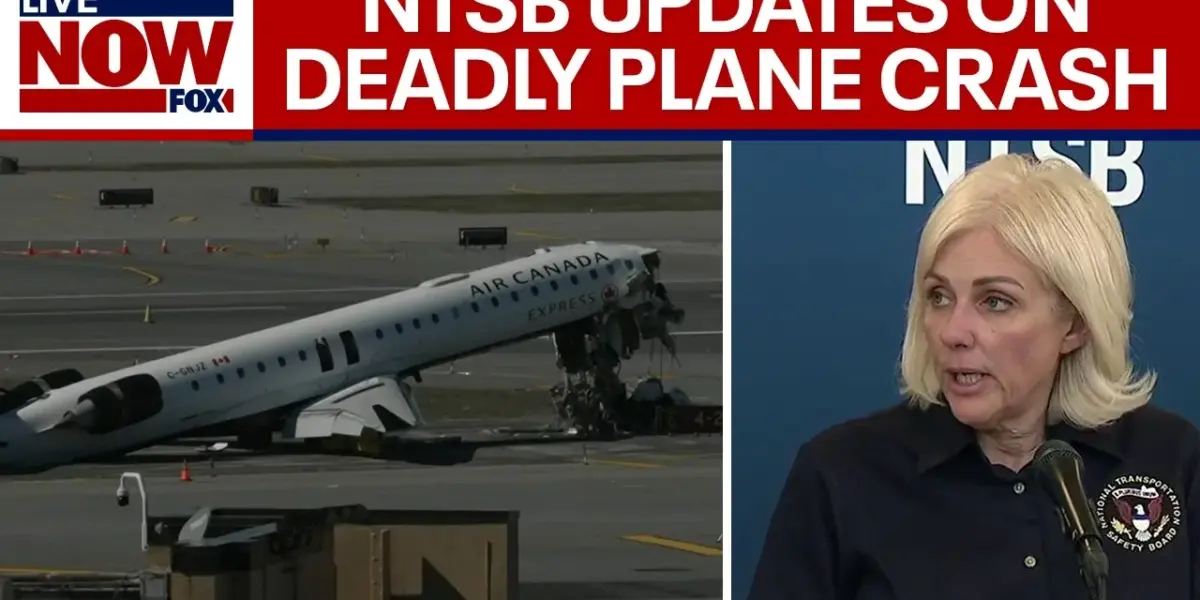
NTSB Shares Preliminary Findings in LaGuardia Crash Investigation
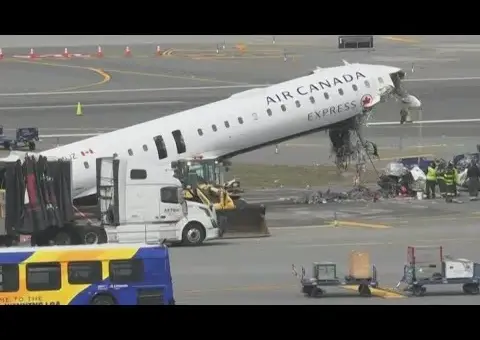
The National Transportation Safety Board (NTSB) has provided an early look into the investigation of a fatal crash at LaGuardia Airport, revealing that multiple factors likely contributed to the deadly incident. The NTSB’s Chairwoman, Jennifer Hammond, along with board member John Doo and Investigator-in-Charge Doug Brazy, briefed the press on the first full day of their on-site investigation. “We rarely if ever investigate a major accident where it was one failure,” Chairwoman Hammond stated. “Our aviation system is incredibly safe because there are multiple multiple layers of defense built in to prevent an accident. So, when something goes wrong, that means many many things went wrong.”
Cockpit Voice Recorder Reveals Final Moments
Investigators have successfully retrieved and begun analyzing the cockpit voice recorder (CVR) and flight data recorder (FDR) from the crashed aircraft. The CVR, which contains over 25 hours of audio, provided preliminary details of the final three minutes before the incident. According to the NTSB, the flight crew received clearance to land on Runway 4, but was also informed they were second in line. During the approach, the aircraft’s enhanced ground proximity warning system (EGPWS) issued altitude callouts, including 1,000 feet, 500 feet, 50 feet, 30 feet, and 20 feet above the ground. Critically, a ground vehicle, identified as “Truck One,” was cleared to cross Runway 4 at Taxiway Delta just 20 seconds before the recording ended. Shortly after, at 9 seconds before the recording’s end, the tower instructed Truck One to stop. The CVR captured a sound consistent with the airplane’s landing gear touching down at 8 seconds prior to the end of the recording. Just 6 seconds before the recording ended, a transfer of controls occurred in the cockpit, with the first officer transferring flying duties to the captain.
Ground Vehicle Without Transponder Adds Complexity
A significant detail emerging from the investigation is that “Truck One,” the vehicle involved in the collision, did not have a transponder. This absence of a transponder means the vehicle did not transmit its location and identification automatically to air traffic control, relying instead on radar. The NTSB’s analysis of the airport’s runway safety system, ASDS, showed that it did not generate an alert. The system was unable to create a reliable track of the vehicle due to its “close proximity of vehicles merging and unmerging near the runway.” This lack of a clear track meant the ASDS could not warn controllers of the potential conflict on the active runway.
Air Traffic Control Staffing and Procedures Under Scrutiny
The NTSB is also examining air traffic control procedures and staffing at the time of the incident. At the time of the collision, there were two individuals in the tower cab: the local controller, who manages active runways, and the controller in charge, responsible for overall safety. The controller in charge was also performing the duties of the clearance delivery position, which provides departure clearances to pilots. It remains unclear who was performing the duties of the ground controller, who manages vehicle and aircraft movements on taxiways. The NTSB noted that combining these positions is standard operating procedure for LaGuardia’s midnight shift, a shift that the NTSB has previously raised concerns about regarding potential fatigue. “Our understanding right now is that in this situation for the midnight shift, it is standard operating procedure that they only have two on duty and those two perform the duties of other controllers,” Chairwoman Hammond explained, adding that they will investigate this further. The agency is also looking into the shift change that occurred around 10:30 p.m. and whether controllers were adequately staffed and available.
Systemic Failures and Future Recommendations
The NTSB emphasized that a thorough investigation will be needed to understand all contributing factors. They are interviewing controllers and reviewing logs, which have shown some inconsistencies in dates and times. The agency is also investigating the aircraft rescue and firefighting response, which was initially responding to a different United Airlines flight at the gate. Looking ahead, the NTSB aims to prevent similar tragedies by identifying all systemic failures. “This is why we’re here. We’re here to prevent this from reoccurring, prevent this from happening again, and that’s going to take some time,” Chairwoman Hammond concluded. The investigation will continue to gather data from the flight data recorder and conduct further interviews.
Source: NTSB Updates On Deadly LaGuardia Airport Crash (YouTube)

Related Articles
LaGuardia Runway Reopens After Deadly Crash, Safety Lapses Exposed
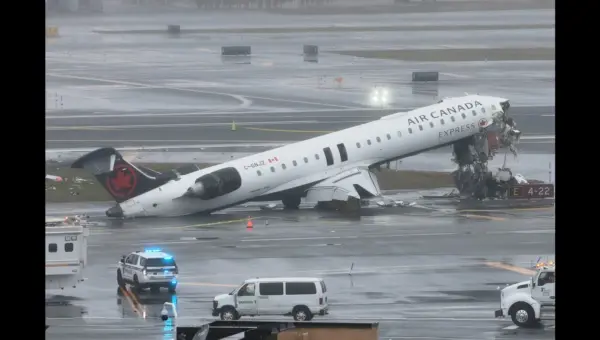
LaGuardia Airport's main runway has reopened after a fatal crash involving an Air Canada Express jet and a fire truck. The incident, which killed two pilots, exposed critical failures in airport safety systems, including ground surveillance and transponder use.

Iran War Talks Ignite, Airport Chaos Deepens
President Trump confirms peace talks with Iran are underway, while US airports face ongoing chaos due to the DHS shutdown. Investigations into a fatal LaGuardia crash reveal systemic safety issues, with experts citing controller fatigue and staffing shortages. Meanwhile, the search for a missing elderly woman continues in harsh desert terrain, highlighting diverse challenges facing the nation.
Air Safety Fears Soar After Deadly Crash
A fatal crash at LaGuardia Airport has triggered a national review of air safety, revealing a pattern of close calls and communication issues at U.S. airports. Investigators are examining technology and staffing, as calls grow for urgent safety upgrades.