November Election: A Call for US Regime Change Amidst Crisis
A prominent political figure calls for 'regime change' in the upcoming November election, citing failures in foreign policy, economic hardship, and domestic safety. This rhetoric highlights a deep dissatisfaction with current leadership and a demand for fundamental shifts in governance.

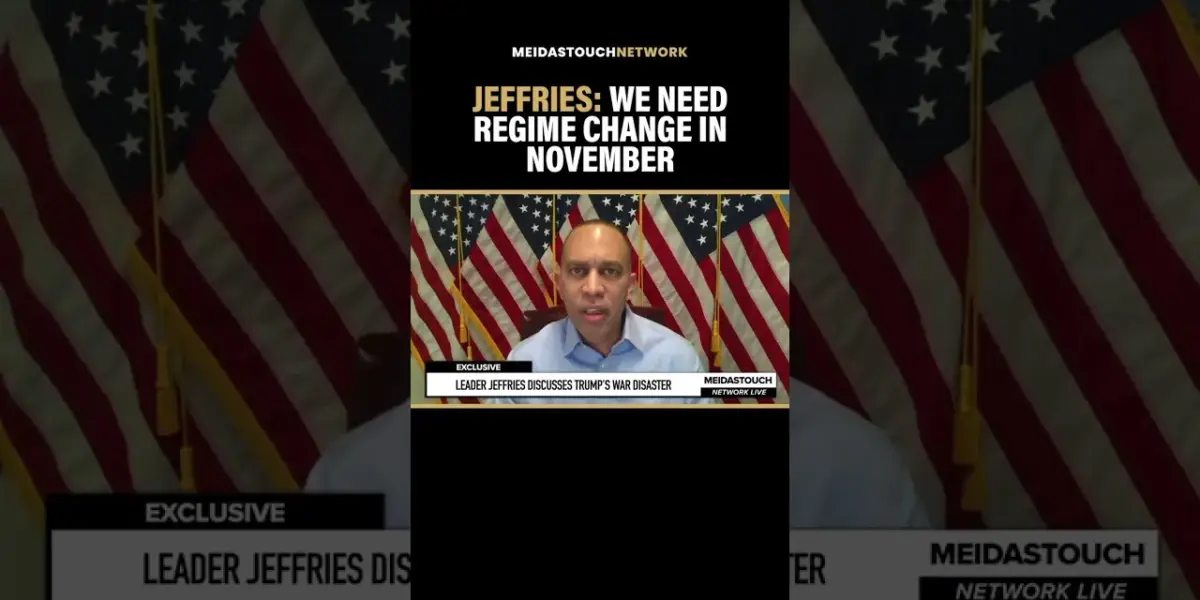
The Unfolding Crisis: A Call for ‘Regime Change’ in November
The political landscape is ablaze with urgent calls for fundamental shifts in American governance, particularly as the nation approaches a pivotal election. One prominent voice, Hakeem Jeffries, has articulated a stark assessment of the current state of affairs, framing the upcoming November election not merely as a contest of candidates, but as a critical juncture demanding ‘regime change.’ This powerful rhetoric stems from a deep-seated dissatisfaction with what is perceived as a failing leadership and a series of detrimental policy outcomes, both domestically and internationally.
Assessing the Current Administration’s Record
The critique leveled against the current political leadership, personified by Donald Trump, is severe and multifaceted. Jeffries contends that Trump has been fundamentally unqualified since his initial emergence on the national scene approximately a decade ago, arguing that his tenure has only exacerbated existing problems. The transcript highlights a series of perceived failures, painting a grim picture of the nation’s trajectory under his influence.
- Foreign Policy Failures: A central tenet of the criticism revolves around foreign policy, particularly the perception of escalating conflicts and mismanaged international relations. The transcript explicitly labels a current war as a ‘failure,’ a ‘war of choice,’ that has already resulted in the loss of American lives and the expenditure of billions of dollars. This is contrasted with a perceived unwillingness to allocate similar resources towards addressing pressing domestic concerns.
- Economic Hardship: The economic well-being of everyday Americans is presented as a casualty of current policies. The transcript points to soaring gas prices and the inability to make healthcare more affordable or reduce grocery bills as direct consequences of leadership failures. The notion that war is prioritized over the economic relief of citizens underscores a significant point of contention.
- Domestic Safety Concerns: The safety and security of the nation’s children are also raised as a critical issue, with the transcript alluding to school children being harmed due to ‘erroneous information.’ While the specifics are not elaborated upon, this suggests a broader concern about the impact of leadership decisions on public safety and trust in information.
- Broken Promises: A particularly sharp point of criticism is directed at the perceived contradiction between campaign rhetoric and actual policy. Trump’s alleged promise not to engage in ‘endless war of choice’ in the Middle East is juxtaposed against the current reality of explosive conflict in the region, framing his leadership as a betrayal of trust and a failure to uphold core commitments.
The Republican Party’s Role
The critique extends beyond a single individual to encompass the broader Republican party. The statement ‘Republicans have been a failure’ suggests a systemic indictment, implying that the party’s collective performance and policy stances have also contributed to the current crisis. This broad brushstroke indicates a belief that the issues at hand are not isolated incidents but rather symptomatic of a larger political malaise.
The Imperative of ‘Regime Change’
The culmination of these criticisms leads to the forceful assertion that ‘regime change’ is necessary. This phrase, often associated with more drastic political upheavals, is employed here to signify a profound and urgent need for a complete overhaul of the current political leadership and its associated policies. The upcoming November election is identified as the vehicle for this necessary transformation. The implication is that incremental changes or a continuation of the status quo will not suffice to address the gravity of the perceived failures.
Why This Matters
The call for ‘regime change’ is not merely political hyperbole; it reflects a deep-seated anxiety about the nation’s direction and its capacity to navigate complex domestic and international challenges. The issues raised—foreign policy missteps, economic strain on households, and perceived threats to domestic well-being—are fundamental concerns that resonate with a broad spectrum of the electorate.
Implications and Future Outlook
If the sentiment expressed in the transcript gains widespread traction, the upcoming election could indeed be a watershed moment. The focus on tangible failures—lost lives, financial burdens, and safety concerns—provides a clear narrative for voters seeking an alternative. The danger, as always in highly polarized political environments, is that such strong rhetoric can further entrench divisions rather than fostering constructive dialogue and problem-solving.
The future outlook hinges on whether this message of urgent need for change can effectively mobilize voters. It challenges the established order and demands accountability. The success of such a call for ‘regime change’ will ultimately be measured by the electoral outcome and the subsequent policies enacted, which will shape the nation’s path for years to come.
Historical Context
The concept of ‘regime change,’ while often associated with international interventions, has a history within domestic political discourse as well. It signifies a desire for a fundamental break from past policies and leadership, often fueled by periods of significant national stress, economic downturns, or perceived moral failings of the incumbent administration. The current rhetoric echoes similar sentiments expressed during past elections where voters sought a decisive shift in direction, driven by a confluence of domestic anxieties and international uncertainties.
The framing of the election as a moment for ‘regime change’ underscores the perceived severity of the current challenges and the belief that only a fundamental shift in leadership can steer the country back on course.
The transcript presents a compelling, albeit one-sided, argument for a drastic electoral intervention. The effectiveness of this message will be tested at the ballot box, but its emergence highlights the profound dissatisfaction and the urgent desire for a different future that many Americans appear to feel.
Source: Jeffries: We Need Regime Change in the U.S. in November (YouTube)

Related Articles

Protesters Challenge Presidential Power, Ignite Debate
Millions are protesting nationwide under the "No Kings" banner, challenging presidential authority and policies they deem unconstitutional. Organizers emphasize First Amendment rights while debating foreign policy, immigration, and the balance of power.
Trump’s “Walk Away” Tactic Signals Tougher Stance on China
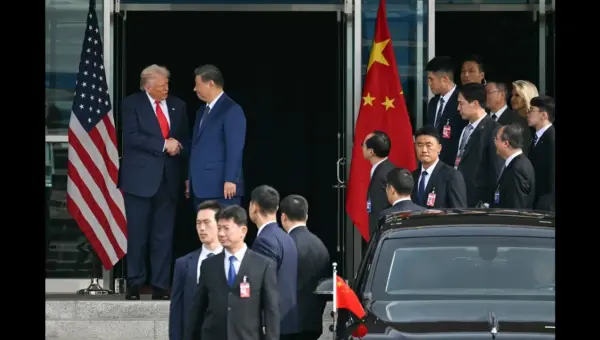
Retired Air Force Brigadier General David Stillwell believes President Trump's strategy of being willing to walk away from negotiations puts pressure on China. This tactic, combined with US global actions and strengthened alliances, signals a more assertive American foreign policy.
Trump’s War Talk Stuns Financial Crowd
Donald Trump's recent speech in Miami focused on his foreign policy, particularly his critical views on NATO and his vision for international relations. He declared the U.S. would no longer defend NATO allies, questioned the value of existing alliances, and suggested renaming the Strait of Hormuz. The speech also touched on his personal views of success, his allies, and his perceived role as a global peacemaker.