North Sea Drilling Debate: Jobs vs. Climate
A debate rages over new North Sea oil and gas fields, pitting economic benefits and jobs against urgent climate action. Labour MP Henry Tuffnel argues for domestic production citing jobs and security, while climate expert Tom Burke calls for a faster shift to renewables. Energy Secretary Ed Milliband faces mounting pressure to decide the fate of the Rosebank and Jack fields.

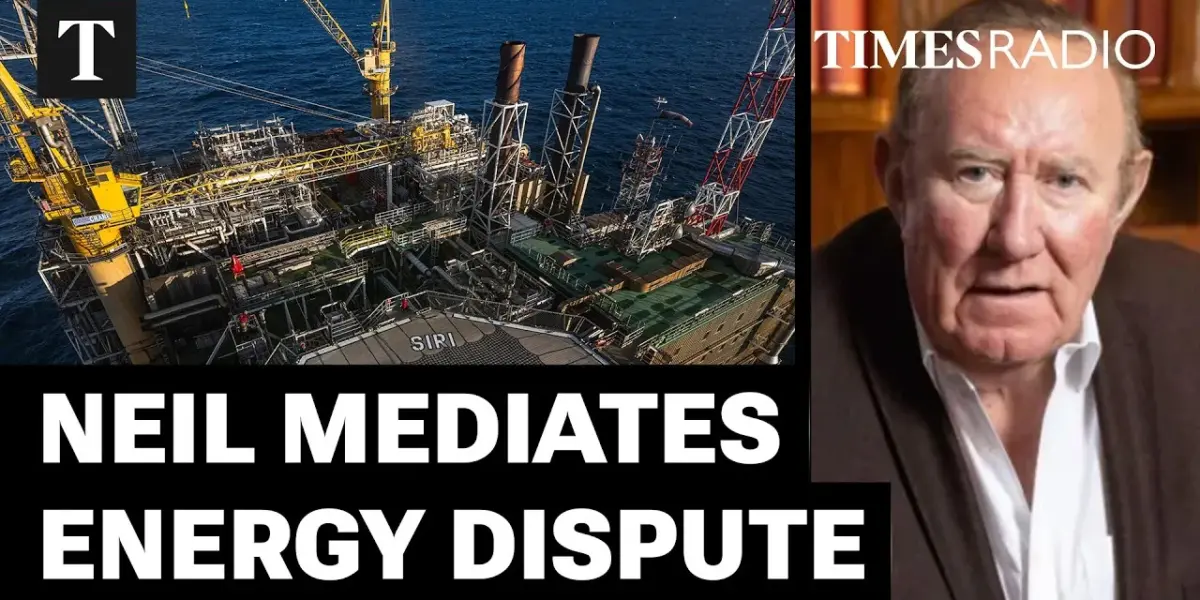
North Sea Drilling Sparks Fierce Debate: Jobs and Economy Versus Climate Concerns
A heated discussion is underway regarding the potential development of new oil and gas fields, Rosebank and Jack, in the North Sea. Energy Secretary Ed Milliband faces growing pressure to give the final go-ahead, which could see these fields producing by autumn. The approval of these fields has become a significant political issue, dividing opinions among key figures and sparking a clash between economic arguments and climate action advocates.
Shifting Political Stances on North Sea Development
The political landscape around North Sea drilling has seen notable shifts. In Scotland, the Labour leader Anna Sarwir has voiced support for the projects. This comes as the Scottish government in Edinburgh, led by the SNP, has also reversed its previous stance. Former First Ministers Nicola Sturgeon and Humza Yousaf, who opposed new developments, have been succeeded by John Swinney, who now favors the fields. Adding to the momentum, Chancellor Rachel Reeves has indicated a willingness to see both fields operational, likely drawn by the prospect of significant tax revenues. However, the ultimate decision rests with Energy Secretary Ed Milliband, who has a history of opposing such projects. He previously labeled Rosebank as “climate vandalism” and was instrumental in the Labour party’s manifesto commitment to halt new North Sea licenses.
The Case for North Sea Oil and Gas: Jobs, Economy, and Security
Labour MP Henry Tuffnel champions the development of these new fields, emphasizing the macroeconomic benefits. He highlighted the importance of jobs and the communities that rely on the oil and gas industry for their livelihoods. “Any transition to renewables has to be a just one, and it’s important that when people think about these opportunities, they remember the jobs,” Tuffnel stated. He also pointed to the potential reduction in the UK’s trade deficit, suggesting that increased domestic oil and gas production could strengthen the pound and help stabilize inflation. The unions, he noted, are also largely in favor of these developments.
“The two key things are the tax receipts and the jobs. But also, I think there’s a balance of payments in respect to the trade argument.” – Henry Tuffnel, Labour MP
Tuffnel argued that continuing to use North Sea resources is a “no-brainer” for the country’s public finances and national interest. He also raised concerns about energy security, particularly in light of global geopolitical instability, such as the war in Ukraine. Relying on foreign regimes for energy, he suggested, carries greater risks than utilizing domestic resources, especially when those regimes may have lower environmental standards.
Climate Expert’s Counterarguments: Limited Resources and Faster Transition
Tom Burke, co-founder of the climate change think tank E3G, strongly disagrees with the push for new North Sea drilling. He urged Tuffnel to critically examine the advice from industry lobbyists, noting that even the industry itself acknowledges that new developments will not prevent the UK from meeting its 2050 target for stopping North Sea oil and gas use. Burke questioned the claimed macroeconomic benefits, suggesting they may not materialize as industry projections indicate.
Burke also addressed the argument that the UK should produce its own oil and gas rather than importing it. He pointed out that the North Sea has already been heavily exploited, with around 90% of its resources already used. “We’ve burnt 90% of what’s there already,” he stated. While acknowledging that some resources remain, such as Rosebank potentially producing 70,000 barrels of oil a day, Burke argued that the focus should be on transitioning away from fossil fuels entirely. He emphasized that gas prices significantly influence electricity bills, which are a major concern for households.
“If you want to do something about climate change, don’t import any gas at all. And the fastest way to do that is to get our own homegrown wind and renewables up.” – Tom Burke, Climate Expert
Burke proposed that the fastest way to address climate change is to accelerate the development of homegrown wind and renewable energy sources. He also highlighted the need to improve energy efficiency, particularly by insulating buildings, which he described as the “leakiest in Europe,” wasting significant amounts of energy.
The Energy Security Dilemma: Domestic vs. Imported Fossil Fuels
A central point of contention is energy security. Tuffnel argued for the pragmatic approach of utilizing domestic resources to ensure a stable energy supply. He questioned why the UK should rely on Norway for gas when it possesses its own North Sea reserves. “Why are we relying on the Norwegians when we can just do it ourselves?” he asked.
Burke countered that the environmental impact of importing liquefied natural gas (LNG) from the United States, a significant source for the UK, carries a substantial carbon footprint. He acknowledged that shipping LNG has a higher emission impact than pipeline gas, but stressed that the fundamental issue is the burning of fossil fuels. He reiterated that the most effective climate action involves rapidly scaling up renewables and improving energy efficiency, rather than developing new fossil fuel extraction projects.
What Lies Ahead: A Decision for Milliband
The debate over the Rosebank and Jack fields highlights a critical juncture for the UK’s energy policy. With significant economic and employment considerations on one side, and urgent climate imperatives on the other, Energy Secretary Ed Milliband faces a challenging decision. The political pressure is mounting, with both pro-drilling and climate-focused factions actively making their case. The outcome will have far-reaching implications for the UK’s energy security, economic future, and its commitment to climate targets. The coming weeks are likely to see further intense lobbying and public debate as the government weighs its options.
Source: North Sea Drilling Sparks Clash Between Labour MP And Climate Expert (YouTube)

Related Articles


Slovak Leader Faces Accusations of Misinformation on Ukraine
Slovak Prime Minister Robert Fico is accused of misrepresenting the economic impact of sanctions against Russia. Critics argue his statements blame Ukraine for the EU's energy policy shift, ignoring Russia's aggression as the root cause. Calls for an independent assessment of energy infrastructure are growing.


UK Economy Needs More Than EU Ties, Experts Say
Experts argue that the UK's economic problems stem from domestic policy, not just Brexit, and closer EU ties won't be a simple fix. While Labour calls for more cooperation, underlying issues like infrastructure and productivity need addressing.


Climate Agenda Pushed Amidst War, Analyst Claims
A climate commentator claims activists are exploiting global crises to push a net-zero agenda, viewing high energy prices as a desired outcome. He argues that groups are using fear tactics and seeking to restructure economies, similar to COVID-19 responses. The discussion also noted Germany's admission about past nuclear policy decisions.