Noem’s ‘Domestic Terrorist’ Claim: A Calculated Spin?
South Dakota Governor Kristi Noem denies calling Alex Prewitt a "domestic terrorist," yet provides a definition that strongly fits his alleged actions. This exchange highlights the strategic use of language in political discourse and the implications of applying charged labels.

Noem’s ‘Domestic Terrorist’ Claim: A Calculated Spin?
The political landscape is often a battleground of narratives, where words carry immense weight and the framing of events can dramatically alter public perception. In a recent exchange, South Dakota Governor Kristi Noem found herself at the center of a debate regarding her characterization of an individual’s actions, specifically concerning the term “domestic terrorist.” The core of the controversy lies in whether Noem directly labeled an individual, Alex Prewitt, as such, and the justification for using such a potent designation.
The Accusation and the Denial
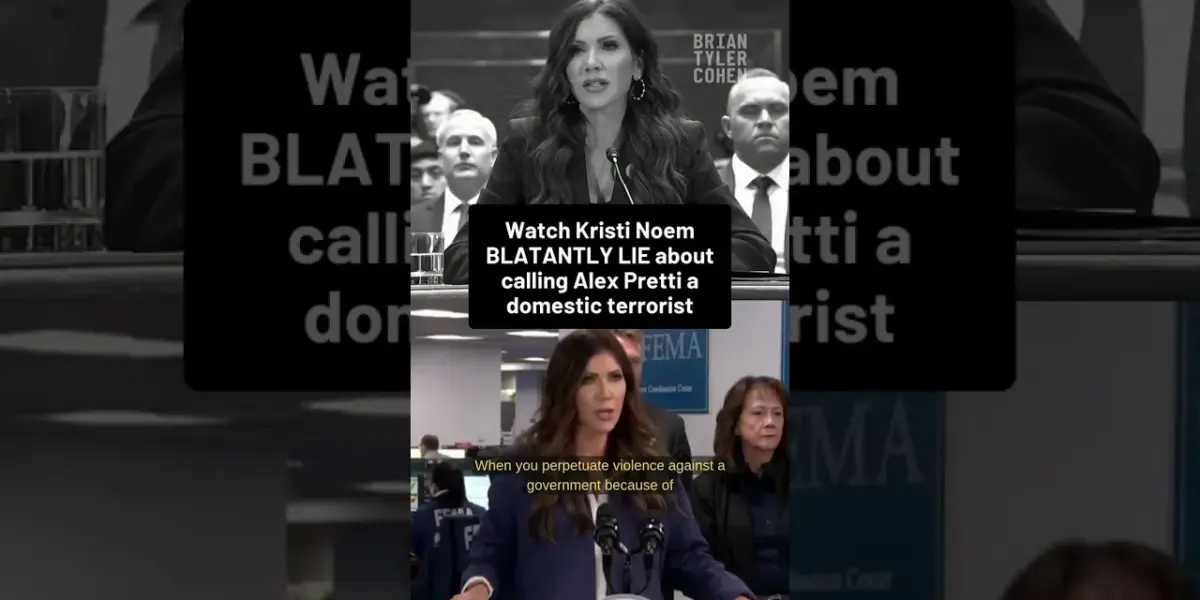
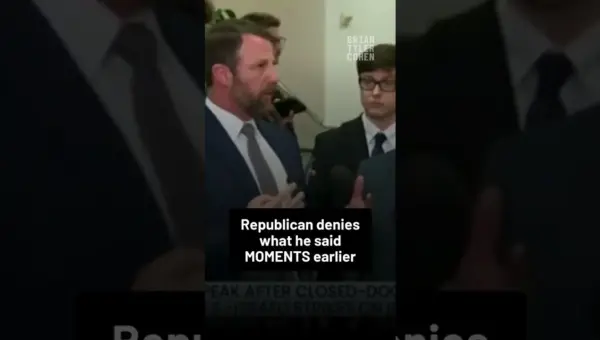
The transcript presents a direct confrontation on this issue. When pressed about “specifically calling them domestic terrorists without any evidence of that,” Governor Noem’s response was a firm denial: “Sir, I ma’am, I did not call him a domestic terrorist.” This statement, on its face, appears to be a clear refutation of the accusation.
However, the context provided immediately following Noem’s denial offers a different perspective. The individual questioning Noem then proceeds to lay out a definition and a justification for labeling the described actions as domestic terrorism. This definition includes actions such as “perpetuat[ing] violence against a government because of ideological reasons and for reasons to resist and perpetuate violence.” Crucially, the definition is then explicitly applied to the individual in question: “This individual who came with weapons and ammunition to stop a law enforcement operation of federal law enforcement officers committed an act of domestic terrorism. That’s the facts.”
Deconstructing the Definition
The definition of domestic terrorism itself is a critical element in understanding this exchange. While Noem denies directly labeling the individual, the subsequent explanation strongly suggests that her office or allies may have implicitly or explicitly framed the event in this manner. The provided definition aligns with common understandings of domestic terrorism, which often involves acts of violence or intimidation against a civilian population or government, driven by political or ideological motivations.
The act described – bringing weapons and ammunition to interfere with a law enforcement operation – certainly possesses characteristics that could be interpreted as fitting this definition. The key elements are the use of force or threat of force, the targeting of a government operation, and the underlying ideological motivation, which is often implied in such scenarios, particularly when they involve resistance to federal authority.
The Nuance of Language in Politics
This situation highlights a common tactic in political discourse: the careful selection and application of terminology. By denying a direct label while simultaneously providing a strong justification for it, a politician can create a degree of plausible deniability while still imprinting the desired narrative onto the public consciousness. The argument becomes that the *actions* fit the definition, even if the politician didn’t utter the precise words in a direct accusation.
This approach can be seen as a strategic maneuver to condemn the actions without fully owning the potentially inflammatory label. It allows for the condemnation of the individual’s behavior in the strongest possible terms, aligning with a law-and-order stance, while avoiding the direct political fallout that might accompany labeling a specific person as a “domestic terrorist” without extensive legal due process or universally accepted evidence.
Historical Context of ‘Domestic Terrorism’
The term “domestic terrorism” gained significant traction in the United States following the Oklahoma City bombing in 1995. Prior to that, while acts of politically motivated violence occurred, the specific categorization and focus on domestic threats were less pronounced in public discourse and policy. Post-Oklahoma City, and especially following 9/11, the distinction between international and domestic terrorism became more defined, with increased attention paid to threats originating from within the country’s borders.
The use of this label has always been politically charged. It is often applied to individuals or groups whose actions are perceived as a direct threat to the stability of the nation or its governmental institutions. The challenge, as seen in this instance, is often in the precise application of the term. While the actions might be undeniably violent or disruptive, the classification as “domestic terrorism” can sometimes be debated, particularly when it involves perceived ideological justifications or when the perpetrator is not affiliated with a widely recognized extremist group.
Why This Matters
The implications of how such events are framed are significant. Labeling actions as “domestic terrorism” carries a heavy connotation, suggesting a threat to the very fabric of the nation. For politicians, using such terms can be a powerful tool to rally support, demonize opponents, or justify certain policies. However, it also carries risks. Misapplication or overly broad use of the term can lead to the erosion of civil liberties, the stigmatization of legitimate protest, and the polarization of society.
In this specific case, the debate over Noem’s words is not just about semantics; it’s about the power of language to shape public opinion and potentially influence legal or policy responses. It raises questions about the threshold for applying such a severe label and the responsibility of public officials to ensure accuracy and avoid inflammatory rhetoric, even when condemning reprehensible actions.
Implications, Trends, and Future Outlook
The trend in contemporary political discourse has seen an increasing willingness to employ strong, often polarizing language. Terms like “socialist,” “fascist,” and indeed, “domestic terrorist,” are often used not just descriptively but as weapons in political battles. This particular incident with Governor Noem fits into this broader trend of heightened rhetorical intensity.
The future outlook suggests that this pattern is likely to continue. As political divisions deepen, the temptation to use charged language to mobilize bases and demonize opposition will remain strong. The challenge for journalists, analysts, and the public will be to discern between legitimate condemnation of actions and politically motivated labeling. The line between describing an act and labeling an individual or group can become blurred, and it is in this grey area that much of the political maneuvering occurs.
Furthermore, the focus on domestic threats, including those that might be labeled as domestic terrorism, is likely to remain a significant concern for national security. The debate over how to define, identify, and combat these threats will continue, and the language used by political leaders will play a crucial role in shaping public understanding and policy responses. The Governor’s careful dance around the direct use of the term, while providing ample justification for it, is a case study in the strategic deployment of language in the modern political arena.
Source: Watch Kristi Noem BLATANTLY LIE about calling Alex Pretti a domestic terrorist (YouTube)

Related Articles

Noem Faces Scrutiny Over ‘Domestic Terrorist’ Label, DHS Spending
Homeland Security Secretary Kristi Noem faced sharp questioning from senators regarding her department's shutdown and her initial labeling of individuals as 'domestic terrorists.' Lawmakers also scrutinized a proposed $70 million jet purchase for travel and deportations amid leadership concerns.

Trump’s ‘Bargaining Chip’ Remark Sparks Outrage Among Service Members
Donald Trump's recent remarks on US casualties in Iran have sparked outrage, with critics accusing him of viewing service members' lives as mere "bargaining chips." The comments highlight a perceived transactional approach to foreign policy that clashes with traditional expectations of respect for military sacrifice.
GOP Strategist Contradicts Himself on ‘War’ Rhetoric
A Republican strategist's contradictory statements about whether the current situation constitutes 'war' highlight the careful and often shifting use of political language. The exchange reveals the strategic importance of defining conflict without necessarily formal declarations.