Noem’s Dog Killing: A Crisis of Leadership and Morality
South Dakota Governor Kristi Noem faces intense scrutiny after detailing the killing of her dog in her memoir. Critics, including a Republican Senator, argue the act reveals a profound leadership failure and questionable moral judgment, sparking a national debate on accountability and animal welfare.

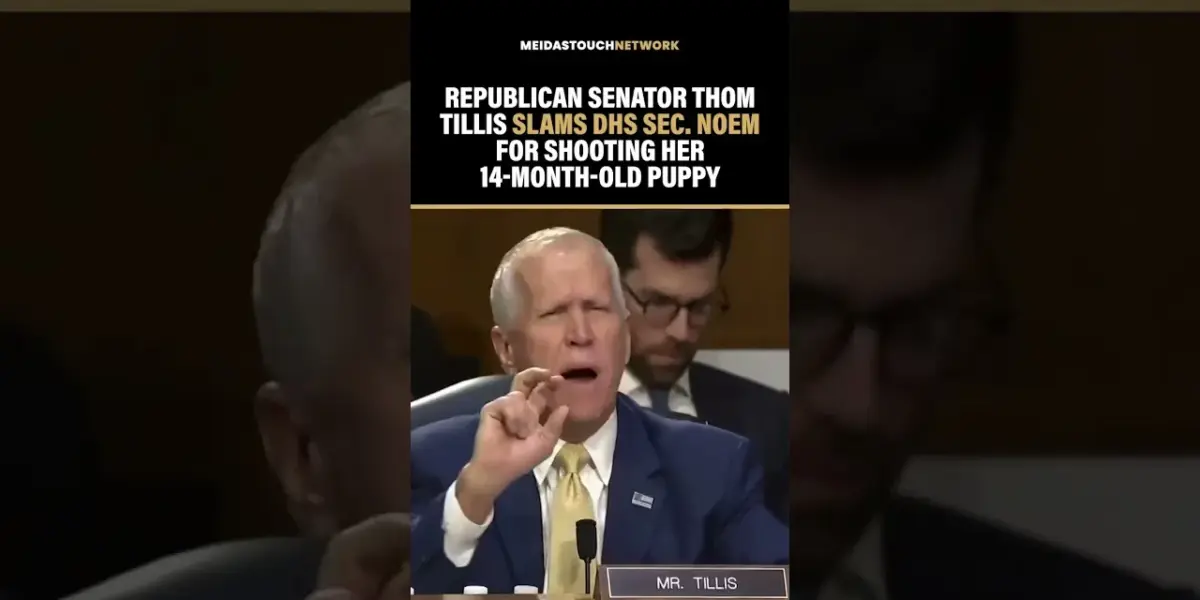
Noem’s Controversial Canine Decision Sparks National Outrage
South Dakota Governor Kristi Noem has ignited a firestorm of controversy following revelations from her memoir, “No Going Back,” detailing the killing of her 14-month-old dog, Cricket. The incident, described by Noem as a necessary act due to the dog’s “terrible behavior,” has drawn sharp criticism from various quarters, most notably from a Republican Senator during a recent hearing. The Senator’s pointed questioning highlights a stark divide in perceptions of Noem’s actions, framing them not as a farmer’s difficult but practical decision, but as a profound leadership failure and a moral misstep.
The Incident and Its Public Reckoning
The crux of the controversy lies in Noem’s own account of killing Cricket, a dog she describes as having a “}[“terrible behavior”]. The Senator, who claims to be a dog trainer, argued that a 14-month-old dog is akin to a “teenager” and that its perceived misbehavior was a consequence of insufficient training, a responsibility that falls squarely on the owner. “You decided to kill that dog because you had not invested the appropriate time in training,” the Senator stated, directly challenging Noem’s narrative. Furthermore, the Senator pointed to another instance in the same lunch hour where Noem killed a goat for “behaving badly,” suggesting a pattern of rash decisions made under duress.
The Senator asserted that these were “bad decisions made in the heat of the moment,” drawing a parallel to Noem’s response to a recent emergency in North Carolina and across the Southeast.
The Senator’s critique extended beyond the specific incident, questioning Noem’s broader leadership. “I expect we’re an exceptional nation. And one of the reasons we’re exceptional is we expect exceptional leadership and you’ve demonstrated anything but that,” the Senator declared. This statement suggests that Noem’s actions, as perceived by the Senator, reflect a deficiency in judgment and character that disqualifies her from embodying the exceptional leadership expected of national figures.
A Farmer’s Duty vs. A Leader’s Responsibility
The debate over Noem’s actions is multifaceted, touching upon the traditional roles of farmers, the ethics of animal treatment, and the expectations placed upon public figures. As a farmer, Noem operates within an agricultural context where difficult decisions regarding livestock are sometimes unavoidable for practical or economic reasons. However, the Senator’s argument emphasizes that even within this context, the specific circumstances surrounding Cricket’s death – a young dog with perceived behavioral issues stemming from a lack of training – represent a failure of responsible pet ownership and, by extension, a failure of leadership.
The Senator’s questioning also probed the framing of these events in Noem’s book. The inclusion of the dog’s killing as a “leadership lesson about tough choices” was particularly galling to the Senator, who viewed it as an attempt to reframe a personal failing as a strategic demonstration of fortitude. The implication is that Noem is not only making poor decisions but is also attempting to legitimize them through a narrative of strength, a move the Senator clearly found “audacious.”
Historical Context and Societal Expectations
The public’s reaction to the incident is also shaped by evolving societal attitudes towards animal welfare. In contemporary society, pets are increasingly viewed as family members, and the casual or punitive killing of an animal, especially one described as young and trainable, is often met with strong emotional and ethical opposition. This sentiment is amplified when the individual involved is a prominent public figure, whose actions are subject to greater scrutiny and held to a higher standard.
Historically, the relationship between humans and animals, particularly in agricultural settings, has been one of utility. However, modern ethical frameworks and widespread adoption of companion animals have led to a re-evaluation of these relationships. The Senator’s stance reflects this shift, prioritizing a nuanced understanding of animal behavior and responsible ownership over a purely utilitarian or disciplinary approach.
Why This Matters
The controversy surrounding Governor Noem’s dog killing is more than just a sensational news story; it is a lens through which to examine the nature of leadership, accountability, and public perception. It forces a conversation about the ethical responsibilities that come with power and visibility. When a leader’s personal conduct, particularly concerning the treatment of animals, is called into question, it raises fundamental concerns about their judgment, empathy, and fitness for office.
The incident underscores the importance of authenticity and transparency in public life. Noem’s decision to include the story in her memoir, and her subsequent defense of it as a leadership lesson, has opened her up to criticism that she lacks self-awareness or is attempting to manipulate public opinion. In an era of constant social media scrutiny, leaders are expected to be more judicious in their actions and their pronouncements, and to demonstrate genuine remorse and accountability when mistakes are made.
Implications, Trends, and Future Outlook
The fallout from this incident could have significant implications for Noem’s political future, potentially impacting her standing with voters and her aspirations for higher office. It has already become a talking point for her political opponents and a source of intense debate among the public. The trend towards greater public scrutiny of the personal lives and ethical conduct of politicians is likely to continue, making such incidents increasingly consequential.
Moving forward, this event highlights the growing sensitivity around animal welfare issues. Politicians and public figures may need to exercise greater caution and demonstrate a deeper understanding of ethical animal treatment to avoid similar public backlash. The incident serves as a cautionary tale about the power of personal narratives and the unforgiving nature of public opinion in the digital age. The Senator’s direct confrontation, culminating in a demand for answers to a request related to “Charlotte’s Web,” signifies a broader desire for genuine engagement and accountability, moving beyond superficial social media responses to substantive issues of character and decision-making.
Source: Republican Senator TAKES DOWN NOEM over Dog Killing (YouTube)

Related Articles
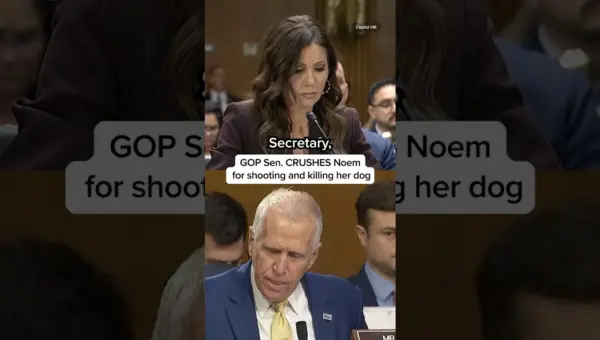
Senator Tillis Condemns Governor Noem’s Dog Shooting Admission
Senator Thom Tillis strongly condemned South Dakota Governor Kristi Noem's admission of shooting and killing her dog, Cricket. Tillis called the act a "bad decision" and questioned the notion of teaching leadership through cruelty during a Senate hearing. Noem had stated the dog was aggressive and that the act was a "tough choice" to impart a leadership lesson.


Noem’s $220M Ads: A Political Power Play or Wasteful Spending?
A GOP Senator grilled Governor Kristi Noem over $220 million spent on television ads featuring her prominently. The exchange raises questions about government waste, political self-promotion, and the procurement process for such massive campaigns.

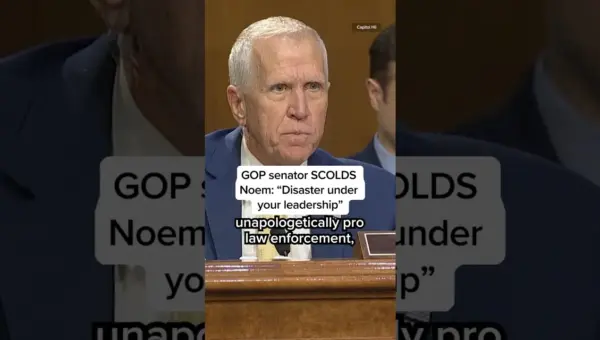
GOP Senator Blasts Kristi Noem: ‘Disaster Under Your Leadership’
Senator Thom Tillis (R-N.C.) has sharply criticized Homeland Security Secretary Kristi Noem, calling the department "a disaster under your leadership" and demanding her resignation. The remarks highlight growing Republican dissatisfaction with border security measures.