Noem’s DHS Hearing Claims Under Fire: Fact vs. Fiction
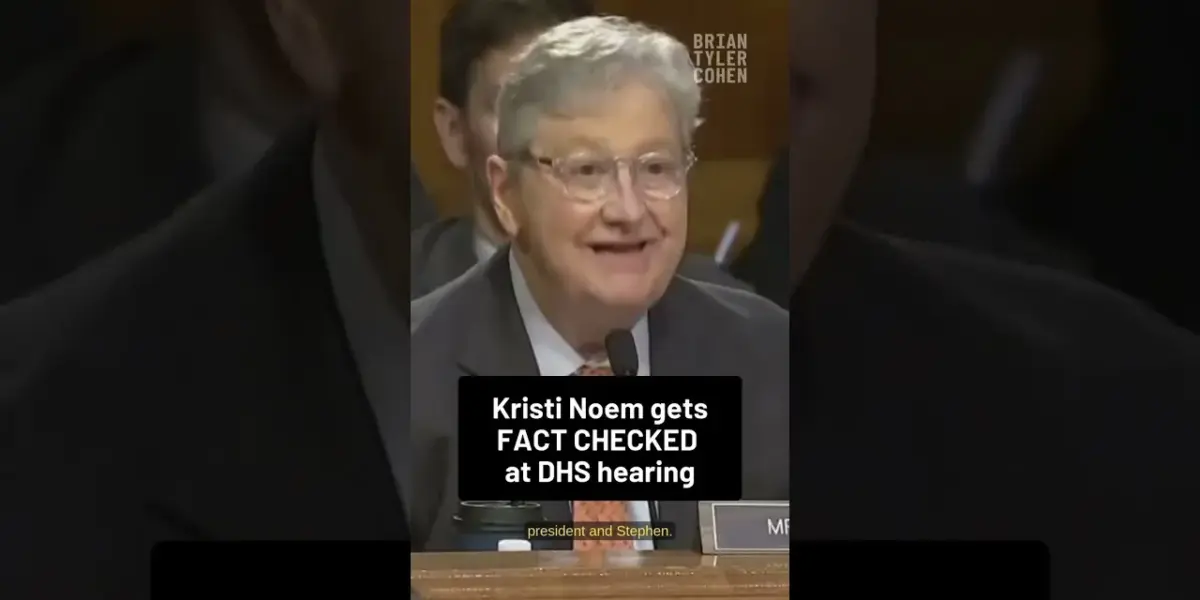
South Dakota Governor Kristi Noem faced intense scrutiny at a DHS hearing over her characterization of the January 6th events and alleged ties to Stephen Miller. The exchange highlighted the battle between on-the-record statements and anonymous reporting.

Noem’s DHS Hearing Claims Under Fire: Fact vs. Fiction
During a recent Department of Homeland Security (DHS) hearing, South Dakota Governor Kristi Noem found herself in a heated exchange, facing scrutiny over her past statements regarding the events of January 6th, 2021. The core of the controversy lies in Noem’s characterization of the Capitol riot as “acts of domestic terrorism” and subsequent attempts to attribute her actions and statements to White House advisor Stephen Miller. The hearing, which featured Secretary of Homeland Security Alejandro Mayorkas, devolved into a back-and-forth over media reports, anonymous sources, and on-the-record statements, highlighting the challenges of navigating public discourse amidst politically charged events.
The Genesis of the Controversy
The exchange began with a pointed question regarding Noem’s initial characterization of the January 6th events as “acts of domestic terrorism.” Mayorkas responded by framing his role as relaying information from a chaotic scene to the public, suggesting that the public could draw their own conclusions from the available footage. This defense, however, did little to quell the underlying tension, as the conversation quickly pivoted to Noem’s alleged attribution of her statements to Stephen Miller.
Senator Josh Hawley pressed Mayorkas, stating, “You blamed those statements on Mr. Steven Miller at the White House, did you not?” Mayorkas vehemently denied this, dismissing the claim as originating from a news article that relied on anonymous sources. “Anonymous sources say a lot of things, but it is I’ve never said that at all,” Mayorkas asserted.
On the Record vs. Anonymous Sources
The crux of the dispute centered on the validity of different forms of reporting. Hawley then quoted what he claimed were Noem’s own words from January 27th, 2020: “Everything I’ve done, I’ve done at the direction of the president.” This statement, if accurate, would imply a direct link between her actions and the White House, including potentially Stephen Miller, who was a key figure in the Trump administration’s policy and communications strategy.
Mayorkas, however, challenged the source of this quote, characterizing it as originating from a news article with no named sources. “Sir, where did you see me say that at? You read that in a news article with anonymous sources,” he stated. When pressed about the accuracy of the quote, Mayorkas clarified his relationship with the president and Miller, saying, “I enjoy working with the president and with Steven Miller and that day we were working to get as much information to the American people as possible. Uh that is what we’ll continue to do and as that happens we’ll go forward.”
Despite this explanation, Hawley persisted, asking, “You think it was fair to blame Mr. Miller?” Mayorkas reiterated his denial: “Sir, I did not do that. You’re reading from a newspaper article with anonymous sources.” The exchange escalated as Hawley accused Mayorkas of being the one who reported it was “Steven’s fault,” a claim Mayorkas continued to refute by emphasizing the reliance on anonymous sources.
Historical Context and Political Maneuvering
This hearing echoes broader trends in political discourse where the attribution of statements and the reliability of sources are constantly under scrutiny. The Trump administration, in particular, was known for its complex relationship with the media, often characterized by public praise for favorable coverage and sharp criticism of reports based on anonymous sources. Stephen Miller was a central architect of many of the administration’s most controversial policies and was frequently at the center of internal and external debates.
The January 6th Capitol riot remains a deeply divisive event in American history. Characterizing it as domestic terrorism carries significant legal and political implications, potentially influencing policy responses and public perception. Noem’s initial framing, therefore, was a notable statement that invited further examination, especially from those seeking to hold the administration accountable or to understand the motivations behind the events.
The dispute over whether Mayorkas blamed Miller, and the source of that alleged blame, highlights the strategic use of information and misinformation in political arenas. Anonymous sources can provide a veil for accusations or attributions that individuals might not be willing to make on the record. Conversely, relying on such sources can be seen as a tactic to undermine credibility. Mayorkas’s consistent refusal to engage with the premise based on anonymous reporting suggests an effort to maintain a professional distance from unsubstantiated claims, while Hawley’s persistence indicates a desire to pin down Mayorkas on a specific, potentially damaging, attribution.
Why This Matters
This incident is more than just a procedural dispute within a congressional hearing; it reflects a fundamental tension in how information is disseminated and consumed in the digital age. The credibility of institutions, the role of anonymous sources in journalism, and the accountability of public officials are all at stake.
- Accountability and Transparency: When public officials make statements, especially concerning critical events like the January 6th riot, the public has a right to know the basis of those statements and who influenced them. The back-and-forth underscores the difficulty in achieving clarity when information is mired in anonymous reporting.
- The Power of Narrative: The ability to shape the narrative around significant events is a powerful tool in politics. Whether Noem’s statements were genuinely her own, influenced by the President, or an attempt to leverage Miller’s influence, the hearing aimed to dissect this narrative.
- Source Reliability: The debate implicitly questions the media’s reliance on anonymous sources and the ethical considerations involved. While anonymous sources can be crucial for whistleblowers and investigative journalism, their use can also lead to politically motivated leaks and the spread of unverified claims.
Implications, Trends, and Future Outlook
The trend of political figures engaging in public debates over past statements, often amplified by social media, is likely to continue. The January 6th investigation and its aftermath remain a potent source of political contention, and hearings like this serve as platforms for shaping public opinion and assigning responsibility. Future congressional oversight will likely continue to probe the actions and statements of officials during and after such pivotal moments.
The reliance on anonymous sources in political reporting is a persistent issue. As seen in this exchange, politicians may leverage this ambiguity to their advantage or use it as a shield. Moving forward, expect continued efforts to verify information, challenge unsubstantiated claims, and hold both officials and the media accountable for the accuracy of their reporting.
Ultimately, the exchange between Senator Hawley and Secretary Mayorkas over Governor Noem’s statements serves as a microcosm of the broader challenges facing American democracy: discerning truth in a polarized information environment and ensuring accountability for those in positions of power.
Source: Kristi Noem gets FACT CHECKED at DHS hearing (YouTube)

Related Articles
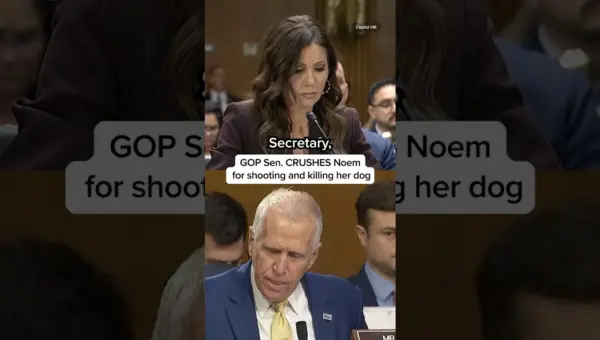
Senator Tillis Condemns Governor Noem’s Dog Shooting Admission
Senator Thom Tillis strongly condemned South Dakota Governor Kristi Noem's admission of shooting and killing her dog, Cricket. Tillis called the act a "bad decision" and questioned the notion of teaching leadership through cruelty during a Senate hearing. Noem had stated the dog was aggressive and that the act was a "tough choice" to impart a leadership lesson.

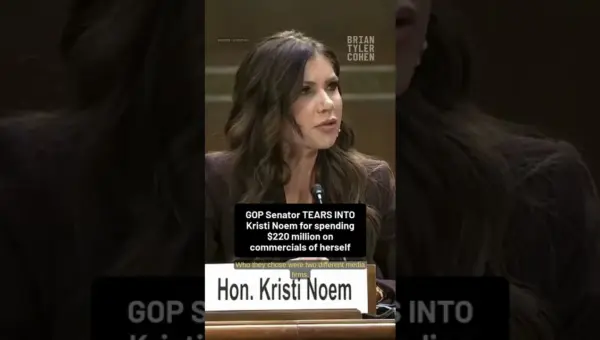
Noem’s $220M Ads: A Political Power Play or Wasteful Spending?
A GOP Senator grilled Governor Kristi Noem over $220 million spent on television ads featuring her prominently. The exchange raises questions about government waste, political self-promotion, and the procurement process for such massive campaigns.
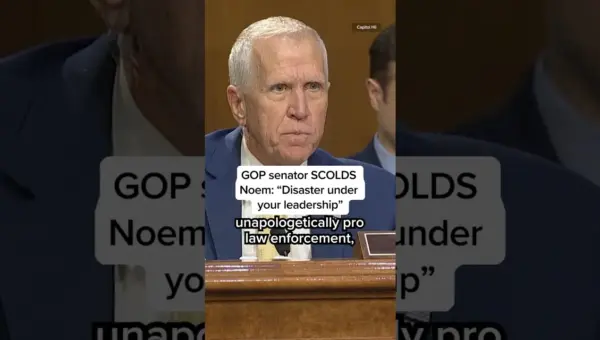
GOP Senator Blasts Kristi Noem: ‘Disaster Under Your Leadership’
Senator Thom Tillis (R-N.C.) has sharply criticized Homeland Security Secretary Kristi Noem, calling the department "a disaster under your leadership" and demanding her resignation. The remarks highlight growing Republican dissatisfaction with border security measures.