Nigeria’s President Visits UK Amid Homegrown Instability
Nigerian President Bola Ahmed Tinubu is in the UK for a state visit, his first in 37 years, amid escalating security crises at home. The visit focuses on economic ties, including a £746 million port upgrade deal, while Nigeria grapples with Islamist insurgencies and farmer-herder conflicts.

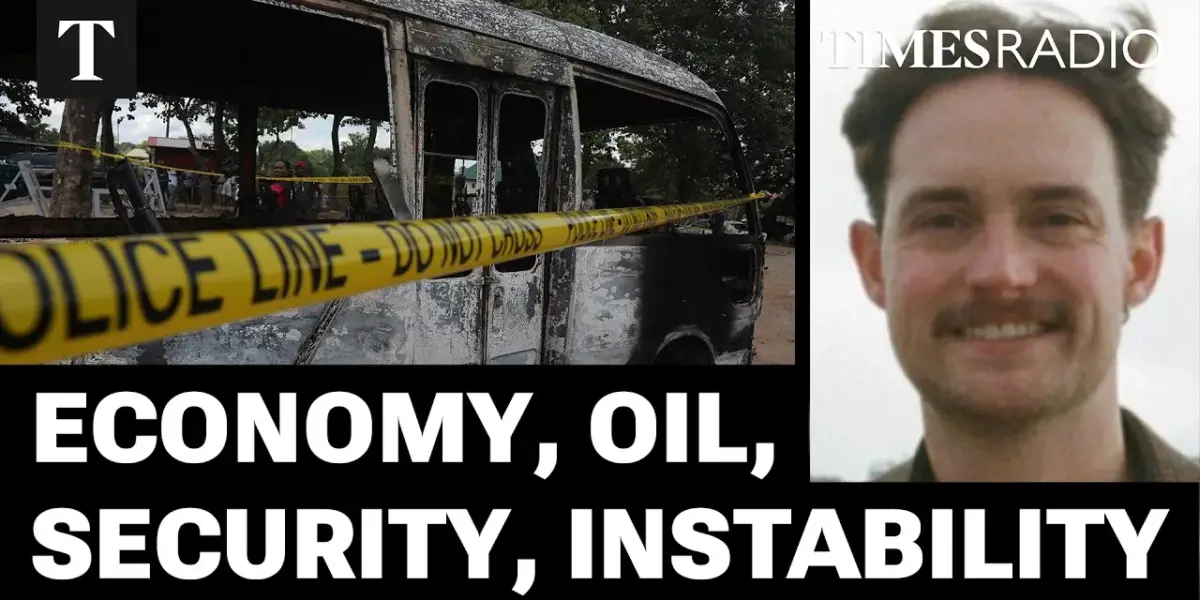
Nigeria’s President Visits UK Amid Homegrown Instability
Nigerian President Bola Ahmed Tinubu arrived in Britain for a two-day state visit, the first by a Nigerian leader in 37 years. The visit, which began with his touchdown in Stansted last night, highlights the significant diplomatic and economic ties between the UK and its former colony. While President Tinubu and the First Lady were welcomed at Windsor Castle by the King and Queen, the visit occurs as Nigeria grapples with severe internal challenges, including a persistent Islamist insurgency and widespread banditry, leading many to believe the government has lost control.
Economic Ties and Security Discussions
The state visit, the first since 1989, is expected to solidify the relationship between the two nations. A key outcome anticipated from the bilateral meetings is the signing of a 746 million pound financing agreement. This funding is earmarked for the crucial upgrade of two major ports in Lagos, which are vital for UK-Nigeria trade, a partnership currently valued at approximately 8 billion pounds annually. Beyond economic cooperation, discussions are also slated to cover cultural industries, particularly Nigeria’s vibrant Nollywood film industry, and security matters. There is also potential for dialogue on religious issues, given recent events involving Anglican church leaders in Nigeria seeking distance from the Church of England.
Nigeria’s Role in Global Energy Markets
Nigeria, a leading oil producer and refiner in Africa, is positioned as a critical energy partner for the UK. With Africa’s largest refinery located within its borders, Nigeria’s stable hydrocarbon output is particularly valuable amidst global energy market volatility. The UK already imports a significant amount of crude and refined products from Nigeria. Given the current geopolitical situation in the Gulf, it is likely that both nations will seek to strengthen these energy ties. Nigeria, for its part, may view itself as a bastion of stability in an uncertain global oil market, though it may not rush into new supply agreements during this period of flux.
Deepening Security Crises at Home
Despite its economic importance and diplomatic engagements, Nigeria faces a complex and worsening security situation. The country is officially under a state of emergency, reflecting the severity of the challenges. In the northeast, a deeply entrenched Islamist insurgency continues, spearheaded by Boko Haram and an expanding threat from the Islamic State’s West Africa Province. This region recently saw peace shattered by suicide bombings in Maiduguri, which killed at least 23 people.
North Central Nigeria: A Hotspot of Conflict
Perhaps the most difficult and troubling conflict zone is North Central Nigeria. Here, long-standing tensions between predominantly Christian farming communities and mostly Muslim herders have escalated dramatically. Driven south by climate change and insecurity elsewhere, herders, often from the Fulani ethnic group, are moving vast herds of cattle into states like Plateau and Benue. These movements frequently lead to clashes with Christian farmers, resulting in escalating violence. The Fulani herders are often well-armed, benefiting from a large black market for weapons in the Lake Chad Basin, while farming communities are largely unarmed. These conflicts, involving cattle rustling and retaliatory attacks, have claimed thousands of lives in recent years.
International Attention on Internal Conflicts
The severity of the violence in North Central Nigeria has drawn international attention. Reports have highlighted harrowing accounts of once-harmonious neighbors turning against each other. The conflict here is characterized by intercomunal violence rather than direct engagement with formal Islamist militant groups, though violence against Christians is also a significant issue in the northwest and northeast. This complex security landscape has even prompted strong statements from international figures, with former US President Trump referring to the situation as a form of ‘Christian genocide,’ a claim that, while highlighting the religious dimension of the conflict, underscores the complicated nature of the violence across the country.
Looking Ahead
President Tinubu’s visit to the UK offers an opportunity to secure vital economic support and discuss security cooperation. However, the success of these diplomatic efforts will ultimately be measured against Nigeria’s ability to address the deep-seated internal conflicts that continue to destabilize the nation. All eyes will be on whether the agreements made in London can translate into tangible improvements in security and stability for the Nigerian people.
Source: Nigerian President Visits UK While Country Faces Insurgency And Instability At Home | Jack Denton (YouTube)

Related Articles


Inslee Slams Trump on Economy Amidst Rising Gas Prices
Former Washington Governor Jay Inslee strongly criticized former President Donald Trump's economic policies and his response to rising gas prices. Inslee slammed Trump as 'out of touch with reality' amidst market turmoil and the closure of the Strait of Hormuz. He also warned of potential legislative efforts to shield the oil and gas industry from climate change accountability.


Satellites May Pollute Earth’s Atmosphere, Harm Ozone
Earth's atmosphere may face a new threat from the growing number of satellites burning up upon re-entry. Scientists warn that the resulting particles could deplete the ozone layer and impact climate, urging for greater research and regulation.
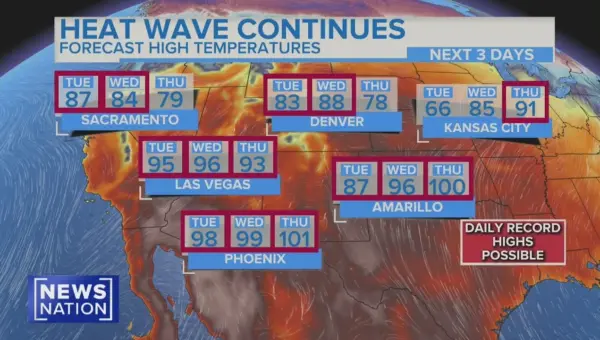
Heat Dome Scorches 14 States, Shatters Records Early
A powerful heat dome is causing record-breaking temperatures across 14 states, pushing summer-like heat into early spring. Meanwhile, Hawaii faces severe flooding due to interconnected weather systems. These extreme events highlight growing concerns about climate change.