NHS Masters Strike Management, But Patient Care Still Suffers
The NHS has developed a strong capacity to manage strike actions, leading to surprisingly efficient operations during industrial disputes. However, this adaptation comes at a cost, with patient care still significantly disrupted and staff morale suffering under immense pressure.

NHS Adapts to Frequent Strikes, But Patient Impact Remains
The National Health Service (NHS) has become remarkably adept at managing and coping with frequent strike actions, a situation that paradoxically allows for smoother operations during walkouts but still carries significant negative consequences for patients. This adaptation has emerged as junior doctors prepare for further industrial action, with senior doctors now also considering strikes.
Government Ultimatum on Doctor Strikes
Prime Minister Rishi Sunak has issued a stark warning to the British Medical Association (BMA), giving them 48 hours to call off the planned six-day junior doctor strike, scheduled from April 7th to April 13th. Failure to do so, he stated, would result in the withdrawal of an offer that could create thousands of additional NHS training positions. Despite this ultimatum, the BMA’s resident doctor committee has not wavered, and a ballot for senior doctors on potential strike action is now underway.
BMA Explains Rejection of Pay Offer
Jag Fletcher, chair of the BMA resident doctor’s committee, explained that the government and media seemed surprised by the rejection of their pay offer. “We had a 65% turnout and 83% of residents reject it,” Fletcher stated, emphasizing that the offer was not put to members because it was not considered a good deal on pay. He had previously communicated this to the Health Secretary, highlighting the disconnect between the government’s perception and the doctors’ reality.
NHS Providers Acknowledge Pressures, But Focus on Solutions
Rory Dason, representing NHS Providers, acknowledged the difficult environment doctors are working in. “I think that many hospital leaders recognize the position that resident doctors and consultants are in at the moment,” he said. Dason pointed to the immense pressure and stringent targets within the NHS, coupled with rising inflation, which can make pay offers seem less appealing over time. However, he stressed that hospital leaders are eager to focus on reducing waiting lists, improving emergency care, and transforming the NHS. While recognizing the legitimacy of doctors’ concerns about training conditions, Dason stated that there is a general consensus that the government’s offer on pay is final due to financial constraints.
“The government have been really really clear that there is no more money and we are operating in a constrained financial environment and in that environment pay is not something that’s going to change.”
Rory Dason, NHS Providers
Potential Impact on Training Places
The government’s threat to withdraw the offer of 4,000 new specialty training places is seen by some as counterproductive, given the ongoing need for more doctors and specialists. Dason explained that each training place represents a significant investment. He noted a recent shift towards more constructive discussions with the government over the past few months, suggesting the Prime Minister’s frustration might stem from negotiations not yielding fruit after a 12-week period.
Strikes Create Operational Efficiency, But Harm Patients
Ironically, the NHS’s ability to manage strikes has led to some unexpected operational improvements. During recent strikes, consultants stepped in to manage emergency departments, leading to higher patient discharge rates. “Actually, we’ve probably had the best winter that we’ve had for about four or five years,” Dason observed, attributing some of this success to consultants overseeing hospital operations.
However, he was quick to emphasize that the primary negative impact of strikes is always on patients. While the NHS has become better at rescheduling appointments, with around 95% of appointments kept during the last strike, cancellations are inevitable. Dason also highlighted the often-overlooked disruption caused by the periods leading up to and following strikes, where normal operations must be restored, and staff may need to take leave.
Worrying Trend Towards Perennial Strike Action
The NHS’s growing proficiency in handling strikes, while seemingly a sign of resilience, also raises concerns about a potential future of continuous industrial action. The discontent is not limited to junior doctors, as senior doctors are also considering strike ballots. This tension exists even as recent surveys show a slight increase in public satisfaction with the NHS, with improvements in waiting lists and urgent care, and the service meeting its financial targets.
Dason concluded by noting that while the NHS is performing better on several key metrics, the cost is being borne by the staff, who are working in an extremely pressurized environment, leading to a significant hit on morale.
Source: The NHS Is 'Good At Handling' Strikes | NHS Providers Representative (YouTube)

Related Articles

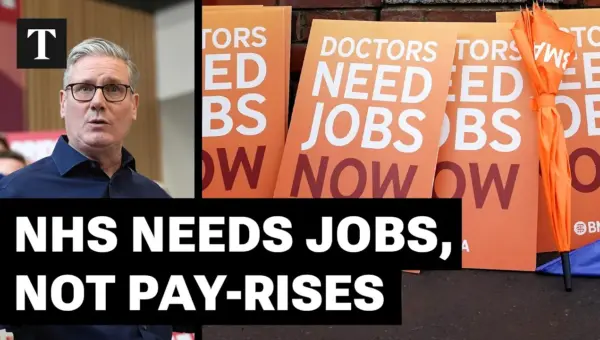
Junior Doctors’ Pay Rise Falls Short Amid NHS Doctor Shortage
A recent pay rise for junior doctors is unlikely to resolve the NHS's critical doctor shortage, according to GP Dr. Sarah Jarvis. She argues the main problem is a lack of training places, creating a "log jam" for new doctors. The discussion also highlighted the growing need for GPs to screen patients for gambling addiction.

Hospitals Must Serve Healthier Food or Lose Federal Cash
Health officials are demanding hospitals serve more nutritious food to patients, linking it to federal funding. This move aims to improve recovery times and combat the nation's metabolic disease crisis by emphasizing whole foods over processed options.


Trump’s Lavish Ballroom Project Masks Deeper Issues
While the Trump administration reportedly considered healthcare cuts for military funding, President Trump focused on showcasing plans for a new White House ballroom. This disconnect raises questions about leadership priorities and the administration's engagement with pressing national issues and the needs of its citizens.