NFL’s Fleeting Dynasties: Teams That Shone Bright, Then Faded
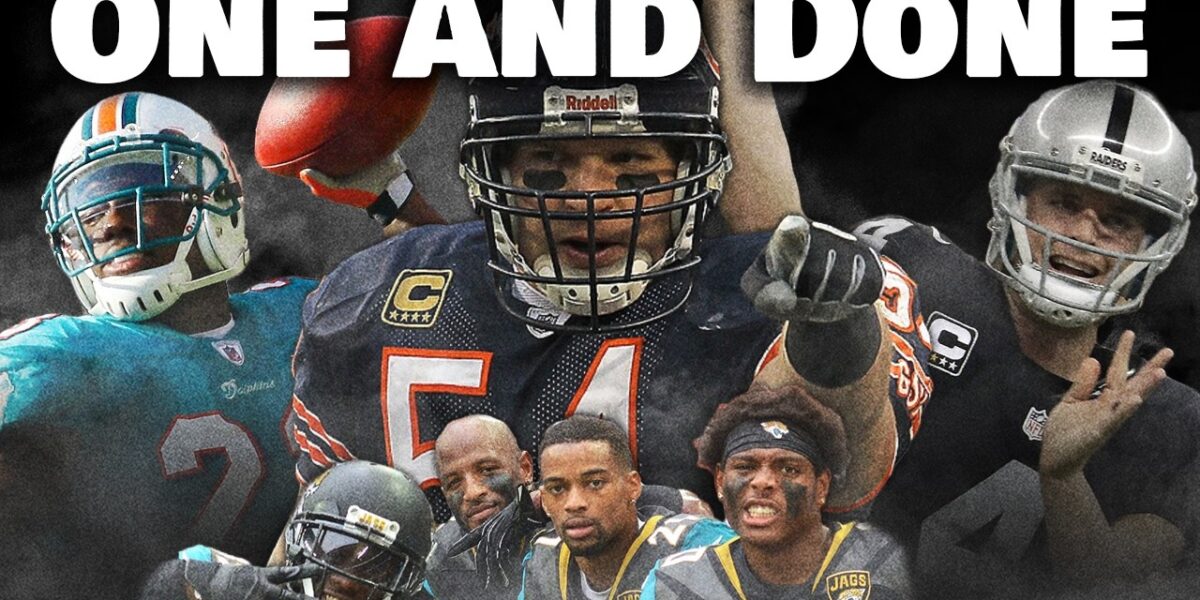
NFL history is dotted with teams that experienced a single, spectacular season before vanishing into obscurity. From the "Dirty Birds" of Atlanta to the "Sacksonville" Jaguars, we explore the most memorable one-year wonders and their dramatic falls from grace.

NFL’s Fleeting Dynasties: Teams That Shone Bright, Then Faded
Throughout NFL history, the league has witnessed an electrifying phenomenon: the rise of the ‘one-year wonder’ team. These franchises, often mired in years of mediocrity, explode onto the scene with a spectacular season, only to vanish back into obscurity as quickly as they emerged. This article delves into the infamous one-year wonder teams of the past three decades, examining their meteoric rises and equally swift falls from grace.
The 1998 Atlanta Falcons: The Birth of the “Dirty Birds”
For most of the 1980s and 90s, the Atlanta Falcons were largely an afterthought in the NFL. With only three playoff appearances between 1981 and 1997, and no deep postseason runs to speak of, the franchise struggled for relevance. However, the 1998 season marked a seismic shift. Quarterback Chris Chandler delivered a Pro Bowl-caliber season, while running back Jamal Anderson exploded for over 1,800 rushing yards. The Falcons soared to an incredible 14-2 record, earning them the iconic “Dirty Birds” moniker, popularized by Anderson’s touchdown celebrations and O.J. Santiago’s post-game comments. Their playoff journey saw them defeat the 49ers and then stun the 15-1 Vikings in an overtime thriller to reach their first-ever NFC Championship and Super Bowl. Despite a dominant regular season, their Cinderella story ended with a 34-9 loss to the Denver Broncos in Super Bowl XXXIII. Hopes were high for 1999, but a season-ending injury to Jamal Anderson and a decline in Chris Chandler’s performance saw the Falcons plummet to a 5-11 record. By 2000, even with a healthy Anderson, the team struggled, winning just four games and seeing both offense and defense become abysmal. It would take the arrival of Michael Vick four seasons later for the Falcons to return to the postseason.
The 2001 Chicago Bears: A Defensive Juggernaut
The early 2000s were a rough patch for the Chicago Bears, who made the playoffs only once between 1991 and 2000, with multiple seasons ending at 5-11 or worse. The 2000 season was particularly bleak. However, the drafting of Brian Urlacher in 2000 proved to be a turning point. Urlacher went on to win Defensive Rookie of the Year, anchoring an incredible 2001 season for the Bears. Their defense, reminiscent of the Buddy Ryan era, was brutally tough, finishing first in points allowed (12.7 PPG) and featuring five Pro Bowlers, with Urlacher emerging as an MVP candidate. Safety Mike Brown became legendary, securing game-winning overtime pick-sixes in back-to-back weeks. The offense also improved, led by Offensive Rookie of the Year running back Anthony Thomas. This 13-3 season, the team’s best in 15 years, saw them transform from the 20th-ranked defense to the league’s best. Despite the impressive turnaround, they were eliminated by the Eagles in the divisional round. The magic quickly faded in 2002, as the team slumped to a 4-12 record, cycling through three different starting quarterbacks. Despite Urlacher’s continued brilliance, the rest of the team faltered. It took four more years for the Bears to return to the playoffs under Lovie Smith.
The 2007 Cleveland Browns: A Fluke Season
The Cleveland Browns endured a brutal stretch from 2003 to 2019, characterized by consistent losing and embarrassment. In those 17 seasons, they managed only one winning record and one season where they outscored their opponents. That anomaly occurred in 2007 when the Browns, surprisingly, looked like a competent football team. Early signs of their unusual success included a wild 51-45 shootout victory over the Bengals in Week 2. Kicker Phil Dawson provided another memorable moment with a bizarre, yet successful, game-winning field goal in overtime against the Ravens after a kick hit the upright and crossbar before landing in the field of play. These quirky events coincided with the Browns finishing 10-6. Quarterback Derek Anderson earned his only Pro Bowl selection, and running back Jamal Lewis found his old form. Astonishingly, despite their 10-6 record, the Browns missed the playoffs. This season stands out as the only non-playoff team discussed, due to its stark contrast with the surrounding years of futility. Their record book from 2003 to 2016 reads like a cautionary tale: 5-11, 4-12, 6-10, 4-12, 10-6, 4-12, 5-11, 5-11, 4-12, 5-11, 4-12, 7-9, 3-13, 1-15, 0-16. A stark reminder of the challenges faced by Browns fans.
The 2008 Miami Dolphins: The Wildcat Revolution
The Miami Dolphins entered the 2008 season on a historic low, finishing 1-15 in 2007 and having cycled through four head coaches since 2004. The hiring of Tony Sparano, a former offensive line coach with no prior NFL coordinator experience, did not inspire immediate confidence. After an 0-2 start, the Dolphins stunned the league by defeating the New England Patriots, largely thanks to running back Ronnie Brown’s five touchdowns. This offensive explosion was powered by the innovative “Wildcat” formation, where a non-quarterback takes the direct snap. The Dolphins rode this gimmick to an 11-5 record, completing the biggest single-season turnaround in NFL history and winning their division for the first time in eight years. Quarterback Chad Pennington, who had never made a Pro Bowl in his first eight seasons, was a surprising runner-up for MVP. However, the Wildcat’s effectiveness waned in the playoffs, as the Ravens dismantled the Dolphins in the wild card round. While the season was memorable, the Wildcat’s limitations became apparent in subsequent years, and the Dolphins struggled to replicate their success, making the playoffs only once between 2002 and 2015. It’s also worth noting that Tom Brady’s season-ending injury in Week 1 of 2008 opened the door for Miami’s unexpected division title.
The 2012 Washington Redskins: RGIII’s Brief Brilliance
Following Joe Gibbs’ retirement, Washington endured a four-year stretch of mediocrity, failing to win more than six games between 2009 and 2011, despite hiring Mike Shanahan. Quarterback instability plagued the team until the arrival of Robert Griffin III (RGIII) in the 2012 NFL Draft. The impact was immediate. Despite a 3-6 start, RGIII transformed into one of the league’s most dynamic players, leading the NFL in yards per attempt and boasting a high yards per carry average. He earned Offensive Rookie of the Year honors, and Washington made their first playoff appearance in six seasons. Their late-season surge suggested Super Bowl aspirations. In the wild card game against Seattle, they held a 14-0 lead, but RGIII tore his ACL, and Seattle rallied for the win. This heartbreaking loss marked the beginning of the end for Griffin’s brilliance. Upon his return in 2013, he was a shadow of his former self, struggling to adapt to a more pocket-passing style. The team’s run game, once dominant, became average, and injuries mounted. After a disastrous 2013 and a partial season in 2014, Washington moved on from RGIII, pivoting to Kirk Cousins in 2015, who led them back to the playoffs. RGIII’s tenure was defined by one magical season followed by injury-riddled disappointment.
The 2016 Oakland Raiders: Carr’s MVP Caliber Season
The Oakland Raiders spent much of the 2000s and 2010s in the NFL’s basement, with 11 seasons of five wins or less between 2003 and 2020, and only one playoff appearance amidst nine head coach changes. Their 2016 season, however, stood out as a complete anomaly. Building on a 7-9 record in 2015, the Raiders, featuring a young core of Derek Carr, Amari Cooper, and Khalil Mack, reached new heights. Derek Carr emerged as an MVP candidate, throwing for over 500 yards and four touchdowns in an overtime victory against the Buccaneers. Khalil Mack delivered a Defensive Player of the Year-caliber season. Through 14 games, the Raiders were 11-3, with legitimate Super Bowl aspirations. Tragically, Carr suffered a fractured fibula in Week 16, ending his season and derailing the Raiders’ Super Bowl hopes. Despite winning that game to go 12-3, the offense looked listless without Carr. They were dominated by the Broncos in Week 17 and lost to the Texans in the wild card round with backup Connor Cook at the helm. The magic vanished, and despite retaining their core talent and adding Marshawn Lynch, the Raiders fell to 6-10 in 2017. Carr’s numbers regressed, and head coach Jack Del Rio was fired. The subsequent trade of Khalil Mack to Chicago, followed by Amari Cooper, signaled a complete roster overhaul and a return to rebuilding, with the Raiders finishing last in points allowed in 2018.
The 2017 Jacksonville Jaguars: “Sacksonville’s” Defensive Fury
After a dismal stretch from 2011 to 2016, where they failed to win more than five games in a season, the Jacksonville Jaguars transformed into a juggernaut in 2017, nicknamed “Sacksonville.” Bolstered by draft picks and free agency additions, their defense became overwhelming, forcing turnovers at an elite rate and producing six Pro Bowlers. The offense, led by rookie running back Leonard Fournette, was competent enough to complement the defense. The Jaguars finished 10-6, scoring seven defensive touchdowns, five of which were scoop-and-scores, a remarkable feat considering their defensive struggles the previous year. Their defense continued its dominance in the postseason, shutting out the Bills in the wild card round. They then jumped out to a 28-7 lead against the Steelers in the divisional round, ultimately hanging on for a victory to reach the AFC Championship game. Despite holding a 10-point lead in the fourth quarter, they fell to the Patriots in a heartbreaker, a loss still debated by Jaguars fans due to questionable calls. The “Sacksonville” magic faded quickly. While the defense remained solid in 2018, it took a slight step back, and the offense faltered, leading to a 5-11 record. By 2019, the defense had collapsed, prompting a team reset, including the firing of Doug Marrone and the trade of Jalen Ramsey. Three years after their AFC Championship run, the Jaguars hit rock bottom with a 1-15 record in 2020.
The 2018 Chicago Bears: A Defense Dominates, Kicker Falters
Following the Jay Cutler era and a 3-13 season, the Chicago Bears drafted Mitch Trubisky second overall in 2017. After a 5-11 showing that season, they hired Matt Nagy, hoping to develop their young quarterback. The transformation in 2018 was dramatic. The offense flourished, with Trubisky throwing six touchdowns in a Week 4 victory and tallying four total touchdowns in a Week 10 game where he passed for over 350 yards. This offense was flashy and innovative, but the team’s true strength lay in its defense. The offseason acquisition of Khalil Mack turned a good unit into the NFL’s best. In 2018, the Bears offense ranked in the top 10 in scoring, while the defense was number one, with Mack finishing as runner-up for Defensive Player of the Year. Chicago finished 12-4, their first 12-win season since their Super Bowl run in 2006. Riding a nine-game winning streak into the playoffs, a Super Bowl appearance seemed tangible. However, in the wild card game against the Eagles, Cody Parkey missed a potential game-winning field goal, doinking it off the uprights and crossbar, sealing the Bears’ elimination. The team regressed the following season, missing the playoffs, and Trubisky took a step back. Despite an 8-8 record in 2020, they made the playoffs but were quickly ousted by the Saints, signaling the need for a new direction and leading to the drafting of Justin Fields. In the four years following 2018, the Bears failed to win more than seven games. While some point to the 2010 team’s run to the AFC Championship as a greater one-year wonder, the 2012 Bears, with their higher point differential and Cutler-Marshall connection, could also be argued as a peak before another period of mediocrity. The Bears have a history of these fleeting moments of success, and fans now hope Caleb Williams can bring sustained success.
Source: One-Year Wonders: Teams That Exploded Then Vanished (YouTube)

Related Articles


Manning on Red Sox Dream: ‘Big Deal’
Eli Manning, the legendary former NFL quarterback, revealed a childhood dream of playing for the Boston Red Sox. Despite a storied career with the New York Giants, Manning admitted the allure of the historic franchise was a 'big deal' for him growing up.
Bears Stadium Debate: Location Matters Less Than the Team
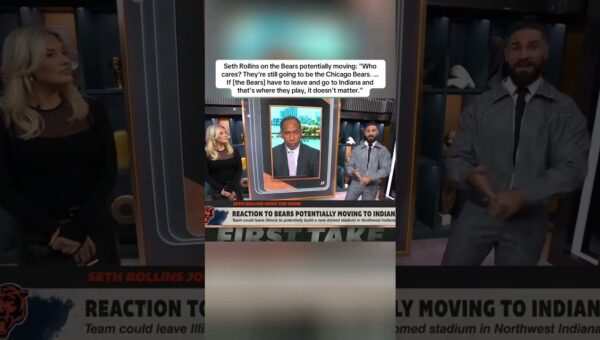
The Chicago Bears' stadium future is under intense scrutiny, with some arguing that the team's identity transcends its current location. Despite sentimental attachments to Soldier Field, the need for a modern facility capable of hosting major events and generating revenue is paramount. The debate centers on whether the Bears can secure a state-of-the-art stadium, even if it means moving beyond traditional city limits.
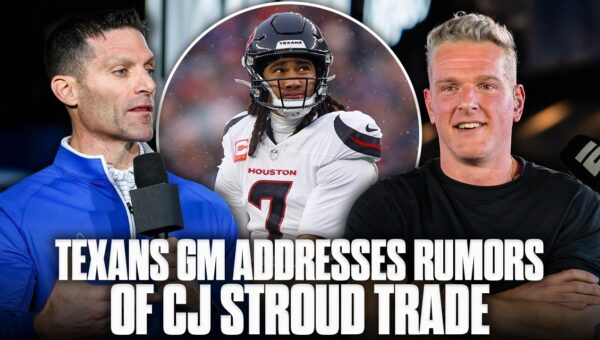
Texans GM: CJ Stroud Is Our QB, He’s Not Going Anywhere
Houston Texans GM Nick Caserio unequivocally stated that CJ Stroud is their quarterback and not available for trade. Caserio emphasized the team's belief in Stroud and their commitment to building around him for the future. The discussion also touched on the Texans' rapid turnaround and their overall team-building philosophy.