Newsom’s Bold Tactic: Fighting Fire With Fire Against Trump
Governor Gavin Newsom argues for a more aggressive political strategy to counter Donald Trump's tactics, citing California's response to Texas redistricting as a model. He calls for Democrats to "fight fire with fire" and embrace conviction over conventional politics to safeguard democratic institutions.

Newsom’s Bold Tactic: Fighting Fire With Fire Against Trump
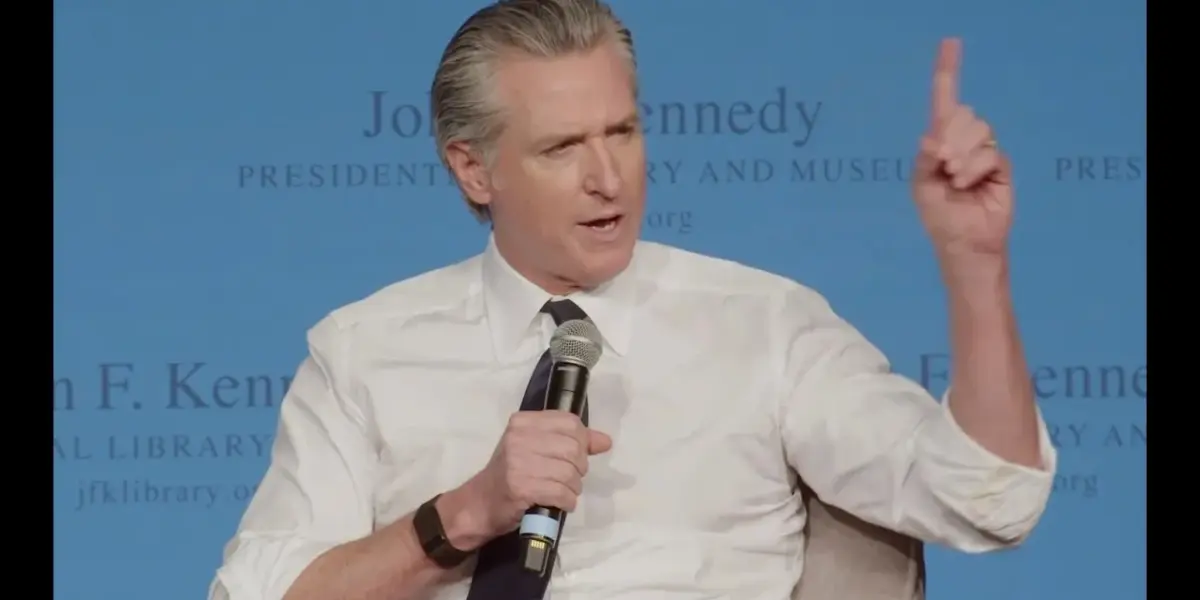
In a candid conversation, California Governor Gavin Newsom detailed a strategic shift in political engagement, arguing that traditional Democratic responses are insufficient against the aggressive tactics employed by Donald Trump and his allies. The discussion, sparked by California’s response to Texas’s redistricting efforts, underscores a broader call for a more assertive and unconventional approach to safeguarding democratic institutions.
The Backfire of Trump’s Redistricting Gambit
The conversation opened with an examination of Proposition 50 in California, a decisive action Newsom took to counter what he described as a “power grab” by the Trump administration. This move was a direct response to Texas’s aggressive gerrymandering, which, according to Newsom, was driven by Donald Trump’s demand for five specific congressional seats he felt “entitled” to. The irony, Newsom pointed out, was that in the recent Texas primary elections, four of those targeted districts saw higher Democratic turnout than Republican turnout, suggesting a potential backfire for the Republican strategy.
Newsom characterized Trump’s demand to then-Governor Greg Abbott as “remarkable and chilling,” linking it to Trump’s post-January 6th attitude towards democracy. “Democracy is for suckers,” Newsom quoted as a prevailing sentiment, illustrating Trump’s alleged willingness to subvert electoral processes, as evidenced by his calls to find votes in Georgia.
A New Playbook for Democrats
A central theme of the discussion was the perceived inadequacy of conventional Democratic responses. Newsom admitted that the initial inclination was to respond with op-eds or strongly worded letters, a tendency he humorously contrasted with Trump’s direct, power-driven approach. “I started with a tweet. I was very satisfied with myself. They said we had 500 likes,” Newsom recalled, highlighting the disconnect between traditional political discourse and the urgency of the situation.
This realization prompted a shift. Newsom credited former Speaker Nancy Pelosi for her crucial role in orchestrating a rapid, 10-day response to the Texas redistricting challenge. This involved a “90-day sprint” to qualify Proposition 50 for the ballot, raising $118 million, and ultimately drawing and defending new district lines. “We fought fire with fire and we punched back,” Newsom stated, emphasizing the need to meet aggression with equal force.
He invoked the spirit of community organizing, inspired by figures like Barack Obama, to describe the grassroots nature of Proposition 50. The campaign, he explained, was not top-down but a collective effort that recognized the existential threat to the republic. “The best of the Roman Republic, best of Greek democracy, co-equal branches of government, popular sovereignty, the rule of law, not the rule of dawn,” Newsom articulated, framing the struggle as a defense of foundational democratic principles.
“A Preview of Things to Come”
Newsom repeatedly used the phrase “a preview of things to come” to describe various incidents, painting a grim picture of Trump’s alleged ongoing efforts to undermine democratic processes. He cited the appearance of “masked men” and a “private police force” at a Proposition 50 rally in Los Angeles as an intimidation tactic. He also pointed to the deployment of Border Patrol Tactical Units (BORTAC) with Apache helicopters to Dodger Stadium on election morning, which he saw as a message to deter voters.
Further examples included Trump’s social media posts alleging a rigged election in California, the Department of Justice’s involvement in election monitoring, and attempts to “take over” election commissions, as seen in Fulton County, Georgia. Newsom also referenced the “Save Act,” which he argued is not about voter ID but about controlling who gets to vote and voter registration, highlighting his belief that Trump is “not screwing around.”
The Asymmetry of Power and Information
The conversation touched upon the “asymmetry” in political communication, particularly the role of conservative media networks like Fox News, Sinclair, One American News, and Newsmax. Newsom described these outlets as “propaganda networks” that can “flood the zone” with their message, contrasting this with the more argument-focused approach of Democrats.
He also addressed the complicity of various figures and institutions, including politicians, corporate leaders, and media members, who he believes are either making deals with Trump or hoping the issues will simply disappear. “They’ve got to be called out, I’m sorry, or we will lose this country,” he asserted, advocating for a more aggressive stance against such complicity.
Trump’s Motivations: Personal Gain Over Public Service
Newsom offered a stark assessment of Trump’s motivations, describing his actions as a “corruption story.” He pointed to alleged instances where Trump’s personal financial interests appeared to influence policy, citing the drop in tariffs on Vietnamese goods following a Vietnamese approval of a Trump golf course development, and a $2 billion deal with the UAE involving high-valued chips.
“This is a grift the likes of which we’ve never experienced in history of this country at a scale unprecedented,” Newsom declared, suggesting that Trump’s foreign trips were often opportunities for his family and associates to secure business deals. He characterized Trump not as a builder, but as someone focused on “destruction” and “personal portfolio” rather than national well-being.
Redefining Democratic Strength and Conviction
Drawing parallels to his decision to perform same-sex marriages in San Francisco in 2004, Newsom emphasized the importance of “conviction” and “strength.” He recalled the universal condemnation he faced from his own party at the time, but argued that audacious actions, when rooted in doing the “right thing,” can ultimately lead to progress. This was framed as a lesson for the Democratic party, which he believes needs to regain its “mojo” and project strength, not just rightness.
He quoted Bill Clinton: “Given the choice, the American people always support strong and wrong versus weak and right.” Newsom’s message is that Democrats must be both strong and right, but more importantly, they must have the courage of their convictions and be able to “sell” their vision effectively. He called for a shift away from conventional politics towards a more “audacious” and “bold” approach, particularly in preparation for the 2026 elections.
The Erosion of the Republican Party
Newsom also commented on the state of the Republican party, describing it as “supine” and lacking an identity beyond devotion to Trump. He contrasted this with historical Republican figures like Ronald Reagan, suggesting that Trump has little in common with traditional conservative values. He highlighted economic indicators like job losses and rising gas prices as evidence of Trump’s “wrecking ball presidency.”
Why This Matters
The core of Newsom’s argument is a call to action for the Democratic party and its supporters. It highlights a perceived fundamental difference in the approaches of the two major political parties: one focused on consolidating power through aggressive, often unconventional means, and the other historically reliant on established norms and arguments. Newsom’s emphasis on “fighting fire with fire” and embracing “audacious” actions suggests a recognition that the political landscape has shifted, demanding a recalibration of strategy.
This perspective is crucial because it speaks to the broader health of American democracy. If one party is perceived as willing to bend or break rules to achieve its aims, and the opposing party is slow to adapt or unwilling to engage in similar tactics, it creates an imbalance that can weaken democratic institutions. Newsom’s call for strength and conviction, even if it means adopting tactics previously considered outside the norm, reflects a pragmatic, albeit controversial, response to what he views as an existential threat.
Implications, Trends, and Future Outlook
The trend Newsom identifies is a move towards more combative and less traditional political engagement. The success of Proposition 50, as described, suggests that voters may respond to decisive, proactive measures. The future outlook hinges on whether the Democratic party can effectively adopt a new playbook that balances its traditional values with the perceived necessity of assertive action. The upcoming elections, particularly 2026, are framed not just as contests for power, but as critical junctures for the survival of democratic norms as we understand them.
Newsom’s narrative also points to a growing disillusionment with the traditional political establishment, both within his own party and among the electorate. The emphasis on “moral authority” and “strength” suggests a search for leadership that can inspire confidence and demonstrate resilience in the face of perceived threats.
Historical Context and Background
The conversation is steeped in historical context, referencing figures like Jesse Jackson, Nancy Pelosi, Barack Obama, Bill Clinton, and even historical movements like the Civil Rights era and the 1960s. Newsom’s own political history, particularly his decision on same-sex marriage, serves as a personal case study for embracing bold, conviction-driven action despite significant opposition. The comparison to historical figures like Martin Luther King Jr., Gandhi, and Mandela underscores a desire for leadership grounded in moral authority and a commitment to justice, contrasting it with Trump’s perceived self-serving agenda.
The reference to the “best of the Roman Republic” and “Greek democracy” situates the current political struggles within a long historical narrative of democratic challenges. The mention of Trump’s alleged attempts to rewrite history and censor facts further emphasizes the historical stakes involved.
Conclusion
Gavin Newsom’s analysis presents a compelling case for a fundamental re-evaluation of political strategy. By framing the current moment as a critical battle for the soul of the republic, he urges a departure from conventional political discourse and a embrace of bolder, more assertive tactics. The success of California’s Proposition 50 is offered as a tangible example of this approach, demonstrating that “fighting fire with fire” can be an effective, albeit challenging, means of defending democratic principles against perceived authoritarian threats. The underlying message is clear: the future of democracy may depend on the willingness of its defenders to adapt and act with conviction and strength.
Source: Gavin Newsom on Trump’s BIGGEST BACKFIRE (YouTube)

Related Articles
Trump Addresses GOP Conference, Vows to Fight ‘Corrupt’ System
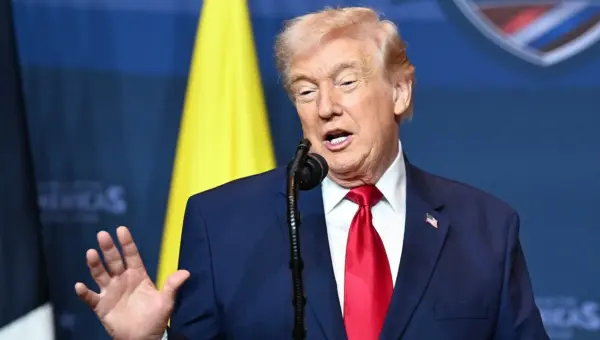
Former President Donald Trump addressed Republican lawmakers at his Doral property, launching sharp criticisms against what he termed a "corrupt" system and "witch hunts." He vowed to continue fighting against perceived political persecution, rallying his base with a message of resilience and a return to "America First" principles.


Trump’s Iran Attack: Legal or Illegal War? Experts Weigh In
Experts are questioning the legality of the US-led offensive in Iran, noting that true 'legal gold standard' wars, authorized by UN Security Council resolutions, are exceptionally rare. The conflict's objectives, potential for internal unrest in Iran, and the differing strategies between the US and Israel are under intense scrutiny as the situation develops.


Iran’s Pain Strategy: How Gas Prices Could Sink Trump’s Election Hopes
Iran's strategy to inflict maximum pain on the US through economic disruption, particularly rising gas prices, could significantly impact Donald Trump's political future. This analysis delves into Iran's calculated approach to deterrence and the broader regional implications.