Newsom Slams Trump as ‘Weak President’ Following Tariff Setback, Alleges Self-Dealing
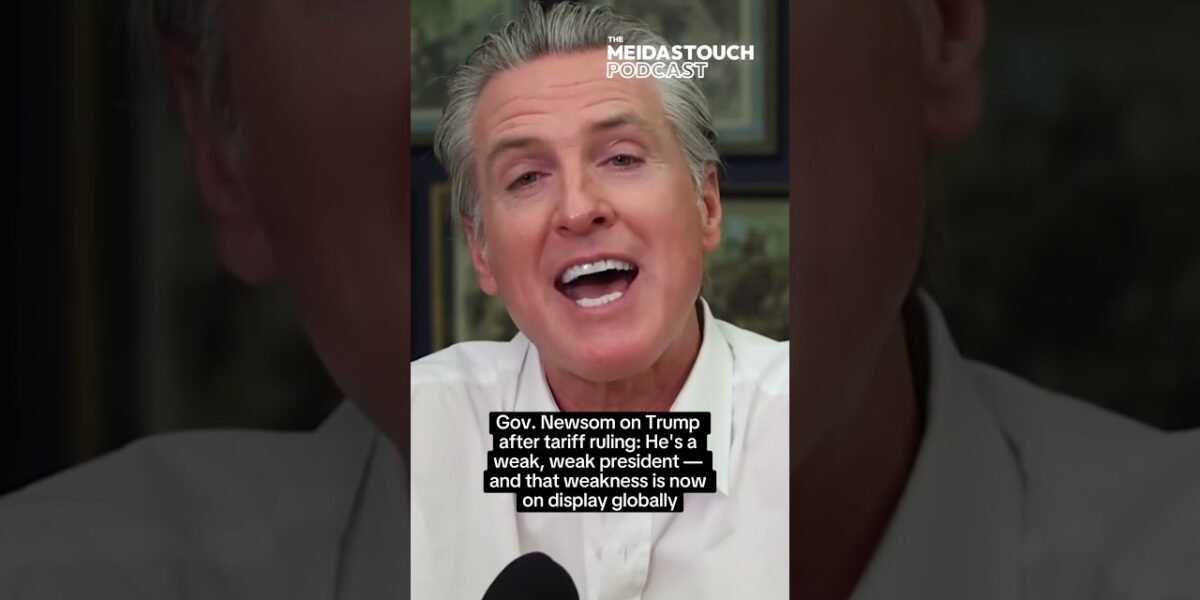
Governor Gavin Newsom has sharply criticized former President Donald Trump, labeling him a "weak president" whose economic policies, reliant on tariffs and mass deportations, are unraveling. Newsom linked a recent "tariff loss" and a Supreme Court development to alleged "self-dealing" and "crony capitalism," citing instances in Vietnam, the UAE, and Saudi Arabia where trade policy decisions reportedly coincided with Trump's personal business interests.

Newsom Slams Trump as ‘Weak President’ Following Tariff Setback, Alleges Self-Dealing
In a scathing critique, Governor Gavin Newsom of California has publicly branded former President Donald Trump as a "weak, weak president," asserting that this perceived weakness is now "on display globally." Newsom’s comments came in the wake of what he described as a significant "tariff loss" and a related development at the Supreme Court, which he claims has left Trump with "nothing else going on" beyond an unraveling economic policy.
A Global Display of Weakness
Governor Newsom did not mince words, launching a direct attack on Trump’s leadership and its international standing. "He’s a weak, weak president, and that weakness is on display globally now as well as the rest of the world starting to turn against Trump and Trumpism," Newsom declared. This assertion positions the alleged tariff setback not merely as a policy failure but as a symptom of a broader decline in Trump’s influence and the global appeal of his political ideology.
The California Governor emphasized that tariffs were among the "only card he had left," suggesting that their diminished efficacy or a legal challenge against them would leave Trump politically and economically vulnerable. This perspective highlights the centrality of trade policy, particularly the use of tariffs, to the Trump administration’s economic strategy and public image.
The Unraveling of Economic Policies
Newsom contended that Trump’s entire economic policy was built on shaky foundations, primarily "mass deportations" and the aggressive use of tariffs. He argued that this strategy is now "beginning to unravel," pointing to various factors, including social unrest. While the transcript’s specific reference to "the people in Minneapolis" in this context is brief, it likely alludes to the societal and political challenges that emerged during Trump’s presidency, which critics often argued diverted focus from or undermined the administration’s economic narrative.
The former President’s trade policies, characterized by the imposition of tariffs on goods from countries like China and European nations, were central to his "America First" agenda. Proponents argued these tariffs protected domestic industries and jobs, forcing fairer trade deals. Critics, however, often warned of retaliatory measures, increased costs for consumers, and disruptions to global supply chains. Newsom’s comments suggest a culmination of these criticisms, implying that the foundational elements of Trump’s economic vision are proving unsustainable.
Tariffs, Personal Dealings, and the "Great Grift"
A significant portion of Newsom’s critique focused on what he termed the "great grift" and "crony capitalism" he alleges characterized Trump’s administration. He explicitly linked the tariff policies to the former president’s "personal dealings" and "self-dealing," suggesting that public policy was often intertwined with private financial gain.
"Don’t forget for a second, these tariff policies are connected to the great grift, the great that this this great self-dealing, this this crony capitalism we’re seeing around the globe," Newsom asserted. This accusation suggests a pattern where policy decisions, including trade actions, were allegedly influenced by or designed to benefit Trump’s personal business interests or those of his associates.
Newsom provided several examples to substantiate his claims, referencing specific instances where he believes Trump’s official actions coincided with personal financial opportunities:
- Vietnam: Newsom cited a situation where Trump allegedly "moved back on tariff policy in Vietnam as he got a business deal done there with the golf course in the waiver of a lot of environmental rules." This implies a quid pro quo, where a favorable trade decision was traded for personal business advantages, potentially including the reduction of regulatory hurdles for a golf course development.
- UAE and Saudi Arabia: Similar allegations were made regarding the United Arab Emirates and Saudi Arabia. Newsom stated, "Same thing in the UAE, same thing in Saudi Arabia." While specific details were not elaborated upon in the transcript, these references align with broader criticisms during Trump’s presidency regarding his administration’s close ties to these nations and the potential for conflicts of interest involving his family’s business ventures in the region.
The concept of "crony capitalism" and "self-dealing" has been a recurring theme in the criticisms leveled against the Trump administration. Critics often pointed to the fact that Trump retained ownership of his businesses while in office, leading to concerns about the commingling of public duty and private profit. These concerns ranged from foreign dignitaries patronizing Trump hotels to policy decisions that appeared to benefit specific industries or individuals with ties to the administration.
The Supreme Court’s Role and Broader Implications
The Governor concluded his remarks by directly referencing "what happened today at the Supreme Court," implying that a ruling or decision related to tariffs or trade policy served as the catalyst for his strong condemnation. While the specific case or ruling was not detailed in the transcript, Newsom’s framing suggests a legal setback that he interprets as a significant blow to Trump’s economic strategy and a validation of his "weakness."
The Supreme Court, as the highest judicial body in the United States, often plays a critical role in interpreting laws, including those related to trade and executive power. A decision perceived as limiting the executive’s authority on tariffs or striking down a particular trade action would indeed have significant implications for future trade policy and the balance of power within the government.
Newsom’s comments place these legal and policy developments within a larger narrative of political accountability and the integrity of governance. By connecting trade policy to alleged personal enrichment and "crony capitalism," he seeks to highlight what he views as fundamental flaws in the Trump administration’s approach to both economics and ethics.
Political Context and Future Outlook
Governor Newsom, a prominent Democrat and often a vocal critic of Republican policies, delivers these remarks from a clear political vantage point. As the leader of California, a state that frequently clashed with the Trump administration on issues ranging from environmental regulations to immigration, Newsom’s perspective reflects a deep ideological divide.
His accusations of "weakness" and "self-dealing" are not merely reactive but are part of an ongoing political discourse shaping public perception of past administrations and future political contests. The emphasis on global perception also underscores the importance of international relations and trade in the broader American political landscape.
For critics of Trump, Newsom’s statements reinforce a narrative that portrays the former president’s policies as self-serving and ultimately detrimental to national interests, both economically and ethically. For supporters, such criticisms are often dismissed as partisan attacks. Regardless of political alignment, Newsom’s forceful commentary serves as a potent reminder of the enduring controversies surrounding the Trump presidency’s economic policies and the allegations of conflicts of interest that dogged his time in office. The "tariff loss" and the Supreme Court’s involvement, as interpreted by Newsom, thus become pivotal moments in this ongoing debate, signaling a potential turning point in the perceived effectiveness and ethical standing of a key aspect of Trump’s legacy.
Source: Newsom Reacts to Trump Tariff LOSS: He's a weak, weak president (YouTube)

Related Articles

Trump Threatens “Unseen” Force on Iran After Leader’s Death
Following the assassination of Supreme Leader Ayatollah Ali Khamenei, U.S. President Donald Trump has vowed to unleash unprecedented force on Iran. While outlining ambitious goals including regime change, experts express skepticism about the effectiveness of airstrikes and the potential for popular uprising against a resilient Iranian government.
Senator Coons Questions Trump’s Iran Strategy After Troop Deaths
Senator Chris Coons has sharply criticized President Trump's strategy in Iran following the deaths of three U.S. service members. Coons questioned the intelligence regarding Iran's nuclear proximity and the lack of clear strategy and congressional debate for the "war of choice."
Nuclear Expert Debunks Trump’s Iran Bomb Timeline
Nuclear security expert Joe Cirincione refutes claims that Iran was two weeks from a nuclear bomb, stating the process would take months. He analyzes recent strikes on Iran's nuclear facilities, arguing military solutions are insufficient and diplomacy with inspectors is key.