New CPU Algorithm Outpaces GPUs in Physics Simulation
A new physics simulation algorithm leverages CPU power through domain decomposition, achieving speeds up to 66x faster than previous methods and even outperforming GPUs. This breakthrough promises more realistic animations and advanced scientific modeling.

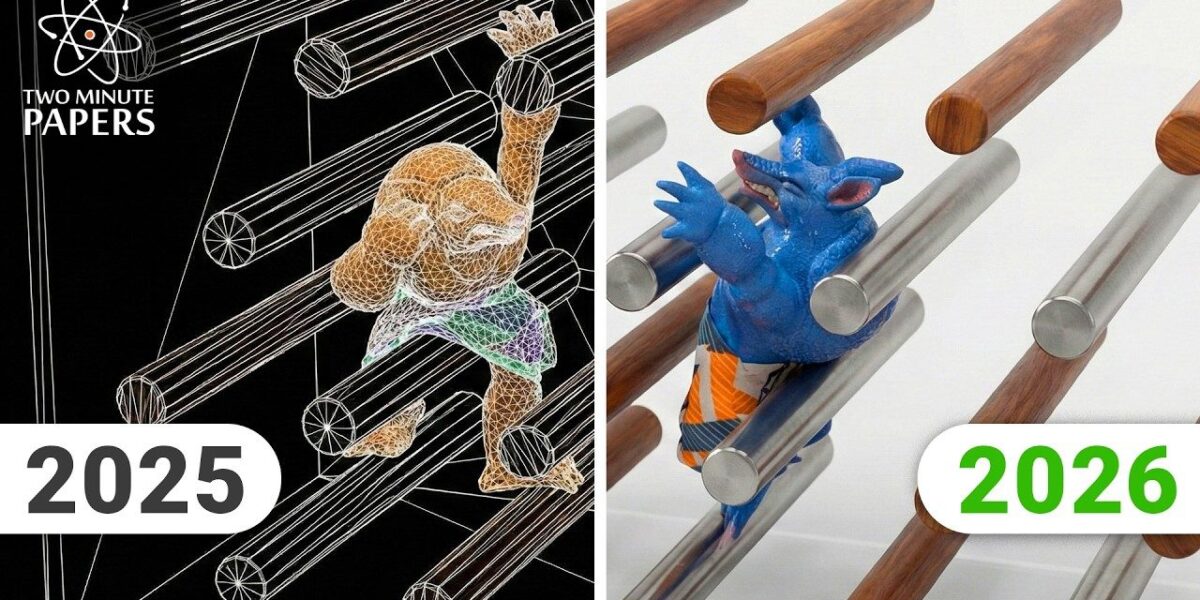
Revolutionary CPU Algorithm Achieves Unprecedented Speed in Physics Simulation
In a significant leap forward for computer graphics and simulation, researchers have developed a novel physics simulation algorithm that dramatically outperforms even the most advanced GPU-based techniques. This breakthrough, detailed in a recent paper, allows for highly complex simulations, such as intricate cloth dynamics and object interactions, to be computed at speeds previously thought impossible, particularly on standard CPUs.
Unpacking the Simulation Powerhouse
The core of this innovation lies in its ability to handle massive computational problems with remarkable efficiency. The paper showcases simulations involving millions of ‘degrees of freedom’ – essentially, the number of variables a computer must solve for to accurately represent a physical system. For instance, a detailed curtain simulation involved 6 million degrees of freedom. Traditionally, such complex problems would require immense processing power and time, often relying on the parallel processing capabilities of Graphics Processing Units (GPUs).
The Challenge of Traditional Simulation
To understand the significance of this new method, it’s helpful to consider how complex simulations are typically handled. Imagine a massive jigsaw puzzle – this represents the complex physical problem. A common approach using GPUs is akin to employing thousands of ‘ants’ (parallel processing threads) to each solve a tiny piece of the puzzle simultaneously. While individually fast, these ‘ants’ must constantly communicate and coordinate, leading to a ‘shouting match’ of iterations. For intricate simulations, this communication overhead can become a bottleneck, slowing down the overall process significantly.
A New Approach: Domain Decomposition and Grandmasters
The new algorithm, however, adopts a fundamentally different strategy. Instead of a vast army of ants, it employs a smaller number of highly capable ‘puzzle grandmasters’ – representing CPU cores. The core idea is ‘Domain Decomposition,’ where the large, complex problem is divided into a manageable number of smaller, independent sub-problems or ‘chunks.’ Each ‘grandmaster’ (CPU core) then takes one of these chunks and solves it completely and accurately. This is analogous to dividing the jigsaw puzzle into 32 large sections, with each grandmaster expertly solving their assigned section.
The Brilliance of CPU Strengths
This approach plays directly to the strengths of CPUs, which excel at complex, sequential tasks and heavy lifting on fewer problems, rather than the massively parallel, but often communication-intensive, tasks GPUs handle. The algorithm cleverly isolates the most computationally intensive parts within each domain, allowing CPU cores to solve them efficiently. Crucially, the ‘grandmasters’ first agree on the boundaries and connections between their respective chunks. Once these crucial interfaces are resolved, the internal complexities of each chunk are solved independently, minimizing the need for iterative communication.
Quantifiable Performance Gains
The results are staggering. This new CPU-based method can simulate one frame of complex cloth dynamics in as little as 6.6 seconds, even with millions of degrees of freedom. This represents a speed increase of up to 66 times compared to previous state-of-the-art techniques like C-IPC. It also boasts an 11x speed improvement over another CPU-based friction method, PD-Coulomb. Perhaps most impressively, this CPU algorithm runs an astonishing 2.6 times faster than a cutting-edge GPU-based technique, defying the conventional understanding of GPU dominance in parallel processing tasks.
Mathematical Elegance
The mathematical underpinning of this approach simplifies a seemingly insurmountable problem. Instead of solving for every single piece (like the 10,000 ants), the algorithm focuses on solving for the ‘glue’ – the forces holding the domains together – and the ‘corner pieces’ – the critical interaction points between domains. This significantly reduces the number of variables that need to be computed at each step, transforming a massive, intractable problem into a manageable one. The math effectively turns a massive communication bottleneck into a polite, quick handshake between a few expert solvers.
Why This Matters
This breakthrough has profound implications across various fields. In the realm of entertainment, it promises more realistic and fluid animations for films and video games, enabling complex cloth simulations, character interactions, and environmental effects that were previously too computationally expensive. For scientific research, it opens doors to more accurate simulations in areas like material science, biomechanics, and fluid dynamics, where precise physical modeling is crucial. The ability to achieve these high-fidelity simulations on readily available CPUs could democratize access to advanced simulation tools, making them more accessible to smaller studios, independent developers, and researchers without access to extensive GPU clusters.
Availability and Future Impact
While the paper details the groundbreaking research, specific commercial implementations or pricing for this particular algorithm are not yet widely announced. However, the underlying principles are likely to be integrated into future physics engines and simulation software. The research community is actively discussing and exploring this work, highlighting its potential to redefine the landscape of real-time physics simulation and computational modeling.
Source: Physics Simulation Just Crossed A Line (YouTube)

Related Articles


OpenClaw Emerges: AI Agent Automates Life 24/7
OpenClaw, a new open-source AI agent, is gaining rapid traction for its ability to automate tasks 24/7 and integrate with messaging apps. Initially named Claudebot, the project faced a naming dispute before settling on OpenClaw, highlighting the fast-paced and sometimes contentious nature of AI development.

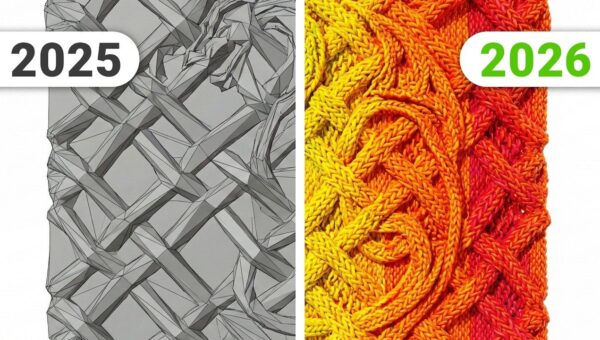
Physics Simulation Leaps Forward: 45x Faster, Real-Time Rendering
A new physics simulation technique drastically accelerates complex animations, achieving up to 45x speed improvements and enabling real-time rendering for hair, cloth, and structural dynamics. The open-source method bypasses traditional bottlenecks, offering unprecedented realism and efficiency for games, film, and scientific applications.

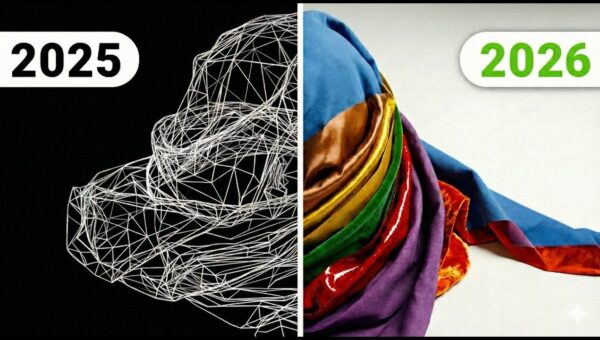
AI Breakthrough: Hyper-Realistic Clothing Simulation Achieved
A new physics-inspired technique revolutionizes digital clothing simulation, delivering hyper-realistic results with unprecedented speed and efficiency. By intelligently allocating detail and predicting material behavior, it overcomes the long-standing compromise between visual fidelity and computational cost.