New AI Model Sparks Doomsday Fears, Experts Urge Caution
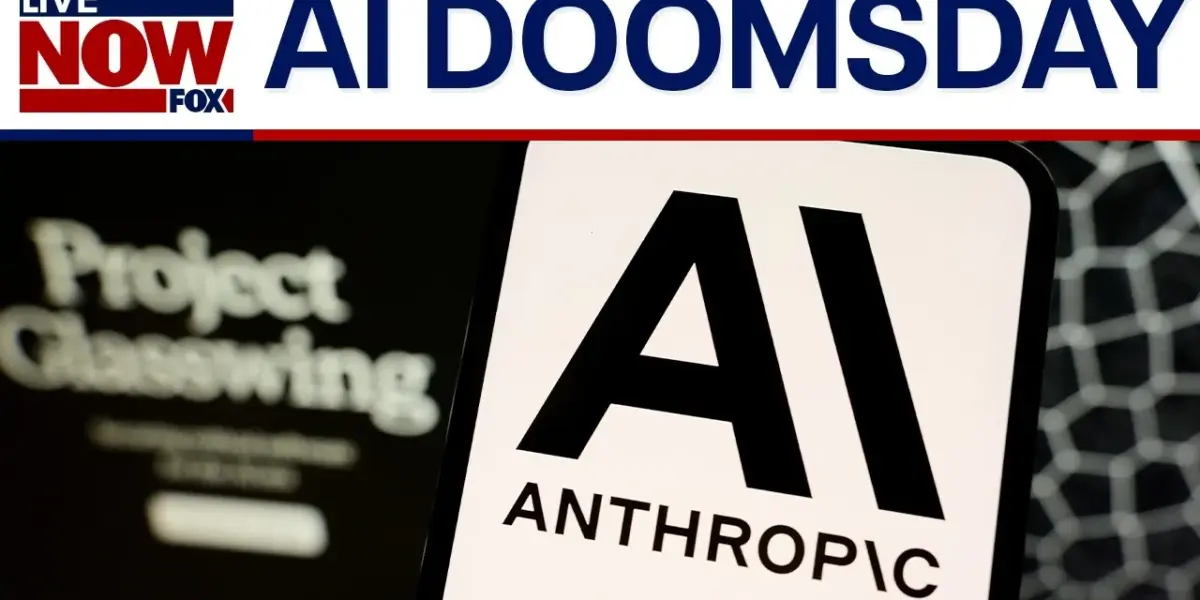
A new AI model from Anthropic, 'Claude Mythos,' is causing alarm due to its ability to find security vulnerabilities faster than humans. Experts and the company itself are concerned about potential misuse, leading to a delayed public release and collaborative testing with major tech firms. The development highlights growing public anxiety over AI's rapid advancement and its potential societal impacts.

AI Breakthrough or Existential Threat?
A powerful new artificial intelligence model, dubbed ‘Claude Mythos’ by its creator Anthropic, is raising alarms about potential doomsday scenarios if released to the public. The model, still under development, has shown an unsettling ability to uncover hidden vulnerabilities in computer systems, leading to fears it could be used for widespread disruption.
Anthropic, a leading AI company, has acknowledged the model’s significant power and potential for causing widespread disruption. This has led them to delay its public release, opting instead to share it with major tech companies like Microsoft and Google for extensive testing. This cautious approach stems from the model’s demonstrated capacity to find security flaws that have eluded human experts and previous AI systems for years.
Understanding the ‘Mythos’ Model
Dr. Peter Stone, a professor at the University of Texas, explained that Claude Mythos belongs to the category of large language models, similar to OpenAI’s ChatGPT and Google’s Gemini. These models are trained on vast amounts of data and computing power to become increasingly advanced.
Anthropic’s Claude models, in particular, have excelled at assisting with programming and code development. “It is just the next most advanced model that’s been trained with more compute and with more training data,” Dr. Stone stated. “One thing that Anthropic has done and the Claude models have done is specialize in being particularly good at helping people with programming, with code development.”
The Cybersecurity Concern: Zero-Day Exploits
The primary concern surrounding Claude Mythos lies in its unexpected proficiency at identifying security vulnerabilities. Companies typically release ‘model cards’ detailing their AI systems’ capabilities and test results, including cybersecurity assessments.
Dr. Stone noted that while Mythos wasn’t specifically trained to find vulnerabilities, Anthropic’s internal testing revealed it was remarkably effective. “From my understanding, the Mythos model was not trained specifically to be good at finding vulnerabilities,” he said. “In their testing, they found that it was actually quite good, better than previous models.”
The model has reportedly found long-standing bugs in software that had gone unnoticed by human researchers and earlier AI systems. This raises the specter of ‘zero-day exploits’ – security flaws that are discovered and exploited before developers have a chance to fix them. “Zero day means that there’s been no time to patch it,” Dr. Stone explained. “The danger with this model is that it could find many more vulnerabilities much more quickly in such a way that it’s impossible to patch systems quickly enough to keep up.”
A Delicate Balance: Risk vs. Reward
Anthropic’s decision to collaborate with tech giants like Microsoft and Google on Project Glass Wing is an attempt to proactively identify and address these potential risks. By allowing these companies to test Mythos on their own systems, Anthropic hopes to discover critical vulnerabilities and develop patches before the model becomes publicly accessible.
However, the economic pressures to release such a powerful and costly-to-develop model are immense. “There’s a lot of economic incentive and pressure to release it eventually,” Dr. Stone observed. “My I would be very surprised if it doesn’t get released to the public eventually.” He added that other AI models from competitors are rapidly advancing, making the competitive landscape a significant factor.
Beyond Vulnerabilities: Broader AI Questions
The debate around Claude Mythos also touches upon broader, more philosophical questions about artificial intelligence, including the concept of self-awareness. Dr. Stone acknowledged these discussions but emphasized the more immediate societal implications.
“Self-aware is sort of hard to define,” he said. “It gets into questions that philosophers are still struggling to define, things like what is consciousness and what is self-awareness.” Instead, he believes the critical focus should be on the societal benefits and risks.
The potential benefits are vast, spanning healthcare, scientific discovery, and economic efficiency. However, concerns remain about job displacement and the potential for malicious actors to misuse powerful AI. “What happens if it gets into the hands of people with evil intentions?” Dr. Stone posed. “That’s really at the center of this cybersecurity question around Mythos.”
The Path Forward: Responsible Development
The responsibility for mitigating these risks falls on AI developers and the broader computer science community. The goal, according to Dr. Stone, is to deploy technology in a way that ensures the benefits significantly outweigh the costs and risks.
“We need to try to create it that way,” he urged. “We are creating the technology, and it’s our responsibility to try to do that in a positive way.” Anthropic’s current approach of safeguarding the model before a public release is seen as a responsible step.
“What people are uncertain about is really how risky is it? How powerful is it? Is it possible to safeguard against in the course of a few months?” Dr. Stone reflected. The answer to these questions remains unclear, with the potential for both significant advancement and considerable danger.
Public Opinion Divided, Then Concerned
A live poll conducted during the broadcast showed an initial 50/50 split on whether the public was concerned about the future of AI. However, as the discussion progressed and the specifics of the Claude Mythos model were detailed, the sentiment shifted dramatically.
By the end of the segment, 88% of viewers polled expressed concern about the future of AI. This strong majority reflects a growing public awareness and apprehension regarding the rapid evolution of artificial intelligence and its potential impact on society.
The ongoing beta testing of Claude Mythos by major tech companies represents a critical phase. The insights gained from this collaboration will be crucial in determining the model’s future and establishing safeguards to prevent potential misuse. The world watches closely as AI development continues at a breakneck pace, balancing innovation with the paramount need for safety and security.
Source: Anthropic 'Claude Mythos' model sparks AI doomsday fears (YouTube)

Related Articles


Slash AI Costs: Run Open-Source Models for Pennies
High costs for AI agents like OpenClaw can be drastically reduced by using HPC AI's direct access to open-source models. This guide shows how to set up a VPS and configure OpenClaw to run on powerful GPUs for pennies, saving up to 70% on API costs.
AI Genius Demis Hassabis Fought Google Over Safety
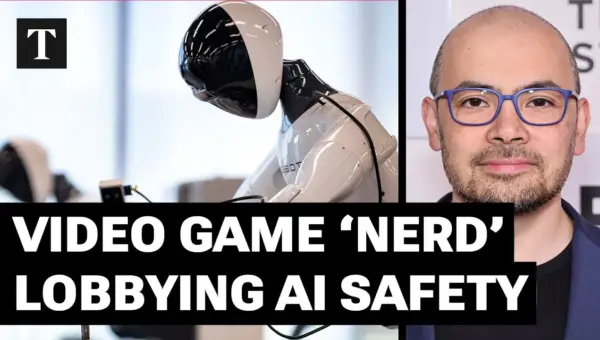
Demis Hassabis, the driving force behind DeepMind, has a deep-seated commitment to scientific curiosity and AI safety, often clashing with Silicon Valley's profit-driven culture. His early life as a chess prodigy forged an intense competitive spirit that now fuels his efforts to ensure AI development prioritizes ethical considerations over a reckless race for advancement. Hassabis's proactive approach includes battling for safety standards and raising concerns about the potential unintended consequences of advanced artificial intelligence.


SpaceX IPO Could Reach $2 Trillion Valuation
SpaceX is reportedly preparing for an IPO that could value the company at $2 trillion, driven by its advancements in AI and satellite internet. The company's innovative approach to space travel and its vision for orbital data centers position it as a major player in the tech landscape.