NBA All-Star Game Shines, But Dunk Contest Dims
The NBA All-Star Game delivered a much-needed dose of competition, but the Dunk Contest's relevance continues to fade. Hosts discuss the game's success, the challenges facing the dunk contest, and the potential of a one-on-one tournament.

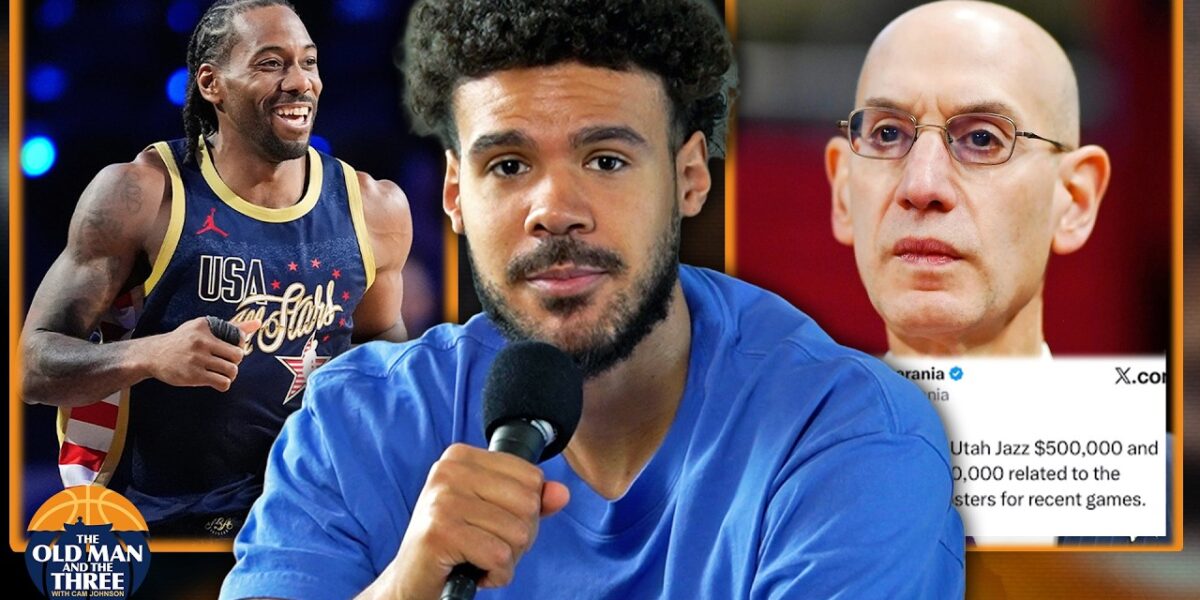
All-Star Game Delivers Competitive Spark, Dunk Contest Faces Existential Crisis
The NBA All-Star weekend, a spectacle designed to celebrate the league’s brightest stars, has once again provided a mixed bag of thrilling action and concerning trends. While the main event, the All-Star Game, showcased a renewed sense of competitiveness and provided multiple game-winning moments, the once-glorious Slam Dunk Contest continues to grapple with relevance and fan engagement.
All-Star Game: A Resurgent Showcase of Talent
This year’s NBA All-Star Game, held in Scottsdale, Arizona, was largely deemed a success by those in attendance and watching at home. The unique format, featuring multiple teams and shorter quarter-long games, proved to be a strategic masterstroke. This structure injected an element of urgency, leading to several dramatic game-winning shots and a noticeable increase in defensive intensity during crucial moments.
“I call it a success,” stated one of the hosts, reflecting on the game. “It’s always interesting when there’s multiple teams and so there’s multiple games and that kind of on one hand to me proved to be beneficial specifically because you have action at the end of every little quarter where it’s like we had game winners like we have multiple game winners. Defense kind of locked in on those close games, offense kind of locked in on those close games.”
While the presentation might have felt slightly different, with some noting a more isolated court and less intense lighting, the core of the game delivered. The hosts emphasized that the shortened games allowed for bursts of energy, enabling players to compete at an 85-90% clip, a significant improvement over recent years where the effort level had been a point of contention.
The team format, with squads like Star, Stripes, and World, ensured that more players had opportunities to shine, with eight-man rotations giving everyone a chance to contribute. This inclusivity, combined with the competitive nature of the final quarters, left many feeling optimistic about the direction of the All-Star Game.
The Dunk Contest Dilemma: Nostalgia vs. Innovation
In stark contrast to the game’s success, the Slam Dunk Contest continues to face an uphill battle. The hosts lamented the difficulty in innovating within the event, noting that “there’s not much left to do. Like you It’s very hard to reinvent new dunks.” While acknowledging the athleticism of professional dunkers, they pointed out that the space for creative growth is limited.
“It just positions the the dunk contest as a competition and kind of just a perpetually losing battle where it’s like we get so nostalgic about the past and about how this one went, how that one went for good reason. Like we’ve had some amazing dunk contests over the years and then when you talk bad about the the more recent ones, like it just doesn’t give guys any incentive to go out there and do it.”
The lack of incentive is compounded by criticism that often follows even commendable performances. “You just no matter what you do, there’s just certain scenarios where it’s like you just feel like you can’t overall win. So what’s the point?” one host questioned, highlighting the no-win situation many participants face.
Furthermore, the preparation required for the dunk contest was discussed as a significant hurdle. Unlike players who naturally engage in one-on-one play, dunking requires dedicated practice and physical readiness, which can be challenging to achieve amidst a demanding regular season schedule. This contrasts with the approach of specialists like Mac McClung, who prepares for the event year-round.
One-on-One Tournament: A Potential Solution?
Amidst the discussions about the dunk contest’s struggles, the idea of a one-on-one tournament emerged as a potential crowd-pleaser. The concept generated enthusiasm, with the hypothetical scenario of top players battling head-to-head in short, intense matchups proving appealing.
However, practicalities remain a concern. Would all the desired stars participate? Would the ideal scenario of the “best of the best” actually materialize? The hosts pondered whether the risk of public exposure would deter players from entering, especially if the reward wasn’t perceived as sufficiently high.
The discussion also touched upon who would qualify for such a tournament. While the immediate thought was to include All-Stars, the possibility of including other skilled players who might not have made the All-Star team, like Julius Randle, was raised. The challenge of selecting a limited field from a potentially larger pool of interested participants was identified as a key hurdle.
Despite these challenges, the one-on-one format’s inherent connection to the natural flow of basketball play was seen as an advantage over the dunk contest. “One-on-one is a lot more, you know, you’re not playing one-on-one in the games, but you’re playing one-on- ones. You’re playing ones after practice every like it’s just it’s more natural to what you’re already doing,” one host observed.
Location, Location, Location: The Impact of Venue
A recurring theme throughout the conversation was the impact of the host city on the overall All-Star weekend experience. The hosts argued that holding the event in major metropolises like Los Angeles can dilute the excitement, as the event may not feel like the primary attraction for the local population.
Drawing parallels to successful events in cities like Indianapolis and Charlotte, they emphasized the importance of a setting where the All-Star weekend is the “biggest show in town.” This creates a palpable buzz and a sense of shared excitement that can be lost in larger, more saturated markets.
“I wish they would do the weekend, especially the game, but the weekend overall in I think they should never do it in big cities. They should never do it in LA again. They shouldn’t do it in New York. Because of what you said. I saw this in Indie. I saw it in Charlotte. I saw it even in New Orleans. Crazy city. I think when everybody is in the same five streets and everything is walkable and it’s the biggest show in town. I think there’s a huge amount of ex it’s a it’s a it’s a thing that the city looks forward to all year.”
The preference for smaller, more focused environments was clear, with the idea that a city that eagerly embraces the event fosters a more authentic and engaging atmosphere for players and fans alike.
The Specter of Tanking
The conversation also briefly touched upon the perennial issue of tanking in the NBA. While not delved into deeply, the hosts acknowledged its ongoing relevance and the frustration it can cause players.
One host, drawing from past experience, stated, “As a competitor, you hate losing. And I just think it should always be on the players who are playing. I think everyone has to keep in mind that their jobs are on the line. So, it’s their responsibility to compete to the highest level or your standing in the league, your job in the league, whatever it may be, will be gone.” This perspective underscores the player’s inherent drive to compete, regardless of a team’s broader strategic goals.
The All-Star weekend, while celebrated for its competitive game, continues to present challenges for its ancillary events. As the league looks ahead, finding ways to reignite the magic of the dunk contest and innovate with formats like a one-on-one tournament will be crucial to maintaining the event’s overall appeal.
Source: Let’s Discuss NBA ALL-STAR and TANKING… (YouTube)

Related Articles

Luka Doncic’s Defense: The Real Issue for Mavs?
Luka Doncic leads the NBA in scoring, but his defensive efforts are being scrutinized as the potential "real issue" for the Dallas Mavericks. While his offensive prowess is undeniable, questions persist about whether his defense can be overcome for championship contention.

Suns Owner Slams NBA Tanking Culture
Phoenix Suns owner Matt Ishbia passionately criticized the NBA's 'tanking' culture, calling it an 'embarrassment' and a 'loser mentality.' He advocated for a return to competitive integrity and discussed his vision for building the Suns.

NBA All-Star Game: One-on-One Tourney to Save the Weekend?
A proposal for a six-player, one-on-one tournament featuring NBA stars like Luka Dončić and Kevin Durant is being discussed as a way to revitalize the struggling All-Star Weekend. However, concerns linger about player exposure and the potential for criticism, mirroring issues seen in the Dunk Contest.