Navy Secures Artemis Mission’s Risky Return
The U.S. Navy is playing a vital role in the safe return of NASA's Artemis astronauts. The splashdown in the Pacific Ocean marks the final, dangerous phase of the mission. This operation highlights the complex coordination between military and space agencies.


Navy Secures Artemis Mission’s Risky Return
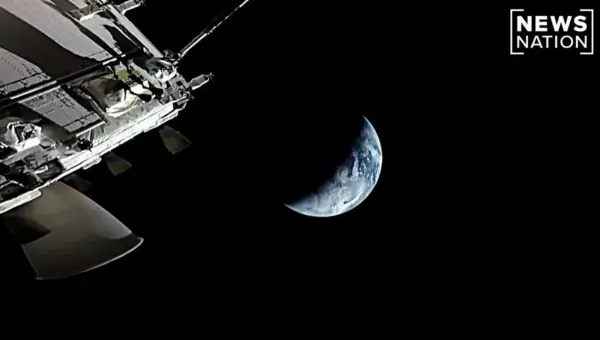
The U.S. Navy is preparing for a critical and dangerous phase of NASA’s Artemis mission: the splashdown and recovery of the Orion capsule in the Pacific Ocean. This operation marks the end of humanity’s next great voyage into space. The Artemis crew has spent days in orbit, experiencing extraordinary views of Earth and conducting important space travel activities. They have even eaten vegetables, like green beans, though thankfully, comfort foods like mac and cheese are also on the menu.
This mission is a historic achievement, making Americans incredibly proud and offering a sense of freedom. For the astronauts, the experience is deeply personal and will be remembered for a lifetime. After a 50-year wait since the Apollo era, these images and achievements are inspiring the world. Now, the crew faces the most dangerous part of their journey: re-entry into Earth’s atmosphere and the splashdown.
Navy’s Crucial Role in Space Recovery
The U.S. Navy, specifically the USS John P. Murtha, is stationed about 50-60 miles off the coast of California. A highly trained recovery team is on board, ready to spring into action. This joint effort involves the Coast Guard, the Navy, and NASA, with over 100 NASA specialists on the Murtha. Training for this complex recovery plan has been underway for over a year. Every moment is carefully choreographed to ensure the astronauts are safely brought from the Orion capsule onto the ship.
Navy Colonel Christopher, who has worked closely with NASA on this plan, highlighted the risks involved. The sea state, or how rough the water is, is very important. The recovery team must safely bring the capsule aboard the ship, which is moving. The wave height can affect this process. The entire recovery plan depends on a successful re-entry.
Understanding the Dangers of Re-entry
Re-entry is extremely risky. The Orion capsule travels at about 25,000 miles per hour. During this descent, temperatures can reach around 5,000 degrees Fahrenheit. NASA engineers had to rework the heat shield on the Orion capsule after issues during the Artemis I mission in 2022. Back then, chunks of the heat shield broke off during re-entry. The capsule returning today features a newly designed and improved heat shield to handle these extreme conditions.
Following a successful splashdown, the astronauts will be transported to another base and then flown back to Houston. The public on the coastline might get a brief glimpse of a streak in the sky or hear a sonic boom as the capsule enters the atmosphere, though the main event happens far out at sea.
Global Impact
This successful Artemis mission and its safe return are significant steps for space exploration. They show renewed commitment to human spaceflight beyond low Earth orbit. The data gathered and the technologies tested, like the improved heat shield, pave the way for future lunar missions and potentially Mars. The international cooperation involved in space programs like Artemis also strengthens diplomatic ties. However, the high cost and inherent risks remind us of the challenges in pushing the boundaries of human exploration.
Historical Context
The Artemis program builds on the legacy of NASA’s Apollo program, which landed the first humans on the Moon 50 years ago. Like Apollo, Artemis aims to explore the Moon and prepare for future missions to Mars. The Navy’s role in recovering spacecraft is also a long-standing tradition, dating back to the early days of spaceflight. This ensures the safety of astronauts and the recovery of valuable scientific equipment.
Future Scenarios
The success of Artemis I and the upcoming splashdown of Artemis II are crucial for future missions. These include landing astronauts on the Moon again and establishing a long-term presence there. Each mission provides valuable lessons learned, refining procedures and technology. Future missions will likely involve more international partners and private companies, reflecting a changing landscape in space exploration.
Source: US Navy preparing for NASA splashdown in Pacific Ocean | NewsNation Live (YouTube)

Related Articles

NASA Tests Heat Shield for Crewed Artemis Return
NASA is conducting extensive tests on the Orion spacecraft's heat shield for the upcoming Artemis II mission. This shield is critical for protecting astronauts from extreme temperatures during Earth re-entry. Following observations from Artemis I, NASA has performed significant testing and expressed confidence in the system's safety.


Artemis II Crew Faces Risky Reentry After Historic Moon Mission
The Artemis II crew is set to splashdown off the coast of California after a historic mission to the far side of the Moon. They face a perilous reentry into Earth's atmosphere, with the spacecraft's heat shield under intense scrutiny. This mission paves the way for future lunar and Mars exploration.


Artemis II Crew Relives Launch; Moon Landing Eyed by 2028
The Artemis II crew reflected on their mission, with launch being a standout moment they'd relive. As the Orion capsule prepares for splashdown, discussions turn to the future, with hopes of lunar landings by 2028 and significant technological and commercial advancements.