Navigating the Global Village: An Examination of American Global Awareness
Viral online content frequently highlights instances where some Americans demonstrate a lack of global awareness, leading to misunderstandings about geography, cultural norms, and international laws. From assuming universal seasons to believing U.S. laws apply worldwide, these examples underscore a perceived insularity. Addressing this 'American bubble' requires a concerted effort in education, cultural exchange, and critical thinking to foster a more globally informed citizenry.


Navigating the Global Village: An Examination of American Global Awareness
In an increasingly interconnected world, a robust understanding of global dynamics, diverse cultures, and international norms is more crucial than ever. Yet, a recurring theme on social media platforms and online forums highlights a perceived gap in global awareness among some Americans. Viral content frequently showcases instances where a lack of international perspective leads to misunderstandings, cultural gaffes, and sometimes, outright condescension. These anecdotes, while often humorous, underscore a deeper issue concerning insularity and the challenges of bridging cultural divides in the digital age.
The phenomenon, often dubbed ‘American exceptionalism’ or ‘the American bubble,’ manifests in various forms, from geographical misconceptions to assumptions about universal laws and cultural practices. Social media, in its capacity to instantly connect disparate communities, has become a prominent stage for these cross-cultural encounters, revealing the extent to which some individuals operate from a purely domestic frame of reference.
The Seasonal Disconnect: Misjudging Global Geography
One of the most frequently cited examples of geographical misunderstanding involves the simple concept of seasons. A widely circulated Instagram post, for instance, outlined an optimal year-long travel route around Australia, considering its seasonal variations. An Australian commenter noted that visiting a desert in May would be “hella cold.” This was met with a dismissive American response: “May is the beginning of summer, buddy.” The subsequent correction from the Australian – “Not in Australia, buddy” – highlighted a fundamental oversight: the Northern and Southern Hemispheres experience opposite seasons.
This incident is more than just a trivial error; it points to a broader lack of understanding about basic global geography. The Earth’s tilt on its axis means that when the Northern Hemisphere is tilted towards the sun, experiencing summer, the Southern Hemisphere is tilted away, experiencing winter, and vice-versa. For many Americans, whose educational and media consumption is predominantly focused on their own hemisphere, this elementary fact can sometimes be overlooked. Such geographical illiteracy can have practical implications, from travel planning to comprehending global climate patterns and agricultural cycles.
Cultural Myopia: Universalizing the Local
Beyond geographical blunders, a common manifestation of this insularity is the tendency to universalize distinctly American cultural experiences. A Reddit post musing on peanut butter and jelly sandwiches as a “universal” and “powerful symbol” of childhood and comfort food exemplifies this. While PB&J is undeniably an iconic staple of American childhood, its cultural significance is far from global. Many countries do not consume peanut butter with the same frequency, if at all, and the combination with jelly is even more specific to American palates.
This example underscores a broader cultural myopia, where deeply ingrained national customs and symbols are mistakenly perceived as global norms. Every nation, region, and culture possesses its own unique culinary traditions, comfort foods, and childhood associations. To project one’s own cultural touchstones onto the entire world not only demonstrates a lack of awareness but also risks devaluing the rich tapestry of global diversity. It highlights a need for greater cultural relativism – the understanding that cultural norms and values are specific to particular contexts and not universally applicable.
Legal & Governance Hubris: When National Laws Go Global
Perhaps more concerning than cultural or geographical misunderstandings are instances where Americans assume the global applicability of U.S. laws and constitutional principles. A Twitter exchange, for example, saw an American confidently declare that “slavery is illegal. It has been since 1865,” in response to a discussion about modern slavery. When challenged with the notion that U.S. laws do not apply worldwide, the American retorted, “I’d like you to show me the exact line in the 13th amendment that says this only applies to the United States.”
This exchange reveals a profound misunderstanding of national sovereignty and international law. The U.S. Constitution and its amendments are foundational legal documents for the United States, binding upon its citizens and within its territorial jurisdiction. They do not, by definition, extend to other sovereign nations, each of which possesses its own legal framework. While international conventions and treaties address global issues like human trafficking, the idea that a domestic law unilaterally applies worldwide is a dangerous oversimplification that undermines the very principles of international relations.
Another poignant example illustrating this nationalistic worldview was the proposed logo for a “Global Board of Peace” allegedly spearheaded by a prominent American political figure. The logo, purportedly representing a worldwide initiative, conspicuously featured a golden depiction of North America, with the United States at its center, marginalizing the rest of the world. Such symbolism, whether intentional or not, projects an image of self-centeredness and a lack of genuine global inclusivity, potentially alienating the very international partners such an initiative would seek to engage.
Measurement Systems and Identity Gaps: The Metric Divide and Localized Identity
The United States stands as one of the few nations globally that has not fully adopted the metric system, continuing to primarily use the Imperial system for everyday measurements. This anomaly frequently surfaces in online discussions, such as a Reddit post questioning, “Who on earth measures oil in liters?” The swift and accurate reply, “Everyone except for America,” encapsulates the global reality. While Americans might be accustomed to gallons and quarts, the vast majority of the world operates on the metric system, measuring volume in liters.
This adherence to a distinct measurement system, while seemingly innocuous, contributes to a sense of isolation and can create practical difficulties in international trade, science, and communication. It also highlights a broader pattern of resistance to global standardization, often rooted in historical precedent and a lack of perceived necessity for change within a large, self-sufficient domestic market.
Related to this is the common American practice of responding with their state, rather than their country, when asked, “Where are you from?” While understandable within the context of domestic travel (where the question typically seeks to differentiate between U.S. states), this habit can appear culturally tone-deaf in international contexts. For individuals from other countries, particularly in Europe or Asia where national borders are often close and distinct, stating one’s country is the standard and expected response. This seemingly minor difference reflects varying degrees of global exposure and the differing salience of national versus sub-national identity in different parts of the world.
Age and Assumptions: The Drinking Age Dilemma
Finally, the differing legal drinking ages across the globe provide another fertile ground for cross-cultural misunderstandings. In the U.S., the legal drinking age is 21, one of the highest in the world. Many other countries, particularly in Europe, set the age at 18 or even lower. An Instagram post depicting individuals celebrating their 18th birthday with alcohol was met with a deluge of American comments asserting, “No, that’s illegal. It’s 21.”
This immediate assumption that U.S. laws dictate global norms is a stark illustration of ethnocentric thinking. It demonstrates a lack of awareness about the varying legal frameworks and cultural approaches to alcohol consumption that exist worldwide. For those outside the U.S., celebrating adulthood at 18 often includes the legal right to consume alcohol, making the American comments appear ignorant and culturally insensitive.
The Roots of the Bubble and Pathways Forward
The recurring patterns observed in these online interactions point to several potential contributing factors to this perceived ‘American bubble.’ Geographic isolation, with vast oceans bordering the country, historically limited direct exposure to diverse cultures compared to, say, European nations. The sheer size and economic self-sufficiency of the U.S. can also foster a domestic-first mindset, reducing the perceived necessity for extensive global engagement for many citizens.
Educational curricula, while varying widely, have sometimes been criticized for an insufficient emphasis on world geography, international relations, and comparative cultural studies. Furthermore, a media landscape often heavily focused on domestic issues can inadvertently reinforce an insular worldview. The ideology of American exceptionalism, while fostering national pride, can also, at times, contribute to a belief in the inherent superiority or universality of American norms.
Addressing this challenge requires a multi-faceted approach. Enhanced global education, starting from early schooling, can equip future generations with a more comprehensive understanding of the world. Promoting international travel, cultural exchange programs, and language learning can foster empathy and direct experience with diverse societies. A more globally-minded media, alongside individual efforts to consume diverse news sources, can broaden perspectives. Ultimately, fostering a culture of curiosity, humility, and critical thinking – the willingness to question one’s own assumptions and learn from others – is paramount in ensuring that Americans, like all global citizens, can navigate the complexities of our shared world with greater understanding and respect.
Source: Proof Americans Don't Know How the World Works | American Reaction | #11 (YouTube)

Related Articles


US Regime Change Efforts: A History of Tactical Wins, Strategic Losses
A comprehensive review of U.S. interventions reveals a consistent pattern: while the United States is adept at tactically removing foreign governments, achieving strategic success—the establishment of stable, legitimate political orders—has proven exceedingly difficult. Historical analysis points to unintended consequences and long-term instability as common outcomes.


Iran Faces Uncertainty After Ayatollah’s Death in US Strike
Iran faces a period of profound uncertainty following the death of its long-time leader, Ayatollah, in a US-led strike. The event has triggered international diplomatic discussions, revealing divergent views among allies, while domestic reactions in Iran appear mixed.

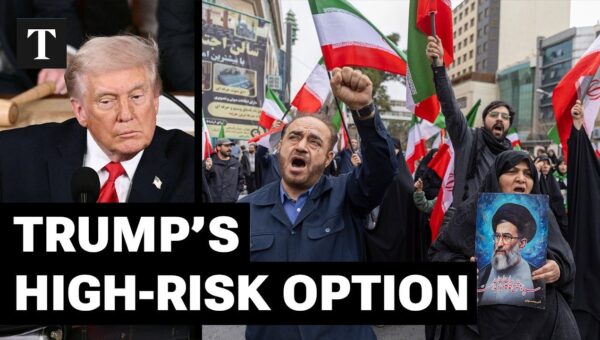
Trump’s Iran Strategy: Regime Change A High Bar
Former US President Donald Trump has declared regime change as the explicit goal in Iran, citing the regime's weakness and brutality. Analysts highlight the aggressive nature of this strategy, which relies heavily on the Iranian people rising up, despite the risks of severe crackdowns. The move has sparked debate on international law and the potential for internal upheaval.