NATO Fortifies Arctic Amid Rising Russia, China Threats
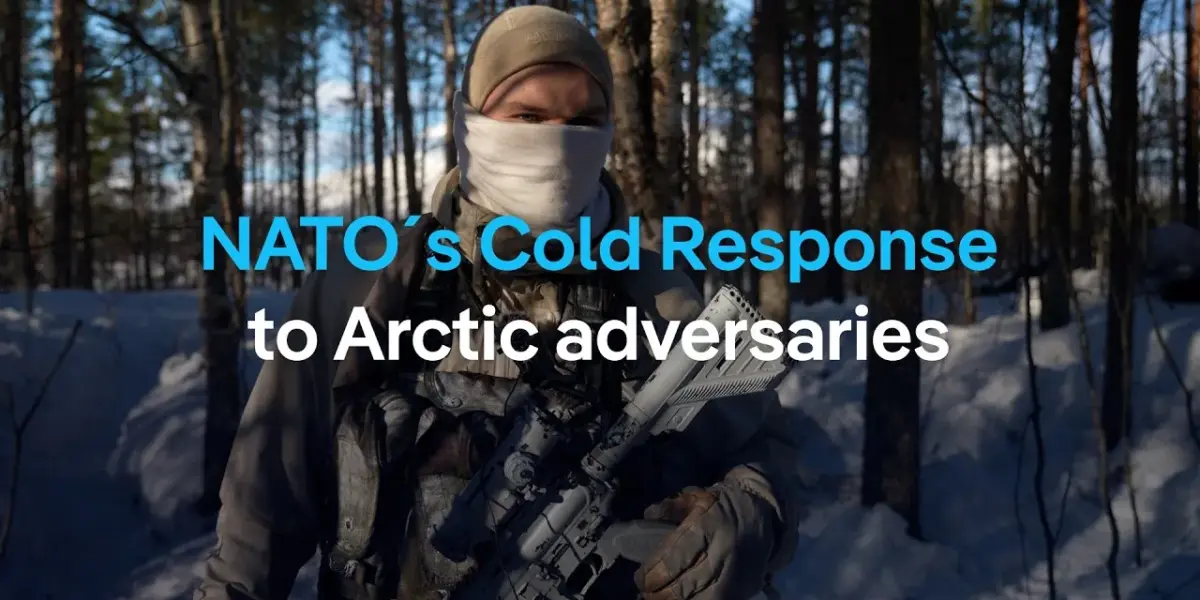
NATO has launched 'Arctic Sentry,' a major operation to bolster its presence and coordinate activities in the strategically vital High North. The move comes amid rising concerns over Russia's military build-up and China's growing interest in the region. The alliance's recent 'Cold Response' exercise simulated a large-scale attack, involving thousands of troops and integrating civilian responders to test readiness in extreme conditions.

NATO Bolsters Arctic Presence with ‘Arctic Sentry’
In the face of escalating military activity from Russia and growing interest from China, the North Atlantic Treaty Organization (NATO) has launched a significant operation named ‘Arctic Sentry.’ This initiative aims to unify and enhance the alliance’s operations in the High North, a region of increasing strategic importance due to melting ice opening new sea lanes and revealing vast energy and mineral resources. The operation serves as a clear signal of deterrence to both Russia and China, while also reassuring allies about NATO’s commitment to the region.
Russia’s Arctic Military Might and NATO’s Response
The Kola Peninsula, located just across the borders of Norway and Finland, is Russia’s primary military stronghold. It houses crucial assets, including nuclear-capable submarines. NATO considers Russia’s recent actions in the Arctic to be more unpredictable and aggressive, which elevates the importance of these Russian bases and their potential to project power from the region. Many of the weapon systems stationed on the Kola Peninsula are aimed at the United States, prompting Washington to demand increased security measures. ‘Arctic Sentry’ directly addresses these concerns by consolidating all NATO activities in the area under a single command.
China’s Arctic Ambitions and NATO’s Vigilance
While the United States, under former President Donald Trump, has highlighted China as a potential threat in the Arctic, some allies believe this concern may be exaggerated. Currently, there is no significant Chinese military activity observed on the NATO side of the Arctic. However, China does increase its research activities in the region during the summer months. NATO is maintaining vigilance, with facilities like the Evaness air station, situated a few hundred kilometers from Russia’s Kola Peninsula, playing a crucial role in monitoring undersea and aerial movements. This monitoring capability was recently showcased during NATO’s ‘Cold Response’ exercise, the first major drill conducted under the ‘Arctic Sentry’ umbrella.
‘Cold Response’ Exercise: A Realistic Training Scenario
‘Cold Response,’ NATO’s largest military exercise, brought together 32,000 troops from 14 allied nations to train in the harsh Arctic environment. The exercise simulated a worst-case scenario: an attack on a NATO ally, in this instance, Norway, triggering Article 5 of the NATO treaty, which states that an attack on one member is an attack on all. The drills involved extensive training on land, at sea, and in the air, focusing on rapid reinforcement and joint operations in extreme conditions. The Italian Navy’s Sanjustu, for example, sailed thousands of kilometers from the Mediterranean to participate, providing its crew and ship valuable experience in Arctic waters.
Naval and Air Power in Action
The exercise featured advanced naval capabilities, with Norwegian corvettes demonstrating their speed and agility, designed to surprise adversaries. Amphibious operations were a key focus, with troops from Europe, Canada, and the United States practicing landings. In the air, fighter jets like the F-35 were on standby for quick reaction alerts, intercepting simulated Russian military aircraft near Norwegian airspace. Aircraft designed for submarine warfare were also deployed, using buoys to detect and track potential underwater threats, such as Russian submarines.
Adapting to Modern Warfare
The training incorporated lessons learned from the conflict in Ukraine. Norwegian soldiers practiced concealment techniques, such as digging into the snow, to counter the increased threat of drones. Commanders emphasized the need to develop war-fighting skills that prevent NATO from being drawn into a protracted war of attrition, unlike the situation in Ukraine. The goal is to ensure that any attack on NATO would not succeed and that the alliance can avoid a static conflict.
Civilian Integration and Local Support
To enhance realism, the ‘Cold Response’ exercise included civilian responders. The town of Narvik, a historic coastal community in Arctic Norway, served as a simulated reception point for casualties from the front lines. A train arrived carrying approximately 100 mock patients, both civilian and military, testing the capacity of the local healthcare system and the coordination between civilian and armed forces. The integration of military personnel and civilian defense units into the hospital’s emergency response highlighted the collaborative approach. Local residents expressed strong support for the exercise, emphasizing the need for readiness and training in case of an attack. “If there war and we be attacked, we need these people and they have to train here,” stated one resident, identifying Russia as the primary threat.
Reassurance and Deterrence
NATO hopes that ‘Arctic Sentry’ and exercises like ‘Cold Response’ will alleviate concerns expressed by leaders like former President Donald Trump, particularly regarding the security of allied territories. The alliance aims to project strength and preparedness, demonstrating that it can effectively defend its members in the challenging High North environment. The leaders of Norway, Canada, and Germany observed the exercise, underscoring the importance of collective security. The message conveyed is clear: NATO is prepared to fight and defend its territory, deterring potential adversaries and ensuring peace through strength. The ultimate goal is to make potential adversaries reconsider any aggressive intentions, as stated by one official: “if we are prepared enough, we want Putin to wake up in the morning and say that maybe NATO is too prepared for a war today.”
Source: Inside NATO's High North mission preparing for a worst-case scenario | DW News (YouTube)

Related Articles


Kremlin Shakes: Elite Discontent Fuels Putin’s Paranoia
Internal turmoil and paranoia are reportedly gripping the Kremlin as President Putin faces growing elite discontent and the realities of the Ukraine war. Meanwhile, Russia's strategic involvement in the Iran conflict highlights complex calculations and potential risks, even as a wider global war remains unlikely.


U.S. Iran Tensions Rise Amid Shifting Alliances
Rising tensions between the U.S. and Iran are creating a volatile geopolitical situation. With conflicting signals on de-escalation and potential shifts in alliances like NATO and U.S.-Israel relations, the path forward remains uncertain. The global economy and regional stability hang in the balance.
Ukraine Strikes Russian Oil Refinery, Eyes Iran Threat
Ukrainian forces struck a key Russian oil refinery, disrupting Moscow's war capabilities. Meanwhile, Finland's president urged continued U.S. support for Ukraine, as Kyiv shares its air defense expertise globally amid growing geopolitical complexities involving Iran and potential sanctions against Hungary.