Nation’s Priorities Skewed: Military Over People?
Donald Trump argues the U.S. should prioritize military spending over domestic programs like daycare, suggesting states handle these needs. This sparks debate on federal versus state responsibility for social services and national priorities. The discussion highlights potential inequalities and the evolving role of government.

Nation’s Priorities Skewed: Military Over People?
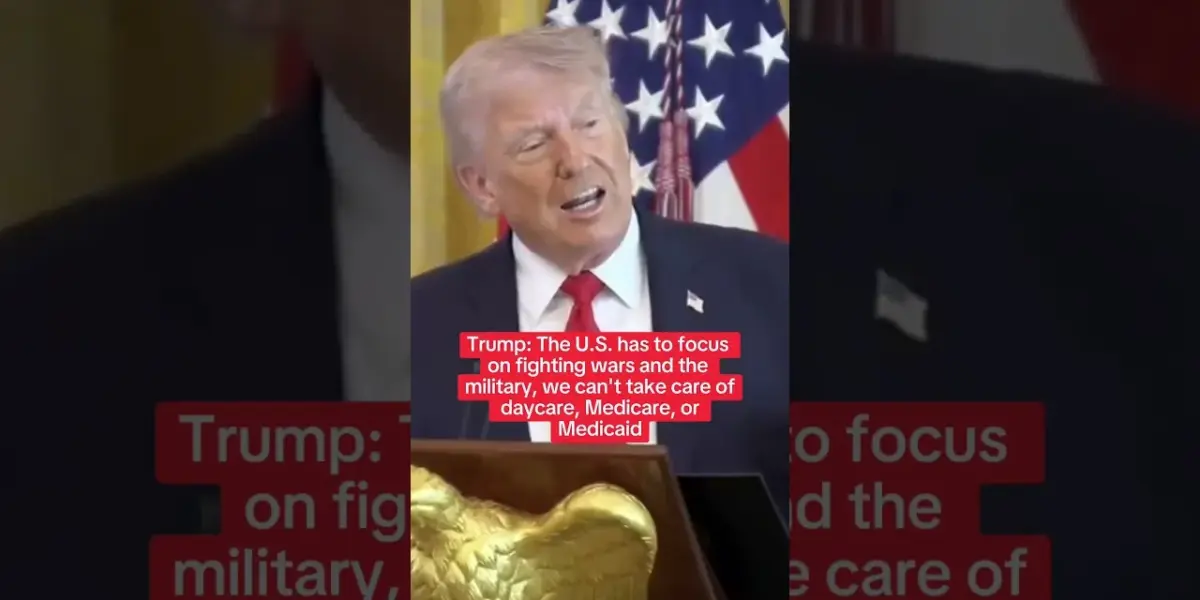
Former President Donald Trump recently stated that the United States should focus its spending on military protection rather than on domestic programs like daycare. He argued that these social services are better handled at the state level, not by the federal government. This idea raises important questions about how we should prioritize national resources and what the role of the federal government truly is.
The Argument for State Control
Trump’s core argument is that the federal government is too stretched to manage a wide array of individual social programs. He specifically mentioned daycare, Medicaid, and Medicare as examples. He believes that each of the 50 states is better equipped to handle these needs. This approach would put the financial burden and the decision-making power squarely on the shoulders of state governments. He suggested that states could raise their own taxes to pay for these services, and perhaps even receive some tax relief from the federal government to help offset the cost.
“We have to take care of one thing. Military protection.”
The underlying idea is that by focusing federal efforts on a single, critical area – national defense – the country can be more effective. It’s like a household deciding to only focus on paying the mortgage and letting each family member manage their own smaller expenses. Trump believes this specialization would strengthen the nation’s security while allowing for more localized solutions to social needs.
A Different View: Federal Responsibility
However, this perspective faces significant criticism. Many argue that programs like Medicare and Medicaid are fundamental safety nets that require federal oversight to ensure a basic standard of care across the country. Leaving these to individual states could lead to vast inequalities. For instance, a person in one state might have access to excellent healthcare coverage, while someone in another state could face inadequate services or much higher costs.
The concept of a unified nation often implies a shared responsibility for the well-being of all its citizens. Federal programs help create a baseline of support that prevents extreme disparities. Think of it like a national highway system; we expect roads to be usable and safe no matter which state you’re driving through. Similarly, proponents of federal social programs believe basic healthcare and childcare should be accessible to everyone, not just those living in wealthier states.
Historical Context: The Evolving Role of Government
The debate over federal versus state control of social programs is not new. Historically, the United States has seen shifts in this balance. Before the Great Depression, many social welfare programs were primarily handled at the local or state level, or through private charities. However, the widespread economic hardship of the 1930s led to the creation of federal programs like Social Security, recognizing that national problems often require national solutions.
Later, programs like Medicare and Medicaid were established in the 1960s to address specific needs related to healthcare for the elderly and low-income families. These were seen as essential federal commitments to ensure vulnerable populations received necessary medical attention. This expansion of federal responsibility reflected a changing understanding of the government’s role in protecting its citizens.
Why This Matters
This discussion directly impacts the lives of millions of Americans. How federal money is spent determines the availability and quality of essential services. If the focus shifts heavily towards defense, it could mean less funding for healthcare, education, childcare, and infrastructure projects that directly benefit the public. It also raises questions about fairness and equality. Should access to basic needs depend on where you live?
Furthermore, the idea of prioritizing military spending touches on the nation’s role in global affairs. A strong military is often seen as a deterrent and a tool for projecting power. However, critics argue that excessive military spending can detract from domestic needs and lead to involvement in foreign conflicts that are costly in both human and financial terms. It’s a constant balancing act between ensuring national security and investing in the well-being of the people at home.
Implications, Trends, and Future Outlook
The trend towards greater federal involvement in social welfare began in the 20th century and has faced ongoing political debate. Proposals to shift responsibilities back to the states, as suggested by Trump, represent a potential reversal of this trend. If adopted, such a shift could lead to a more patchwork system of social services across the country.
The future outlook will likely depend on political will and public opinion. Americans will need to decide what level of government they trust most to address their needs. Will they favor specialized federal focus on defense with state-run social programs? Or will they continue to support a robust federal role in ensuring a minimum standard of living and opportunity for all citizens, regardless of their state of residence? The choices made today will shape the social and economic landscape for generations to come.
Source: Trump Says U.S. Must Spend on War and Military, Not on the People (YouTube)

Related Articles


Trump War Spending Sparks Outrage: Cuts to Social Programs Feared
An accidentally released White House video has revealed Donald Trump's views on prioritizing military spending over domestic needs like childcare. Senator Chris Van Hollen criticized the massive war costs, contrasting them with cuts to essential social programs and questioning the justifications for the conflict.


Trump Links Wars to Healthcare Cuts: A Nation’s Priorities Questioned
Former President Trump suggested the U.S. can't afford healthcare due to ongoing wars, proposing states take over funding. This sparks debate on national priorities, balancing global roles with domestic needs, and potential inequalities if states manage healthcare.


US Exit From NATO: Europe Must Step Up or Face Crisis
If the U.S. leaves NATO, Europe would struggle to replace its capabilities in the short term. Years of underinvestment in European defense have exposed critical weaknesses. The alliance's future depends on European nations stepping up to strengthen their own security.