NASA’s Orion Lands Safely, Proving Heat Shield Fixes Work
NASA's Orion capsule successfully returned astronauts to Earth, proving the effectiveness of heat shield fixes after the Artemis I mission's issues. Retired astronaut Andy Allen highlighted the extensive collaboration and technical readiness behind the program.


NASA’s Orion Lands Safely, Proving Heat Shield Fixes Work
NASA’s Orion capsule successfully splashed down in the Pacific Ocean, bringing astronauts home after a long mission. This return marks a significant moment for the Artemis program. Retired astronaut Andy Allen shared his thoughts on the landing and the efforts behind the mission.
A Smooth Return After a Challenging Journey
Watching the astronauts return safely was a moment of relief and celebration for many, including former astronauts like Andy Allen. He described the feeling as fantastic, acknowledging the hard work and dedication of the entire NASA team. The successful splashdown provided a much-needed piece of good news.
Allen highlighted that the mission is a tribute to America. Tens of thousands of people from all 50 states worked on the rocket and its systems. Businesses, both large and small, played a crucial role in putting everything together. This widespread collaboration is seen as a key to America’s success.
Astronaut Experience: From Shuttle to Capsule
Andy Allen, who flew three space shuttle missions, noted that landing procedures for the Orion capsule are different from the space shuttle. He explained the physical sensation of returning to Earth’s gravity. As a spacecraft descends, the body feels the pull of gravity, which can be a bit of a burden.
However, intense focus and years of training help astronauts manage this. Space shuttle landings required precision, like landing on a runway. The commander’s job was to ensure a safe and accurate landing. Allen recalled the challenge of getting the commander’s feet on the ground during shuttle landings.
The Orion splashdown offers a different experience. It’s described as a fun ride, like a roller coaster, followed by landing on the ocean’s surface. Afterward, astronauts step onto a raft and then take a helicopter ride. Seeing the astronauts walk out looking great after such a mission is a testament to their preparation and the spacecraft’s design.
Addressing the Heat Shield Concerns
A key concern for this mission was the performance of Orion’s heat shield. During the uncremaned Artemis I mission in 2022, the heat shield experienced unexpectedly high erosion upon landing. This raised questions about its ability to protect human crews from the intense heat of re-entry.
NASA made significant changes to the heat shield and the entry process. Instead of pushing the system to its limits, they aimed for a smoother, easier re-entry. This approach reduces the stress on the heat shield. Even with these adjustments, the heat shield performed well, and the capsule was successfully recovered.
Minor but important changes were made to the heat shield itself. This success is credited to the entire system, including all the suppliers and businesses involved. Their commitment to quality work is essential for such complex missions.
Artemis: A High-Readiness Program
Allen described the Artemis program as having a technical readiness level of nine. This means it is about as ready for operations as a program can be before it flies. The successful return of the crew confirms this readiness.
This achievement is a tribute to everyone involved, from small businesses to civil servants, Congress, and the President. Their collective effort in putting the program together is what makes complex projects like this possible and successful in America.
Global Impact
The successful return of the Artemis crew is more than just a technological achievement for NASA. It demonstrates that human spaceflight missions can be conducted safely, even after facing technical challenges like the heat shield issue on Artemis I. This success builds confidence for future deep space exploration missions, potentially paving the way for longer journeys to the Moon and Mars.
It also showcases the ability of large, complex government-led projects to succeed through collaboration between government agencies and private industry. This model can be applied to other major international challenges, such as climate change or global health crises. The mission reinforces the United States’ position in space exploration leadership and inspires a new generation to pursue careers in science and engineering.
Source: Ex-astronaut details what it's like returning to Earth | Morning in America (YouTube)

Related Articles


Artemis II Crew Achieves Lunar Milestone, Shatters Records
The Artemis II mission has concluded its historic nine-day journey, marking the first time humans have flown around the Moon in over 50 years. The crew achieved a new distance record for humanity and captured unprecedented views, paving the way for future lunar missions.

Artemis II Astronauts Safely Splash Down After Moon Mission
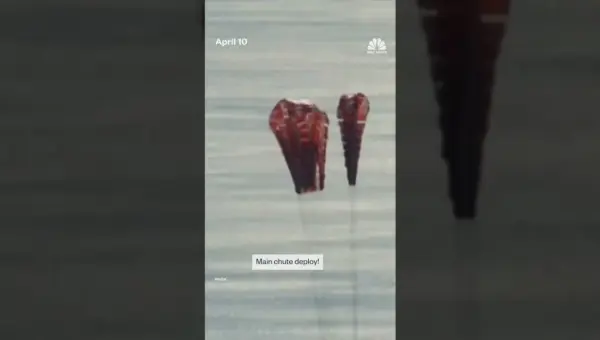
The Artemis II mission concluded successfully as all four astronauts splashed down safely in the Pacific Ocean, marking a significant milestone in lunar exploration. The crew module, Integrity, completed its journey around the Moon and safely re-entered Earth's atmosphere, with all astronauts recovered after a successful parachute deployment sequence.


Artemis II Crew Returns Safely to Earth After Lunar Mission
The Artemis II astronauts have successfully returned to Earth, splashing down in the Pacific Ocean after their historic journey around the Moon. The mission concluded with a challenging re-entry and a smooth recovery operation, bringing all four crew members home safely. This success marks a critical step for NASA's lunar exploration goals.