NASA’s Moon Return: Rockets Blaze, Shields Glow, Risks Loom
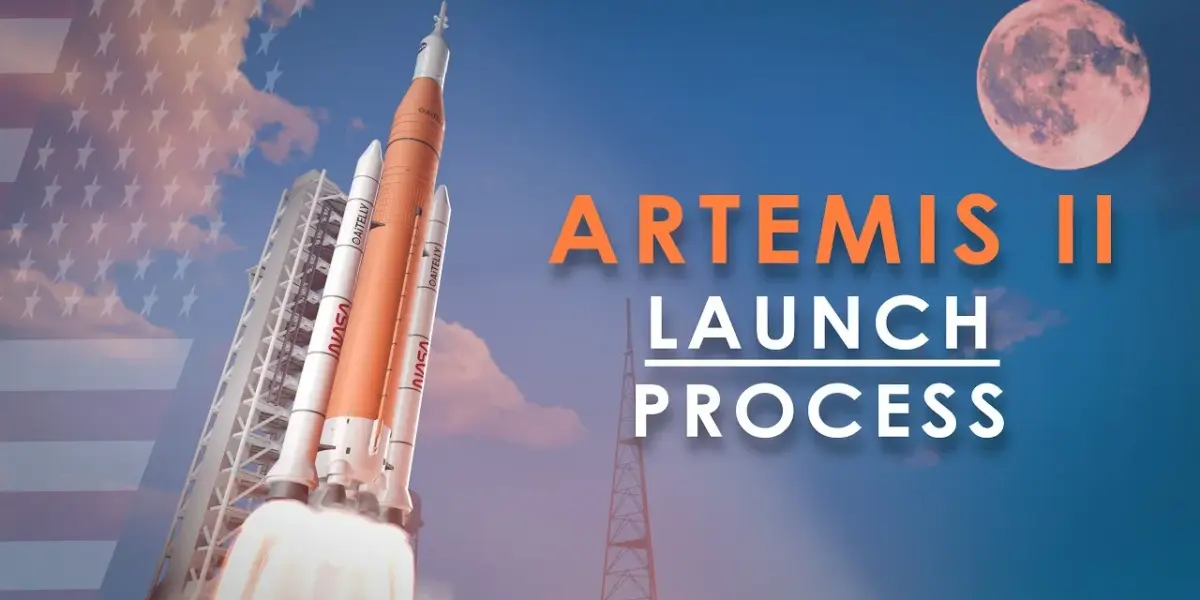
NASA's Artemis 2 mission prepares to launch the most powerful rocket ever built, the Space Launch System (SLS), sending astronauts back to the Moon after 50 years. This complex journey involves a powerful liftoff, a critical lunar injection burn, a gravitational slingshot maneuver around the Moon, and a dangerous re-entry through Earth's atmosphere. The mission highlights both incredible engineering achievements and the inherent risks of space travel.

NASA’s Bold Leap Back to the Moon: A Rocket Science Breakdown
NASA is gearing up for a historic return to the Moon, a journey not taken by humans in over 50 years. The Artemis 2 mission is set to launch the most powerful rocket ever built, the Space Launch System (SLS). This mission isn’t just about getting astronauts to the Moon; it’s a complex dance of engineering, physics, and risk management. Understanding how this massive rocket works and the dangers involved gives us a glimpse into humanity’s drive to explore the cosmos.
Liftoff: Unleashing Earth’s Might
The journey begins at NASA’s Kennedy Space Center. As the countdown reaches zero, the SLS rocket ignites its core engines and two massive solid rocket boosters. This powerful combination unleashes a staggering 8.8 million pounds of thrust. Imagine the force needed to lift such a colossal machine off the ground. The rocket tears through the atmosphere, a fiery spectacle lighting up the Florida coast. Within two minutes, the side boosters, having done their job, burn out and fall away into the Atlantic Ocean. The main core stage then pushes the rest of the spacecraft, the Orion capsule and its upper stage, into low Earth orbit before separating.
The Lunar Push: Breaking Free of Earth’s Grasp
Reaching the Moon requires more than just getting into orbit. This is where the trans-lunar injection comes in. As Orion circles Earth, the rocket’s upper stage fires one last time. This powerful burn accelerates the spacecraft to over 24,000 miles per hour. It’s this immense speed that allows Orion to escape Earth’s gravitational pull. Once this crucial maneuver is complete, the upper stage detaches, leaving the Orion spacecraft to continue its journey, powered by its European service module. This phase is all about precision, using gravity’s pull and a powerful boost to set the course for the Moon.
Around the Moon: A Cosmic Slingshot
For the Artemis 2 test flight, the plan isn’t to land. Instead, the astronauts will use a clever maneuver called a free return trajectory. They will fly around the far side of the Moon, using its gravity like a giant slingshot. This natural boost will send them back towards Earth without needing significant engine firings. This saves precious fuel and tests a critical part of the mission’s return plan. Future missions aiming for a lunar landing will use a different, more stable orbit. This involves parking in a highly elongated, egg-shaped path where the gravity of Earth and the Moon balance out, allowing astronauts to transfer to a lunar lander.
The Fiery Return: Surviving Re-entry
The journey home is often described as the most dangerous part of any space mission. As Orion approaches Earth, the service module, which provides power and propulsion, is jettisoned. Only the capsule-shaped crew compartment remains. Orion slams into Earth’s atmosphere at a blistering 25,000 miles per hour, about 32 times the speed of sound. The friction creates a superheated plasma, reaching temperatures nearing 5,000 degrees Fahrenheit – nearly half as hot as the Sun’s surface. Orion’s heat shield must withstand this incredible inferno to protect the crew. After enduring this fiery descent, parachutes deploy to slow the capsule down for a splashdown in the Pacific Ocean, where Navy ships await to recover the astronauts.
Lessons from Near Disasters: Safety and Redundancy
Space travel is inherently risky, and even minor issues can become life-threatening. The transcript mentions a past NASA mission where a helium gas leak almost doomed the crew. Helium is vital for pressurizing rocket fuel. A significant leak could prevent thrusters from working correctly, which is critical for maneuvering in space. Similarly, the Boeing Starliner capsule faced problems with its reaction control system thrusters during a mission. Software issues flagged thrusters as non-operational, affecting the spacecraft’s ability to move. While some thrusters were restored, the cause remained unclear. These incidents highlight the constant challenges NASA and other space agencies face in ensuring crew safety.
SpaceX’s Approach: Reliability Through Design
The transcript also touches on SpaceX’s approach to crewed missions, particularly with the Crew Dragon capsule. SpaceX uses two-stage rockets, like the Falcon 9, designed for reliability. This means if one engine on the first stage fails, the others can compensate. This redundancy adds a significant layer of safety. The Crew Dragon itself is an autonomous spacecraft, meaning it flies itself. However, astronauts can take manual control if needed. The capsule is designed for a splashdown landing in the ocean, similar to NASA’s Orion.
Boeing’s Starliner: A Different Landing
Boeing’s Starliner capsule offers a different approach. Unlike SpaceX’s ocean landings, Starliner is designed to land on solid ground. It uses a combination of drogue parachutes, main parachutes, and airbags to cushion its touchdown. This method aims for a softer landing and easier recovery. The Starliner is also a large spacecraft, weighing around 44,000 kg when fully fueled, comparable to nearly 27 school buses. This comparison helps illustrate the sheer scale and weight of the vehicles we send into space.
Why This Matters
The Artemis program and the ongoing development of private spaceflight capabilities represent a new era of space exploration. The SLS rocket and Orion capsule are crucial for NASA’s goals of returning humans to the Moon and eventually reaching Mars. Simultaneously, companies like SpaceX and Boeing are developing their own spacecraft, pushing the boundaries of innovation and making space more accessible. These missions are not just scientific endeavors; they are tests of human ingenuity and our ability to overcome immense challenges. The risks are undeniable, from the extreme heat of re-entry to the potential for system failures. However, each mission, whether a success or a learning experience, builds upon our knowledge and capabilities, paving the way for future discoveries and human expansion beyond Earth.
Looking Ahead: The Future of Lunar Exploration
The Artemis missions are designed to establish a long-term human presence on the Moon. This includes building a lunar base and utilizing lunar resources. The development of different spacecraft like Starliner and Crew Dragon shows a diverse and competitive space industry. This competition often drives faster progress and more cost-effective solutions. As we learn more about surviving and operating on the Moon, these lessons will be vital for even more ambitious missions, such as sending humans to Mars. The journey back to the Moon is just the beginning of humanity’s next giant leap into the solar system.
Historical Context: A Half-Century Journey
It’s been 50 years since the Apollo program last sent humans to the Moon. The technology and understanding of space travel have advanced dramatically since then. The Apollo missions relied on the Saturn V rocket, which was powerful for its time but different in design and operation from the SLS. The challenges faced by the early astronauts, like navigating and surviving in a hostile environment, are still relevant today. However, modern computing, materials science, and engineering allow for more sophisticated systems and a greater understanding of the risks involved. The Artemis program builds on the legacy of Apollo while incorporating the latest technological advancements and lessons learned from decades of space exploration, including the International Space Station and robotic missions.
Source: Artemis 2 Moon Mission : The Complete Launch Breakdown #nasa (YouTube)

Related Articles


Moon Mission Sparks New Space Race Era
The Artemis II mission's return from the Moon marks a new era in space exploration, potentially sparking a modern space race. The mission provided new scientific data and breathtaking views, while also highlighting the inherent risks of deep space travel. This renewed focus on lunar exploration has significant geopolitical and economic implications for global powers.
Astronauts’ Silent Treatment Exposes Trump’s Space Rift
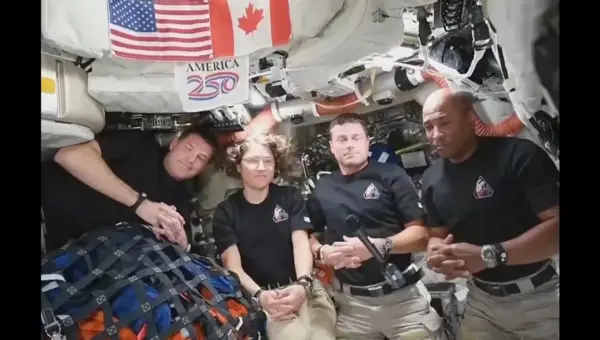
An awkward call between Donald Trump and the Artemis 2 astronauts, marked by prolonged silence from the crew, highlights a perceived disconnect in values and leadership. The incident contrasts with past presidential interactions and raises questions about Trump's stance on space exploration versus his proposed budget cuts.


Trump’s Iran Threat Looms as Artemis II Reaches New Space Heights
Former President Trump issued a stern warning to Iran regarding a potential deal, while the Artemis II mission achieved a new distance record in space. The Education Department also announced it is rescinding Title IX agreements related to gender identity policies.