NASA’s Asteroid Mission: From Mars Dream to Lunar Gateway
NASA's ambitious Asteroid Redirect Mission (ARM), designed as a stepping stone to Mars, aimed to capture a small asteroid boulder and tow it to lunar orbit for astronaut testing. Though cancelled, its advanced propulsion and robotic technologies live on in NASA's Lunar Gateway and future deep space exploration plans.

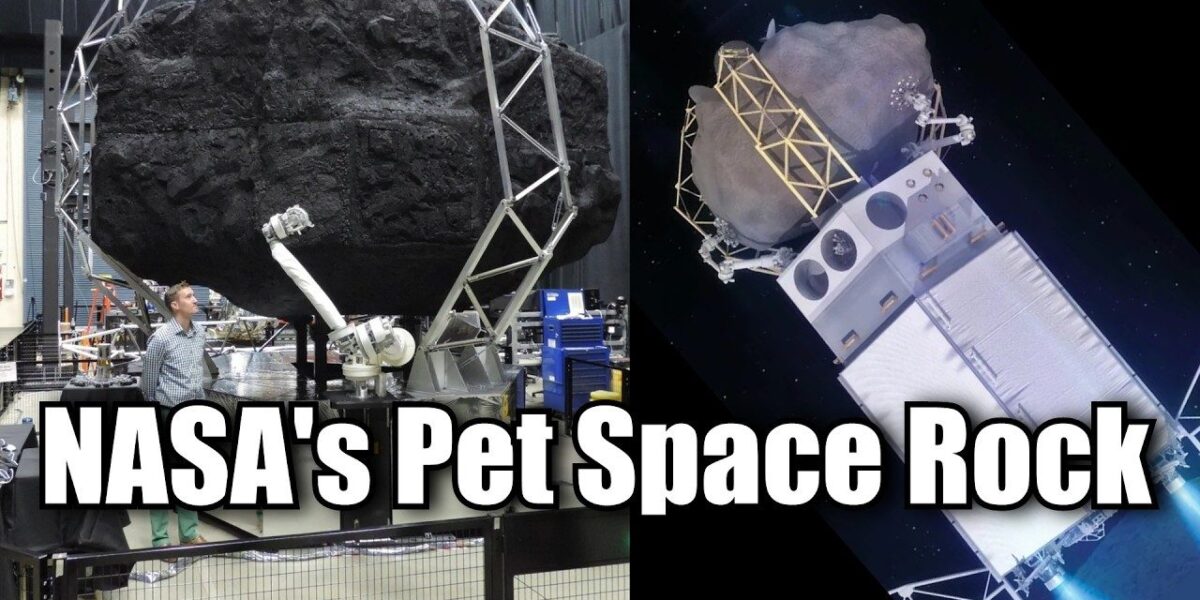
The Ambitious Asteroid Redirect Mission: A Stepping Stone to Mars
A decade ago, NASA envisioned a bold intermediate step in its journey to Mars: the Asteroid Redirect Mission (ARM). This ambitious project aimed to leverage the capabilities of the Orion spacecraft and the yet-to-be-launched Space Launch System (SLS) rocket, not just for deep space exploration, but as a crucial testbed for technologies needed for a human mission to the Red Planet. While the dream of ARM as originally conceived has since been shelved, its technological legacy continues to influence NASA’s future endeavors, particularly in lunar exploration.
From Interplanetary Dust to Lunar Orbit
The core concept of ARM was to capture a small asteroid, or more precisely, a boulder from a larger asteroid, and tow it into a distant retrograde orbit around the Moon. This celestial ‘practice boulder’ would then serve as a target for astronauts, allowing them to test their skills in deep space operations, including spacewalks, sample collection, and spacecraft docking, all within a more accessible lunar environment. This mission would have marked the first time humans visited another celestial body beyond the Moon, potentially even being considered the first human mission to another planet, depending on the asteroid’s classification.
The Kerbal Connection: A Game-Changing Concept
The imaginative scope of ARM resonated deeply within the space enthusiast community, perhaps most notably through its integration into the popular simulation game Kerbal Space Program in 2014. This collaboration introduced players to the concept of capturing and redirecting asteroids, complete with realistic (albeit scaled-down) SLS-like rocket parts and specialized ‘claw’ mechanisms. The game’s playful yet technically grounded approach to ARM allowed millions to experience the challenges and triumphs of asteroid capture, sparking widespread interest and understanding of the mission’s objectives.
Evolution of the Capture Strategy
ARM’s journey through NASA’s planning stages saw a significant evolution in its capture strategy. Initially, the mission considered capturing an entire small asteroid, potentially up to 10 meters in diameter, using an inflatable bag. However, by 2015, the focus shifted to Option Two: the ‘boulder pluck.’ This approach involved identifying a larger asteroid, between 100 to 1,000 meters across, and then using a robotic spacecraft to detach and capture a smaller boulder, approximately 4 to 6 meters in size and weighing around 20 tons. This strategy was deemed more technologically challenging, offering greater opportunities to test advanced robotic manipulation and planetary defense techniques, such as the gravity tractor concept.
The Asteroid Redirect Vehicle (ARV): A Technological Marvel
The heart of ARM was the Asteroid Redirect Vehicle (ARV). This sophisticated spacecraft was designed with a dry mass of approximately 5.5 tons, expandable to about 18 tons with its 13 tons of xenon propellant. It was engineered to fit within a 5-meter fairing, making it compatible with various heavy-lift rockets. A key feature of the ARV was its massive solar arrays, based on the Roll-Out Solar Arrays (ROSA) used on the International Space Station, designed to generate around 50 kilowatts of power. This substantial power was essential for its advanced propulsion system.
Advanced Electric Propulsion: The ION Drive
To tow the captured asteroid boulder back to lunar orbit, ARM relied on the cutting-edge Advanced Electric Propulsion System (AEPS). This system featured four (with a spare) magnetically shielded Hall effect thrusters, each capable of consuming 10-12 kilowatts and producing 300-400 millinewtons of thrust. While generating only micro-G accelerations, these thrusters offered an extremely high specific impulse (around 3,000 seconds), meaning they could achieve significant velocity changes over extended periods with far less propellant than traditional chemical rockets. This solar electric propulsion was envisioned as a critical technology for future Mars cargo missions, enabling the delivery of supplies and equipment over long durations.
Robotic Prowess and Scientific Instrumentation
Beyond its propulsion, the ARV was equipped with a suite of advanced systems. These included a hydrazine monopropellant system for attitude control and asteroid despinning, an X-band communication system for high-bandwidth data transfer, and a comprehensive sensor package comprising infrared spectrometers and laser altimeters for asteroid characterization. Crucially, the ARV incorporated significant onboard autonomy to manage the complex capture maneuvers, compensating for the light-speed delay in communications with Earth. A dedicated docking adapter was also integrated, designed to allow the Orion spacecraft to securely attach.
Mission Timeline and Expected Outcomes
A typical ARM mission profile, using a hypothetical target like a boulder from the asteroid Itokawa, would have involved a 2021 launch. The outbound journey would span approximately 2.5 years, characterized by continuous low-thrust spiraling using the ion engines and consuming about 4 tons of xenon. Upon reaching the asteroid, a 51-day period would be dedicated to characterization and boulder selection. The capture itself involved autonomous descent, touchdown, and the deployment of a three-armed restraint system with micro-spine grippers and drills to secure the boulder. After a successful capture and ascent, the ARV would begin its return journey, arriving back in lunar orbit around 2027. This would be followed by the crewed Orion mission, where astronauts would dock with the ARV, perform EVAs, and collect samples from the asteroid boulder.
Technological Legacy: From ARM to Lunar Gateway
Despite its cancellation in 2017 due to budget reallocations, the technological advancements spurred by ARM did not vanish. The high-power Hall effect thrusters developed for the AEPS were directly repurposed for the Power and Propulsion Element (PPE) of the Lunar Gateway, a planned orbital outpost around the Moon. Maxar Technologies, selected in 2019 to develop the PPE, integrated similar propulsion systems, drawing from the expertise gained during ARM’s development. The PPE, designed to provide power, propulsion, and communications for the Gateway, is expected to generate 50-60 kilowatts of power using large rollout solar arrays and multiple Hall effect thrusters, including some derived from the ARM program’s Hermes thrusters. The PPE is currently slated to launch on a Falcon Heavy in late 2027, followed by a year-long journey to its final orbit.
Uncertain Futures and Evolving Ambitions
However, the future of the Lunar Gateway itself has become uncertain. Recent NASA infographics on Artemis plans have omitted the Gateway, raising questions about its status and potential launch. If the Gateway is indeed scaled back or cancelled, the PPE, and by extension, a significant piece of ARM’s technological legacy, might not fly as originally intended. Despite these uncertainties, the development of advanced propulsion systems, including potential adaptations for nuclear electric propulsion, remains a priority for NASA. The technologies nurtured by ARM continue to hold promise for future deep space missions, underscoring the enduring impact of this ambitious, though ultimately unfulfilled, stepping stone to Mars.
Source: Whatever Happened To The Asteroid Redirect Mission? (YouTube)

Related Articles

NASA’s Evolving SLS Rocket Hints at New Upper Stage
NASA's Artemis program may be adopting a new upper stage for its Space Launch System (SLS) rocket, potentially utilizing the commercially available Centaur V. An updated infographic reveals design changes and hints at evolving mission strategies, including advanced lunar lander operations.


SpaceX Starship V3 Nears First Flight Amidst Major Artemis Shakeup
SpaceX eyes March for Starship V3's maiden flight as new testing reveals design improvements. Meanwhile, NASA's Artemis program faces delays and strategic shifts, with Artemis III repurposed as a LEO test mission.


NASA Revises Artemis Moon Landing Goal to 2028
NASA is revising its Artemis program, targeting a 2028 lunar landing amidst a new space race with China. The plan includes preparatory missions in 2027 and focuses on exploring lunar poles for resources. International collaboration remains key, though funding questions persist.