NASA’s Artemis II Rocket Prepares for Historic Moon Mission
NASA's Artemis II mission is set to launch, marking humanity's return to lunar orbit after over 50 years. The powerful SLS rocket will carry a four-person crew on a ten-day journey, serving as a critical step towards establishing a permanent lunar base by 2028. Mission managers emphasize astronaut safety while acknowledging the inherent risks of exploring beyond Earth.

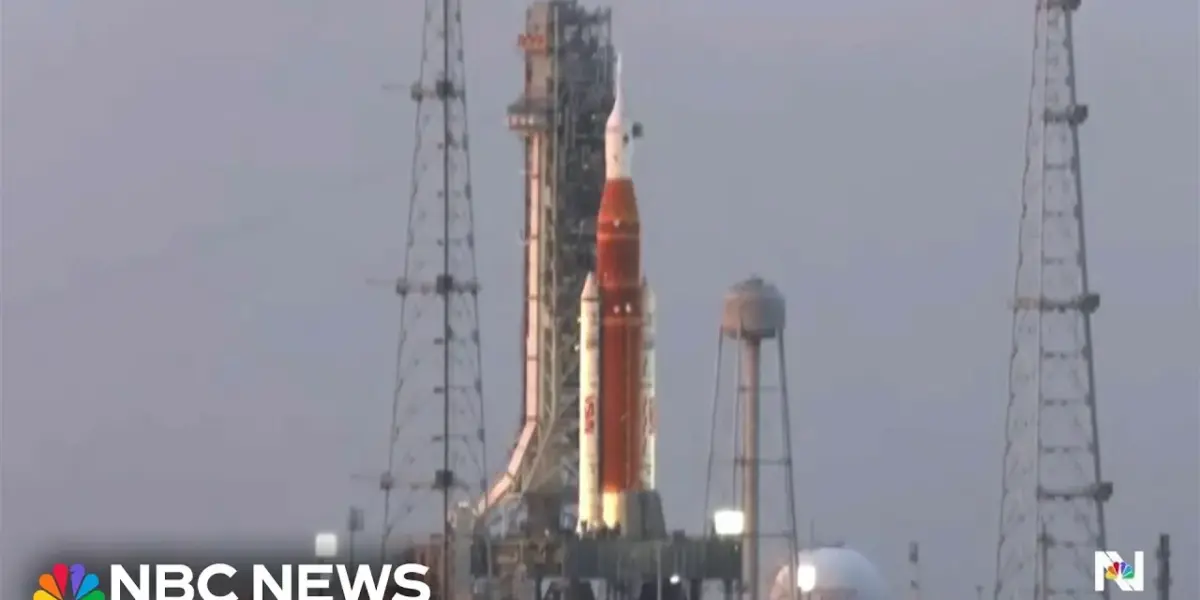
Countdown to Lunar Return: Artemis II Poised for Launch
NASA’s Artemis II mission is on the verge of making history, with the powerful Space Launch System (SLS) rocket standing ready at Launch Pad 39B at the Kennedy Space Center. The four-person crew, currently in quarantine, is preparing for a ten-day journey that marks America’s return to lunar orbit for the first time in over 50 years. This mission is not just a symbolic step; it’s the critical opening act for NASA’s ambitious plan to establish a long-term human presence on the Moon, with a goal of landing astronauts and building a lunar base by 2028.
A Giant Leap for a New Generation
NASA Administrator Bill Nelson emphasized the significance of the Artemis II crew, stating they represent a new generation of space explorers. Commander Reid Wiseman shared a touching moment, posting a photo with his daughters, highlighting the personal and familial aspect of this monumental undertaking. The mission aims to solidify America’s place in space history by not only returning to the Moon but by planning to stay. “It means we’re about to make our return to the Moon, and this time, to stay,” a NASA official stated, underscoring the long-term vision behind the Artemis program.
The Countdown to Liftoff: A Tightly Scheduled Day
The hours leading up to the Artemis II launch are meticulously planned. The critical sequence begins at 7:34 a.m. when ground teams initiate the fueling process for the massive SLS rocket. By 9:45 a.m., the crew will be awake, having eaten their mission breakfast, and preparing to suit up. The astronauts will head to the launch pad at 2:00 p.m., and at 6:24 p.m., the ten-day mission to the Moon will officially commence, beginning with the Orion capsule’s journey.
Meet the SLS: A Rocket of Unprecedented Power
At the heart of the Artemis II mission is the Space Launch System (SLS), one of the largest and most powerful rockets ever built. Standing an imposing 322 feet tall—taller than the Statue of Liberty—the SLS is designed to generate the immense power needed to send humans beyond Earth’s orbit. Its base features four powerful engines, complemented by two large booster rockets. This combined force generates an astonishing 7 million pounds of thrust at liftoff, an amount comparable to the weight of 700 elephants. At the very top of this colossal rocket sits the Orion space capsule, designed to carry the astronauts safely to their destination.
Safety and Risk: Exploring the Unknown
Mission managers have repeatedly stressed that astronaut safety remains NASA’s highest priority. However, they also acknowledge the inherent risks involved in space exploration. “The key to this is understanding the risk, doing everything you possibly can to drive it to zero, and then at some point, you’re going to accept that risk because you’re not going to be able to explore the world beyond ours without taking some risk,” explained a mission manager. This calculated approach to risk is essential for pushing the boundaries of human exploration and achieving ambitious goals like establishing a lunar base.
Why Return to the Moon? Building for the Future
The importance of returning to the Moon, more than 50 years after the Apollo missions, lies in NASA’s strategic objective to build a sustainable presence. “So this is all about building a Moon base. Getting astronauts on the Moon in 2028, building that Moon base,” a reporter relayed. Artemis II serves as the crucial first step, testing the capabilities of the SLS rocket and the Orion capsule, and paving the way for future missions that will involve longer stays and more complex operations on the lunar surface. This foundational work is essential for preparing for even more ambitious journeys, potentially to Mars.
What’s Next for Artemis?
With Artemis II poised to launch, the focus now shifts to the mission’s execution and the crew’s safe return. The success of this flight will provide invaluable data and experience, directly influencing the timeline and capabilities for Artemis III, the mission planned to land the first woman and the next man on the Moon. The world will be watching closely as NASA embarks on this new era of lunar exploration, aiming to build a lasting legacy beyond Earth.
Source: Countdown to NASA’s historic Artemis II launch (YouTube)

Related Articles


Our Sun Might Be a Cosmic Anomaly
New research suggests our Sun, long considered a typical star, might be more unusual than previously thought. This finding impacts our understanding of life's prevalence in the universe and the search for habitable exoplanets.
NASA Rockets Toward Moon, Reigniting Space Race
NASA's Artemis II mission is set to launch, sending a four-person crew on a 10-day journey around the Moon. This historic flight, over 50 years since the last lunar landing, aims to gather research for future exploration and potential resource discovery. The mission represents a significant step in humanity's return to deep space and could pave the way for a permanent lunar presence.


US, China Race to Moon for Global Leadership, Resources
The US and China are in a heated race to return to the Moon, driven by a desire for global leadership and access to lunar resources. This competition extends to shaping future space governance, with differing visions for a commercially open versus state-controlled environment. The Moon is seen as a vital staging post for deeper space exploration, including missions to Mars.