NASA Rockets Toward Moon, Reigniting Space Race
NASA's Artemis II mission is set to launch, sending a four-person crew on a 10-day journey around the Moon. This historic flight, over 50 years since the last lunar landing, aims to gather research for future exploration and potential resource discovery. The mission represents a significant step in humanity's return to deep space and could pave the way for a permanent lunar presence.

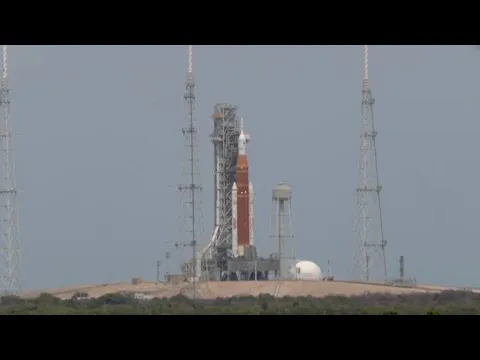
NASA Rockets Toward Moon, Reigniting Space Race
NASA is preparing for its Artemis II mission, aiming to send a four-person crew around the Moon. This launch marks a significant return to lunar exploration more than 50 years after the last human steps on the Moon. The mission is set to lift off soon, with engineers powering up systems and making final checks. The Orion spacecraft, developed over two decades at a cost of $40 billion, will carry the astronauts on a 10-day journey. They will fly around the Moon and then return to Earth.
Weather looks good for the launch, though there’s a 20% chance of delays due to conditions like isolated showers or winds. If the launch proceeds as planned, the Orion capsule is expected to splash down off the coast of Southern California 11 days later. Ideal wind conditions are crucial, and managers are watching for any potential issues that could halt the launch. Mild temperatures are expected, but cloud cover and wind are the main concerns.
The massive 32-story-high rocket system is reported to be ready. Previous issues, like a hydrogen fuel leak and a clogged helium pressurization line, have been fixed. The countdown is now underway for astronauts Reid Wiseman, Victor Glover, Christina Koch, and Canadian astronaut Jeremy Hansen. This mission is seen as humanity’s first step back to the Moon in 53 years. It’s also considered a key step in the search for life beyond Earth.
A Journey Beyond Earth Orbit
The Artemis II mission will take humans further into deep space than ever before. The journey involves a unique flight path. After an initial orbit around Earth, the spacecraft will perform a U-turn at the Moon, which is about 240,000 miles away. The overall mission path is described as a figure-eight. While Artemis II has no landing capability, it will gather important research for future exploration.
This mission could provide new evidence for the possibility of life elsewhere. It also sets the stage for building a future Moon base. Scientists believe the Moon’s surface and inner layers hold valuable resources for Earth. These include rare minerals and metals that could help human advancement. The potential presence of water on the Moon is especially exciting. Water could be a key factor in establishing a sustainable human presence there in the future.
The Broader Context: A New Space Race?
The Artemis program represents a renewed push for lunar exploration, not just by NASA but by other nations as well. While the transcript focuses on Artemis II, the program’s ultimate goal is to establish a long-term human presence on the Moon and eventually send astronauts to Mars. This renewed focus on space exploration is happening at a time of shifting global dynamics. Nations are increasingly seeing space as a domain for scientific discovery, economic opportunity, and national prestige.
The development of advanced spacecraft and launch systems like the one used for Artemis II highlights the significant investment required for deep space missions. The $40 billion cost of the Orion spacecraft alone underscores the financial commitment. This effort is not just about scientific curiosity; it’s also about technological development and international cooperation, or competition. As countries invest more in their space programs, the possibility of a new space race, similar to the one during the Cold War, is becoming more real.
Global Impact
The Artemis II mission, while a single step, has far-reaching implications. It renews global interest in space exploration and inspires the next generation of scientists and engineers. The research conducted during this mission could unlock secrets about the Moon’s formation and resources, potentially aiding future space endeavors and resource utilization. Furthermore, the international cooperation involved, with Canada participating in the crew, signals a trend toward collaborative space exploration. However, it also occurs against a backdrop of increasing competition in space among major powers, who see strategic and economic advantages in lunar and beyond-Earth exploration.
Source: Countdown to Artemis II launch begins | NewsNation Live (YouTube)

Related Articles


Our Sun Might Be a Cosmic Anomaly
New research suggests our Sun, long considered a typical star, might be more unusual than previously thought. This finding impacts our understanding of life's prevalence in the universe and the search for habitable exoplanets.


US, China Race to Moon for Global Leadership, Resources
The US and China are in a heated race to return to the Moon, driven by a desire for global leadership and access to lunar resources. This competition extends to shaping future space governance, with differing visions for a commercially open versus state-controlled environment. The Moon is seen as a vital staging post for deeper space exploration, including missions to Mars.
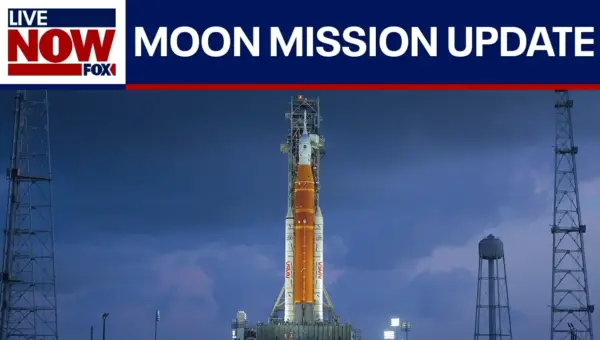
NASA Prepares for Moon Mission Launch Amidst Weather Watch
NASA is nearing a critical launch window for its upcoming moon mission, with teams working through final preparations and safety checks. Meteorologists are closely monitoring weather conditions, which currently show an 80% chance of a 'go' for liftoff, though isolated showers remain a possibility. The mission marks a significant step in humanity's return to lunar exploration.