NASA Pivots: Mars Nuclear Probe, Moon Base Ahead
NASA is pivoting its exploration strategy, prioritizing a nuclear-powered Mars probe and accelerating plans for a moon base. The International Space Station's future is uncertain, with a shift towards commercial platforms. Meanwhile, new telescope data reveals overmassive black holes in dwarf galaxies and captures stunning images of Saturn and the Crab Nebula.

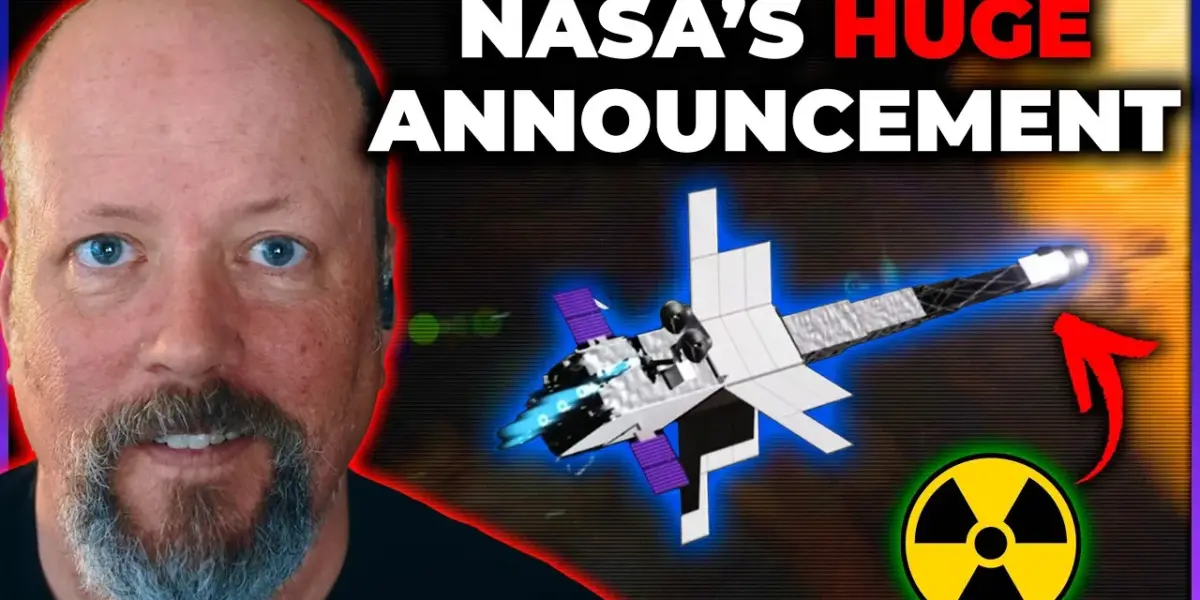
NASA Shifts Focus to Mars Nuclear Probe and Moon Base
NASA is reshaping its future exploration plans, with a new emphasis on Mars and a potential shift away from the International Space Station’s successor. The agency’s new administrator, Bill Nelson, has outlined a vision that prioritizes deeper space missions, including a nuclear-powered probe for Mars and accelerating plans for a lunar base.
The Future of Low Earth Orbit
The International Space Station (ISS), a cornerstone of human spaceflight for over two decades, is slated for de-orbit by the end of this decade. This move will end NASA’s direct role in operating a space station in low Earth orbit. The agency hopes that commercial companies will have private space stations ready to host astronauts by then. NASA plans to become a ‘tenant’ on these private stations, conducting research without the burden of building and maintaining the infrastructure.
However, if these commercial stations aren’t ready, NASA has a backup plan. They might add a new module to the ISS itself. This module would act as a bridge between the aging station and potential commercial partners. The government would own this core module, with private companies attaching their own sections. This approach aims to ensure continued human presence in low Earth orbit even if commercial ventures falter.
Lunar Gateway Paused, Mars Mission Emerges
The planned Lunar Gateway, a space station intended to orbit the Moon and serve as a staging point for lunar missions, is now on hold. Instead of canceling it outright, NASA is pausing its development. A key component of the Gateway, the Power and Propulsion Element, is being considered for a groundbreaking mission to Mars.
This proposed Mars mission, tentatively named ‘Space Reactor One Freedom’ (SR1 Freedom), would test a nuclear fission reactor in space. This reactor would power an advanced ion engine, offering a highly efficient way to travel through deep space. The SR1 Freedom would also carry three advanced helicopters to Mars, building on the concepts explored in the ‘Project Skyfall’ initiative.
These helicopters would deploy into Mars’ atmosphere to scout potential landing sites for future human explorers. This mission is seen as a crucial step toward establishing a human presence on the Red Planet. The ambitious timeline aims for a launch before the end of 2028. However, the scientific community expresses skepticism, noting that these nuclear reactors and advanced helicopters have not yet been tested in space, and the deadline appears very aggressive.
Accelerating Lunar Base Development
With the Lunar Gateway development paused, NASA plans to reallocate funds. The Artemis 4 mission is now expected to be the one that lands astronauts on the Moon. Following this, the agency intends to use the saved resources to directly begin building a permanent moon base with the Artemis 5 mission.
This strategic shift suggests a future where NASA focuses on commercial low Earth orbit operations, a nuclear-powered Mars exploration mission, and establishing a foothold on the Moon. Despite the exciting prospects, the agency has faced significant budget cuts, leading to layoffs and a loss of institutional knowledge. The aggressive timelines for these new initiatives, especially in light of the White House’s efforts to decrease NASA’s budget, present considerable challenges.
Ambitions and Skepticism
NASA’s ambition is evident in its plan to land 30 robotic landers on the Moon in 2027 alone. This is a stark contrast to the Commercial Lunar Payload Services initiative, which has seen only one successful landing in its six years of operation. While the prospect of multiple helicopters on Mars and a lunar base is thrilling, achieving these goals will require overcoming significant hurdles.
Vera C. Rubin Observatory Advances
Meanwhile, the Vera C. Rubin Observatory, operational for just over a month, is already generating a torrent of data. This powerful telescope is designed to survey the entire visible sky over a decade, cataloging billions of stars and galaxies. The data is processed through a network of ‘data brokers’ that filter information for astronomers interested in specific phenomena like supernovae or asteroids.
This system represents a new era of automated astronomical discovery. Alerts for transient events, such as supernovae or potentially hazardous asteroids, are sent to observatories worldwide for follow-up observations. This rapid response capability is crucial for understanding fast-evolving cosmic events and identifying threats to Earth.
Overmassive Black Holes in Dwarf Galaxies
Astronomers using the James Webb Space Telescope have made a surprising discovery about dwarf galaxies. They found that in some early galaxies, the central supermassive black hole was disproportionately massive compared to the galaxy itself. In two dwarf galaxies studied, the black hole accounted for over 60% of the galaxy’s total mass. This challenges the common understanding that black holes typically make up less than 1% of a galaxy’s mass.
Furthermore, these ‘overmassive’ black holes are actively feeding on surrounding material but are not emitting the expected high levels of X-ray radiation associated with active galactic nuclei. The characteristics of these objects bear a resemblance to the mysterious ‘little red dots’ previously observed, suggesting a potential link between these early, unusual black hole-galaxy systems and other enigmatic cosmic phenomena.
Triton’s Influence on Neptune
Neptune’s largest moon, Triton, is a peculiar world with an orbit that goes against the direction of most other large moons, known as retrograde motion. Scientists believe Triton was not formed with Neptune but was captured later. This capture event is thought to have significantly influenced Neptune’s axial tilt, causing it to tilt by 28 degrees, much more than Earth’s.
Triton is also slowly spiraling inward towards Neptune. In about 3.6 billion years, it is predicted to either be torn apart by Neptune’s gravity, forming a ring system, or collide directly with the planet. Thus, Triton’s capture is a key explanation for Neptune’s current axial tilt and its moon’s eventual fate.
Dragonfly Mission to Titan on Track
The Dragonfly mission, a nuclear-powered rotorcraft destined for Saturn’s moon Titan, is progressing well. Its launch is targeted for 2028, with arrival expected in 2034. Recent updates show significant integration progress, including the testing of its ‘brain’ – the integrated electronics module – and power switching units.
A specialized foam coating is also being tested to keep the spacecraft warm in Titan’s frigid environment, where temperatures can reach -179 degrees Celsius (-290 degrees Fahrenheit). Dragonfly will explore diverse locations on Titan, searching for the building blocks of life.
New Twin Protostellar Systems Discovered
Astronomers have identified a second example of a young star system where planets are being directly imaged within a protoplanetary disk. The system, named Wispit 2, is located 437 light-years away and features a Sun-like star about 5 million years old. This discovery follows the earlier identification of the PDS 70 system, providing astronomers with more opportunities to study planet formation in action.
In Wispit 2, two exoplanets have been detected within the disk surrounding the young star. This allows scientists to directly observe planets as they form, offering unprecedented insights into the early stages of planetary system evolution. The ability to image these nascent worlds directly is a significant advancement in exoplanet research.
Webb and Hubble Capture Saturn
Both the James Webb Space Telescope (JWST) and the Hubble Space Telescope have captured stunning images of Saturn. Taken near the end of 2024, these images showcase the planet’s rings, which are currently widening from our perspective after a period where they appeared edge-on. Saturn’s axial tilt causes seasonal changes, affecting how its rings are viewed from Earth.
The JWST, an infrared telescope, reveals details like the ‘ribbon wave’ jet stream in Saturn’s northern hemisphere and highlights the F ring’s prominence due to its icy composition. Hubble, observing in visible light, provides a different perspective. The images also show several of Saturn’s numerous moons, underscoring the complexity and beauty of the ringed planet.
Crab Nebula’s Expanding Remnant
The Crab Nebula, a vibrant supernova remnant, continues to be a subject of study. First observed as a ‘guest star’ by Chinese astronomers in 1054, this celestial cloud is the result of a star’s explosive death. Modern telescopes like Hubble have been imaging the nebula since 1999, allowing scientists to track the expansion of its gas tendrils at speeds of 1,500 kilometers per second.
By comparing images over time, astronomers can chart the debris field expanding from the central pulsar, the dense remnant of the exploded star. This ongoing observation provides critical data on the dynamics of stellar explosions and the evolution of supernova remnants over cosmic timescales.
Source: Nuclear Mars Mission // Moon Base // ISS Replacements (YouTube)

Related Articles


US Military Pursues Secret Tech, Lunar Base Plans Emerge
Reports indicate the US military and defense contractors are exploring advanced technologies, possibly reverse-engineering unknown craft. Concurrently, NASA plans a lunar base, while millions of UAP-related files are allegedly deleted, raising transparency concerns. These developments could reshape global power dynamics.


Dark Matter Defies Gravity, Forming Fuzzy Clouds Instead of Stars
Dark matter, which outweighs all visible matter, surprisingly does not collapse under gravity to form stars or black holes. Instead, it forms vast, diffuse clouds around galaxies, baffling scientists with its unique behavior. Understanding this cosmic enigma is key to comprehending the universe's structure and evolution.
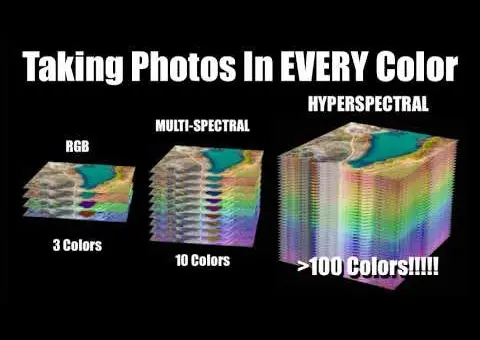
New Satellites Capture ‘Impossible’ Colors from Space
New hyperspectral satellites are capturing images with hundreds of color bands, revealing details invisible to the human eye and traditional cameras. This advanced technology builds on a 200-year legacy of spectral analysis, enabling unprecedented insights into Earth's resources and environment.