NASA Faces UAP Questions After Witness Account
A witness at NASA's Marshall Space Flight Center reported seeing unidentified egg-shaped objects on an ISS live feed. The feed was quickly cut when questioned, raising concerns about NASA's transparency. This incident echoes historical suspicions of government secrecy surrounding unexplained phenomena.

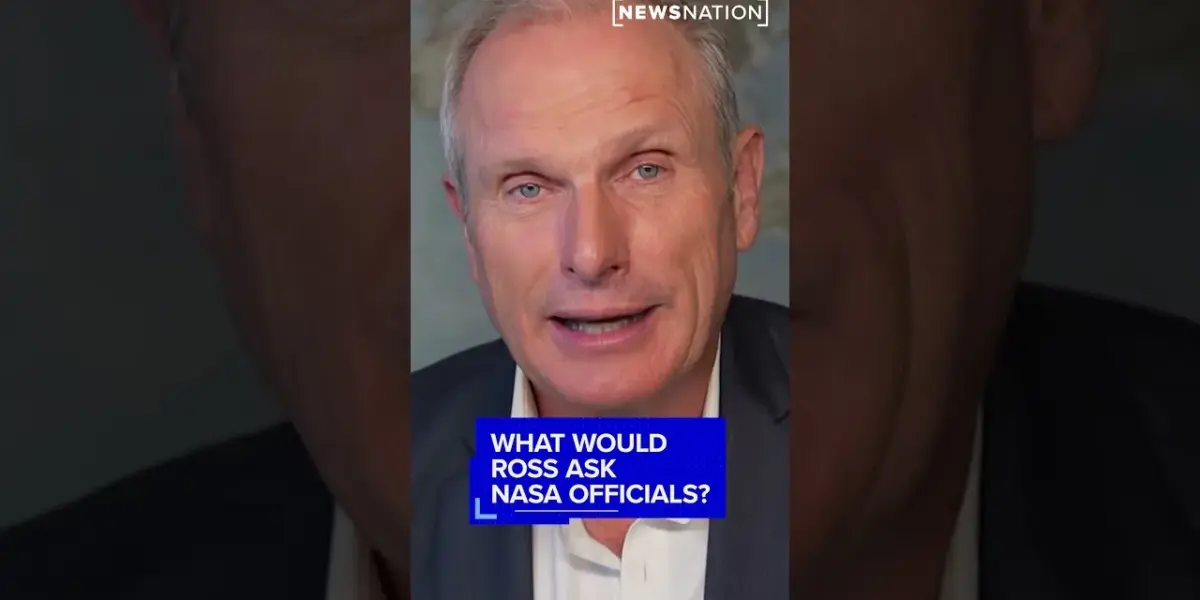
NASA Faces Scrutiny Over Anomalous Objects
Recent accounts from a witness at NASA’s Marshall Space Flight Center in Huntsville, Alabama, are raising new questions about the agency’s transparency regarding unidentified anomalous phenomena (UAP). The incident, which occurred in May 2023 during a conference hosted by the Scientific Coalition for the Study of UAP, involved the sighting of unusual objects on a live monitor showing feeds from the International Space Station (ISS).
The witness, who was accompanied by two other individuals, including the former wife of a NASA administrator, described seeing approximately eight to nine egg-shaped objects emerge from behind the space station. These objects moved across the screen in a manner that appeared anomalous. When the witness inquired about the objects, seeking to understand their nature, the response from the Director of the Marshall Space Flight Center was telling.
Director’s Reaction Fuels Suspicion
The witness initially suggested the objects might be newly released Starlink satellites. However, the Director reportedly dismissed this explanation, stating they were not Starlinks. Following this exchange, the Director turned to a communications official responsible for ISS feeds. This official then switched off the live feed, replacing the video with a message indicating a temporary interruption in transmission to the space station.
The witness expressed personal bewilderment, stating they could not explain what they saw. The sequence of events – the appearance of anomalous objects followed by the immediate termination of the feed and the Director’s abrupt departure from the room when questioned – led the witness to believe NASA intentionally concealed the objects from public view. This experience has prompted calls for greater openness from NASA when dealing with unexplained phenomena observed in its data.
Broader Implications for Transparency
The incident at the Marshall Space Flight Center highlights a recurring theme in discussions surrounding UAP: the perceived lack of transparency from government agencies. While NASA has recently taken steps to establish an independent UAP study team and encouraged public reporting of sightings, experiences like the one described by the witness suggest that skepticism about the agency’s openness persists. The witness’s account suggests that when faced with potentially sensitive or unexplained observations, NASA’s default action may be to obscure rather than explain.
Historical Context of UAP and Government Secrecy
Concerns about government secrecy surrounding UAP are not new. For decades, the public and researchers have suspected that military and intelligence agencies may have withheld information about unidentified aerial phenomena. This latest account, if substantiated, adds to a growing body of anecdotal evidence suggesting that even civilian space agencies might be hesitant to fully disclose information about anomalies observed in space or in video feeds. The historical precedent of classified projects and national security concerns has often been cited as a reason for government opacity, but critics argue this secrecy hinders scientific understanding and public trust.
Global Impact and Future Scenarios
The implications of this incident extend beyond NASA and the United States. As international space cooperation becomes increasingly common, with agencies like ESA (European Space Agency) and Roscosmos (Russian State Space Corporation) collaborating on missions, the standards for transparency regarding UAP could become a global issue. If major space-faring nations adopt a policy of concealment, it could create a fragmented and untrustworthy information environment. Conversely, a commitment to openness by NASA could set a precedent for other nations.
Several future scenarios are possible. NASA could investigate the witness’s claims, potentially releasing further information or explanations for the observed event. Alternatively, the agency might remain silent, or offer a mundane explanation that is not publicly shared. The ongoing public interest in UAP suggests that any perceived lack of transparency will likely continue to fuel speculation and demand for answers, potentially leading to further congressional interest or public pressure campaigns.
Why This Matters
This event, though anecdotal, underscores the critical need for verifiable data and open communication in the study of UAP. The scientific community requires access to information to conduct rigorous analysis. For the public, transparency builds trust in institutions like NASA. The witness’s experience serves as a reminder that questions about unexplained phenomena in our skies, and now seemingly in space, require clear and honest answers, not abrupt interruptions of communication.
Source: What would Ross ask NASA officials? (YouTube)

Related Articles
Trump Praises Artemis II Crew for Moon Flyby
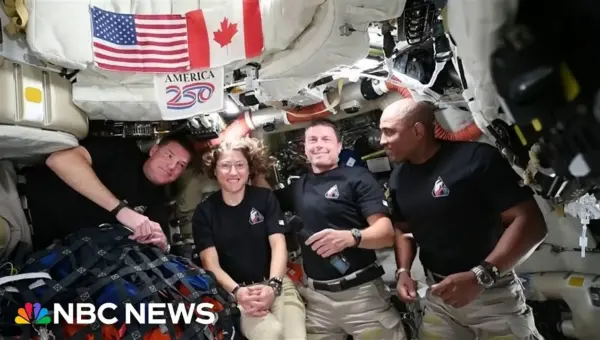
President Donald J. Trump spoke with the Artemis II astronauts following their historic moon flyby. The crew shared their awe-inspiring experiences, including seeing new lunar vistas and the distant Earth. Trump praised their achievements, reaffirming his commitment to American leadership in space and future missions to Mars.
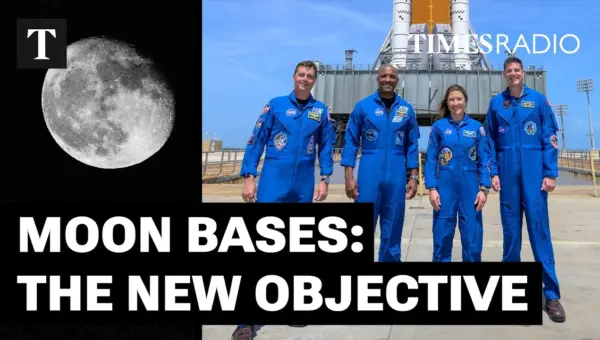
Artemis II Crew Nears Earth After Record Moon Journey
The Artemis II crew has completed a record-breaking lunar flyby, traveling further from Earth than any humans in history. The astronauts are now en route home after a mission that included naming a lunar crater and experiencing significant emotional milestones. This historic journey marks a critical step towards establishing moon bases and future Mars missions.

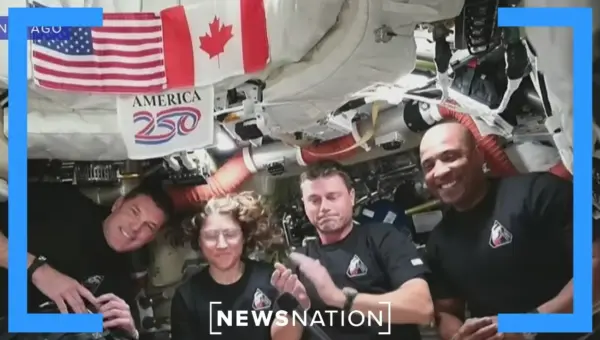
US Reclaims Lunar Lead, Eyes Mars with Artemis II
America's Artemis II mission has completed a historic lunar flyby, marking a return to deep space after 50 years. President Trump spoke with the crew, emphasizing plans for a permanent Moon base and future Mars missions. The mission highlights international cooperation, with Canada participating, and signals a renewed US focus on leading space exploration.