NASA Bets on Moon Mission Amid Heat Shield Concerns
NASA's Artemis II mission faces critical re-entry challenges due to heat shield concerns, despite aiming for historic lunar orbit. The program highlights economic, cooperative, and pride-driven motivations for space exploration.

NASA Bets on Moon Mission Amid Heat Shield Concerns
NASA’s Artemis II mission is heading into its most challenging phase, but questions linger about the spacecraft’s heat shield. While the mission aims to carry astronauts around the Moon for the first time in over 50 years, a recent technical review highlighted potential risks during re-entry into Earth’s atmosphere. The Artemis I mission, which flew without a crew, experienced unexpected damage to its heat shield. This has raised concerns for Artemis II, which uses the same heat shield design. The shield showed signs of charring and pitting, a phenomenon known as ‘blade cracking,’ even though the spacecraft entered the atmosphere at a shallower angle.
Heat Shield Risks and NASA’s Mitigation Plan
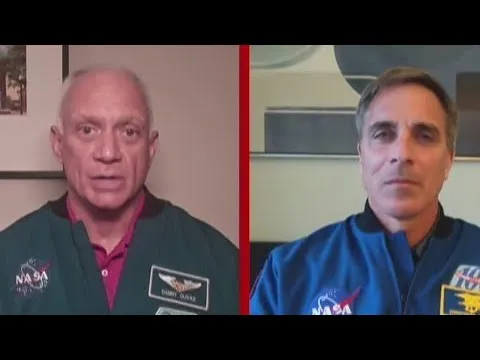
Dr. Danny, who conducted an independent technical review of the heat shield in October 2023, explained the risks. He noted that Artemis II will face similar conditions during re-entry. The primary concern is the heat shield’s ability to withstand the intense temperatures when the spacecraft hits Earth’s atmosphere at high speeds. To address this, NASA plans to alter the re-entry profile for Artemis II. The spacecraft will enter the atmosphere at a steeper angle and faster speed. The goal is to pass through the hottest part of re-entry more quickly. By the time any potential damage, like the observed cracking, occurs, the spacecraft will be deeper in the atmosphere. At this point, the need for thermal protection is less critical, effectively reducing the risk.
Why Pursue Expensive Space Missions?
Chris Cassidy, a former astronaut, addressed the broader question of why nations, particularly the United States, should invest heavily in expensive space exploration. He acknowledged that many people question the cost and the tangible benefits derived from such missions. Cassidy highlighted several key reasons for continued investment in space programs like Artemis.
- Economic Returns: Space exploration drives innovation and creates economic opportunities. It supports jobs and industries in communities surrounding NASA centers and aerospace companies.
- International Cooperation: Programs like the International Space Station (ISS) demonstrate the power of global collaboration. Cassidy believes that future endeavors on the Moon and Mars will also be joint efforts by many nations. Space exploration has a unique ability to bring countries together.
- National Pride: There is an intangible, yet significant, benefit in national pride. Seeing a country achieve grand-scale goals safely and successfully boosts morale and inspires citizens. Cassidy recalled the pride astronauts feel seeing the American flag on their patches, especially when flying alongside international partners like the Canadian astronaut on Artemis II.
Historical Context and Future Ambitions
The Artemis program builds upon decades of space exploration, harkening back to the Apollo missions that first landed humans on the Moon. While Apollo focused on a direct race to the Moon, Artemis aims for a more sustained presence. This includes establishing a long-term base on the Moon and using it as a stepping stone for missions to Mars. The international cooperation seen in Artemis mirrors the spirit of the ISS, which has involved over 15 nations. This collaborative approach aims to share costs and expertise, making ambitious goals more achievable.
Global Impact and the Future World Order
The Artemis program is more than just a scientific endeavor; it represents a renewed push for American leadership in space. In a world where geopolitical competition is increasing, dominance in space technology and exploration can translate into significant strategic and economic advantages. Success in Artemis could bolster international partnerships, but failures or delays could invite rivals to step forward. The economic implications are also vast, with potential for new industries related to lunar resources and space tourism. The program’s success or failure will send ripples through international relations, influencing alliances and the global balance of power in the 21st century.
Future Scenarios
Several outcomes are possible for the Artemis program. A successful Artemis II mission, with astronauts safely returning, would validate NASA’s approach and boost public support. This could lead to accelerated progress on subsequent missions, including lunar landings. However, if significant issues arise during the mission, particularly related to the heat shield, it could trigger delays and require extensive redesigns. This would not only increase costs but also potentially cede ground to other nations actively pursuing their own lunar ambitions. A prolonged setback could also impact international partnerships, leading some nations to seek collaborations elsewhere.
Conclusion
As Artemis II prepares for its critical re-entry phase, the mission stands at a crossroads. The technical challenges, particularly with the heat shield, are real. Yet, the potential rewards—scientific discovery, economic growth, international cooperation, and national pride—remain immense. NASA’s strategy to mitigate risks demonstrates a calculated approach to complex engineering problems. The world watches to see if this bold undertaking will once again inspire awe and reaffirm humanity’s drive to explore the cosmos.
Source: How prepared is Artemis II as it enters the mission’s most dangerous phase? | CUOMO (YouTube)

Related Articles


Rutte Faces Backlash: Trump Allies Criticize NATO Chief
NATO Secretary General Jens Stoltenberg's remarks on global safety and Iran's nuclear program have drawn fire from Trump allies. Former State Department official Christian Whiton called Stoltenberg the "odd man out" in Europe, questioning the substance behind his supportive words for U.S. policy. The debate also raises questions about potential U.S. troop realignments within the NATO alliance.


Iran Tests Strait of Hormuz Control, Challenges Global Oil Flow
Iran is asserting control over the Strait of Hormuz, impacting global oil flow and challenging the U.S. This move has complex implications for international trade, U.S.-China relations, and regional stability. The situation highlights Iran's strategic positioning and its perceived ability to influence global energy markets.


Artemis II Astronauts Gear Up for Fiery Earth Re-entry
The Artemis II astronauts are preparing for a high-speed return to Earth after their lunar mission. The Orion spacecraft will endure intense heat and deploy parachutes to slow down for a splashdown off the coast of San Diego, where a naval recovery team awaits to assess the crew's health.