NASA Aims for Lunar Base, Mars Mission Prep
NASA is embarking on a new era of lunar exploration with plans to build a permanent base on the Moon. This initiative, part of the Artemis program, aims to serve as a vital stepping stone for future Mars missions. The program seeks to develop key technologies and capabilities needed for deep space travel.


NASA Unveils Ambitious Moon Base Plans
NASA has revealed a bold new strategy for returning humans to the Moon, aiming to establish a lasting presence there. This marks the first lunar mission in 50 years and is part of the Artemis program, initiated by President Trump. The goal extends beyond mere exploration; it’s about building a permanent base on the Moon. This long-term vision aims to harness national security benefits and unlock economic potential in space. It also seeks to inspire future generations to push the boundaries of space exploration.
The Moon as a Stepping Stone to Mars
A primary driver for establishing a lunar base is its role as a crucial testing ground for future missions to Mars. The Moon, just a few days’ journey away, offers a practical environment to test new technologies and procedures. Astronauts will work with lunar soil, known as regolith, and experiment with manufacturing using resources found there. A key focus is on utilizing water ice to create rocket fuel, or propellant. This capability is vital for enabling long-duration space travel, like missions to Mars. Being able to produce propellant on the Moon’s surface means astronauts can refuel for their return journey, making Mars missions more feasible and frequent. The Moon also presents an ideal location to test advanced propulsion systems, including nuclear power, which could significantly shorten travel times across the solar system.
Rekindling Public Interest in Space
The original Moon landing in 1969, led by Neil Armstrong and Buzz Aldrin, captured global attention. Today, with a more crowded media landscape and numerous other interests, NASA aims to reignite that public fascination. The Artemis program is designed to be the most significant human spaceflight endeavor in half a century. The Artemis II mission, scheduled for April 1st, will send astronauts around the Moon, venturing farther into space than ever before. This 10-day journey is a crucial step, paving the way for subsequent missions. NASA plans to launch rockets again in 2027 and 2028, with American astronauts set to return to the lunar surface. Officials believe it’s only a matter of time before NASA once again captivates the world’s attention with its groundbreaking achievements.
Market Impact
While the transcript doesn’t detail specific financial impacts, ambitious space programs like Artemis can stimulate innovation and create opportunities across various sectors. Companies involved in aerospace engineering, materials science, robotics, and advanced manufacturing could see increased demand for their products and services. The development of new technologies for lunar operations, such as resource utilization and advanced life support, may also have spin-off applications in terrestrial industries. Furthermore, the long-term goal of space exploration and potential resource extraction could represent significant future economic potential, though these are long-term prospects.
What Investors Should Know
For investors, the Artemis program signifies a renewed commitment to space exploration by a major government agency. This can translate into potential growth opportunities for companies directly or indirectly involved in the space industry. Investors might consider looking at established aerospace contractors, as well as newer companies focusing on specific technologies like satellite services, space logistics, or advanced materials. The long lead times and high costs associated with space missions mean that investments in this sector often require a long-term perspective. The success of these missions, like Artemis II and subsequent landings, could boost investor confidence and attract further private capital into the space economy.
Key Terms Explained
- Regolith: This is the layer of loose, heterogeneous superficial deposits covering solid rock. On the Moon, it’s essentially the Moon’s soil and dust.
- Propellant: This is the substance burned to create thrust in a rocket engine. Producing it in space, like on the Moon, is crucial for long journeys.
- Propulsion: This is the force that moves something forward. In rockets, it’s generated by expelling mass at high speed.
Source: NASA REVEALS bold plan to STAY on the moon (YouTube)

Related Articles

Astronaut Recounts Space Medical Scare, Informs Future Missions
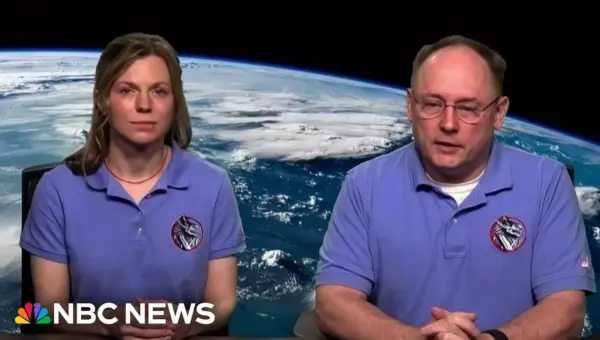
Astronaut Mike Fincke detailed a recent medical emergency aboard the ISS that led to his return to Earth. While doctors ruled out serious conditions like stroke, the exact cause is still being studied, with theories pointing to a space-related anomaly. The experience is providing crucial data for future long-duration missions, including NASA's Artemis program.


Astronaut Recovers From Mystery Space Illness, Inspires Future Missions
Astronaut Mike Fincke has shared details about a mysterious medical emergency he experienced aboard the International Space Station, which led to his early return to Earth. While the exact cause is still under investigation, doctors believe it was space-related, providing crucial data for future deep space missions.


NASA Pivots: Mars Nuclear Probe, Moon Base Ahead
NASA is pivoting its exploration strategy, prioritizing a nuclear-powered Mars probe and accelerating plans for a moon base. The International Space Station's future is uncertain, with a shift towards commercial platforms. Meanwhile, new telescope data reveals overmassive black holes in dwarf galaxies and captures stunning images of Saturn and the Crab Nebula.