N. Korea Eyes Iran War Lessons, Boosts Nuclear Resolve
North Korea is closely observing the conflict in Iran, viewing it as a stark warning that reinforces its commitment to nuclear weapons. Experts suggest denuclearization is no longer a realistic goal for Pyongyang, especially as its arsenal rapidly advances amid shifting U.S. foreign policy. The perceived unreliability of allies further solidifies North Korea's reliance on its nuclear deterrent for regime survival.

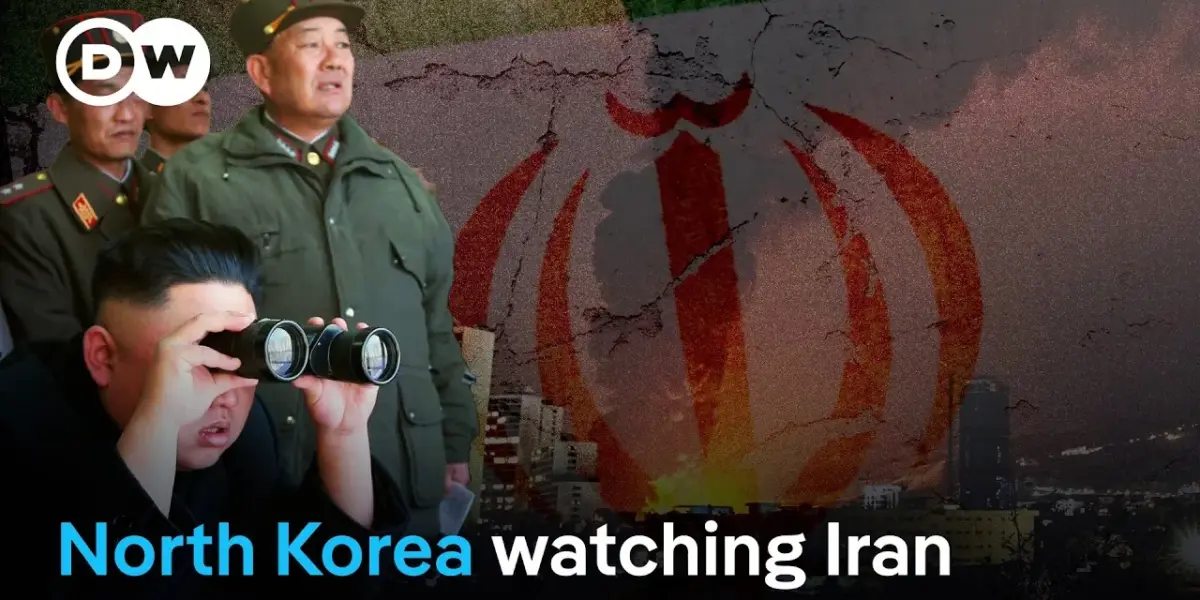
North Korea Studies Iran Conflict, Fortifies Nuclear Stance
As global attention focuses on the escalating conflict in Iran, North Korean leader Kim Jong-un is reportedly observing the developments with intense scrutiny. Far from being a distant news event, the situation in Iran, alongside that of Venezuela under Nicolás Maduro, is perceived in Pyongyang as a stark warning. Both Iran and North Korea share the commonality of being isolated nations under heavy Western sanctions. However, a critical distinction exists: North Korea possesses nuclear weapons, a factor that experts suggest is solidifying Kim Jong-un’s commitment to his nuclear arsenal rather than diminishing it.
Denuclearization: An Outdated Concept?
According to Jean Lee, Director of the Korea Risk Group and a seasoned North Korea expert, the events in Iran are reinforcing Pyongyang’s belief that denuclearization is an outdated notion. “If I have to bet, yes, I agree that denuclearization is something of a older era,” Lee stated. She further elaborated that North Korea is adopting a cautious approach to its international engagements, influenced by the perceived risks demonstrated in the Iran scenario.
“I think there are several reasons that North Korea might be like very careful on how to approach this. First of all, uh although it’s a different region and different context, there are a lot of similarities that we see between uh Iran’s situation and North Korea’s situation. North Korea’s nuclear arsenal is way more developed allegedly according to North Koreans, but still um what happened in Iran is that during what they thought was a negotiation uh with the Trump administration, the strike happened. So from North Korea’s perspective, um it’s something it’s a something of a scenario that it does not really want to see happen to themselves.”
North Korea’s Evolving Arsenal Amid Shifting US Policy
The United States’ approach to North Korea’s nuclear program has seen significant shifts over the years. The Obama administration pursued a policy of “strategic patience,” followed by the Trump administration’s attempts at direct negotiation, which ultimately failed. The Biden administration has reportedly de-prioritized the issue. Ironically, this period of decreased diplomatic focus has coincided with a dramatic strengthening of North Korea’s military capabilities.
Pyongyang has allegedly developed and deployed a range of advanced weaponry, including solid and liquid-fuel Intercontinental Ballistic Missiles (ICBMs) and Intermediate-Range Ballistic Missiles (IRBMs) capable of striking Japan. Furthermore, the development of tactical nuclear weapons and Short-Range Ballistic Missiles (SRBMs) designed to carry them towards South Korea and U.S. bases in the region has been reported. North Korea also claims to possess the capacity to strike the U.S. mainland.
Reliability of Allies Questioned
A key takeaway for North Korea from the situations in Iran, Syria, and Venezuela appears to be the perceived unreliability of major allies like Russia and China in providing complete security guarantees, even in the face of mutual defense agreements. This perceived lack of unwavering support strengthens Pyongyang’s conviction that its nuclear weapons are its ultimate insurance policy for regime survival.
This reliance on nuclear deterrence also presents a complex challenge for South Korea. The U.S., South Korea’s primary ally, is increasingly viewed as a transactional partner, offering support only in critical and limited cases, such as nuclear deterrence. This dynamic increases the pressure on Seoul to bolster its own conventional defense capabilities.
The Prospect of Military Intervention
While the U.S. has not initiated a first strike against North Korea, the logic applied in the Iran scenario—where an ally’s strike prompted U.S. intervention—raises questions about potential future actions. However, experts suggest a direct U.S. first strike on North Korea is unlikely. If a similar scenario were to unfold, South Korea would likely be the initial actor. Yet, the current South Korean government is seen as highly unlikely to initiate a first strike unless faced with clear and imminent signs of a mass attack from the North.
Key Factors to Monitor
Moving forward, analysts will be closely watching several key developments:
- The evolving bilateral relationship between North Korea and Iran.
- North Korea’s strategic decisions regarding the war in Ukraine and its implications for its treaty with Russia.
- The potential impact of a resolution to the Ukraine conflict on North Korea’s calculations regarding its alliance with Russia and its stance towards the U.S.
North Korea’s ongoing commitment to its nuclear program, framed as essential for regime survival, sends a concerning message globally. The complex geopolitical dynamics at play, particularly concerning the Korean Peninsula and its surrounding powers, will continue to be a critical focus for international observers.
Source: The lessons North Korea is learning from the Iran war | DW News (YouTube)

Related Articles


U.S. Iran Tensions Rise Amid Shifting Alliances
Rising tensions between the U.S. and Iran are creating a volatile geopolitical situation. With conflicting signals on de-escalation and potential shifts in alliances like NATO and U.S.-Israel relations, the path forward remains uncertain. The global economy and regional stability hang in the balance.


Iran Targets US With Cyberattacks, Escalating Digital Warfare
Iran is increasingly using cyberattacks to challenge the U.S., as seen in a recent hack of the FBI director's account. Experts say this is a strategic shift due to Iran's limitations in conventional warfare. The U.S. needs to strengthen its digital defenses, focusing on encryption and cloud computing, rather than solely relying on traditional security measures.


Iran Hacks FBI Chief, Exposing U.S. Cyber Vulnerabilities
A recent hack of FBI Director Kash Patel's personal email by an Iran-linked group highlights Iran's growing cyber threat to the U.S. Experts explain how simple security oversights are exploited, emphasizing the need for basic defenses like two-factor authentication to protect against propaganda and potential infrastructure attacks.