Mystery of the Carolina Bays: Earth’s Gunshot Wounds?
Thousands of oval depressions across the eastern US, known as Carolina Bays, have long puzzled scientists. New research suggests strong winds and water erosion during the last Ice Age, rather than meteor impacts, sculpted these unique landscapes, which are now vital habitats for species like the Venus flytrap.

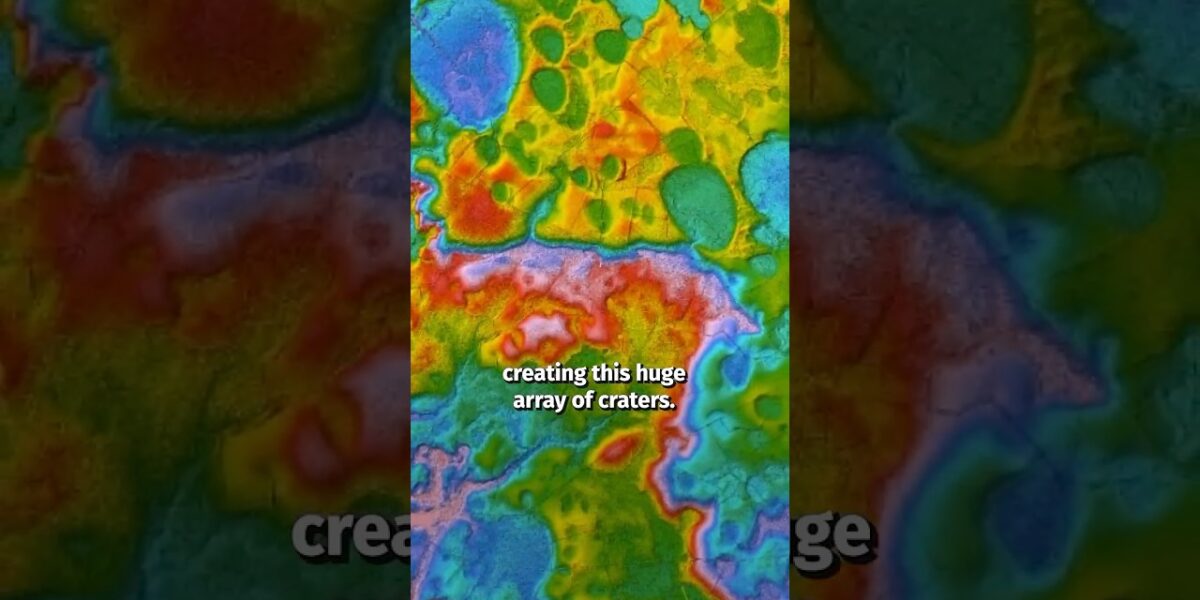
Carolina Bays: An Enduring Geological Enigma
Stretching across the eastern United States, from the sandy coasts of New Jersey down to the humid plains of Florida, lies a geological puzzle that has baffled scientists for decades: the Carolina Bays. These enigmatic depressions, numbering in the tens of thousands, form a peculiar pattern across the landscape, with the vast majority oriented towards the northwest. Their sheer scale and uniformity have led to a variety of speculative explanations, from ancient meteor impacts to the effects of cosmic events, earning them a reputation as some of the most intriguing natural formations in North America.
The Meteorite Hypothesis and Its Demise
Early scientific investigations into the origin of the Carolina Bays leaned towards a dramatic extraterrestrial cause. The prevailing theory suggested that a massive meteor, or a swarm of them, exploded high above the North American continent. The resulting shockwave and debris were thought to have blasted out these thousands of oval depressions. This ‘meteorite impact’ hypothesis offered a compelling, albeit violent, explanation for the widespread and uniform nature of the bays. However, closer examination of the bays themselves began to unravel this theory. Despite extensive searching within the depressions, no definitive meteorite fragments or impact evidence were ever found. Furthermore, radiometric dating of sediments within the oldest bays revealed they formed around 100,000 years ago, while the youngest date to approximately 10,000 years ago. This wide age range contradicted the idea of a single, catastrophic impact event.
Lessons from the Arctic: Permafrost and Wind Erosion
A significant breakthrough in understanding the Carolina Bays came from studying a seemingly unrelated environment: the frozen landscapes of northern Alaska. Here, scientists observed numerous oval-shaped lakes that bore a striking resemblance to the Carolina Bays. Investigations into the dynamics of these Alaskan lakes revealed a crucial mechanism: wind-driven currents. In these regions, strong southwesterly winds create circular currents within the lakes. Over extended periods, these currents erode the lake edges, causing the depressions to elongate perpendicular to the prevailing wind direction. This process, observed over decades and centuries, can transform initially circular lakes into the characteristic oval shapes seen today.
Crucially, the Alaskan lakes are primarily shaped by the interaction of wind and water within a permafrost environment, where the ground remains frozen year-round. This led to the hypothesis that permafrost played a significant role in their formation. However, the Carolinas, even during the last Ice Age, did not experience the extreme cold required for widespread permafrost formation.
A Harsh, Windy Past: Reconstructing the Carolina Environment
While the Carolinas may not have been frozen like Alaska, they were still subject to extremely harsh and cold conditions during the Pleistocene epoch, particularly around the time of the last Ice Age. This period was characterized by a stark, treeless landscape with very sparse vegetation. Without the stabilizing effect of plant roots holding the sandy soil in place, the ground was highly susceptible to erosion by strong winds. The proximity of a massive ice sheet to the north of the region created a significant temperature gradient, driving powerful winds southward across the continent. These winds would have swept across the exposed, sandy terrain of the Carolinas.
The Wind-and-Water Erosion Theory
Scientists now widely believe that these powerful winds played a primary role in carving initial indentations into the landscape. Once these shallow depressions were formed, they would have collected rainwater. The combination of these water-filled hollows and the persistent strong winds would have initiated a process similar to that observed in Alaska. The wind would have driven swirling currents within the nascent bays, further eroding their edges and elongating them in a consistent direction – towards the northwest, aligning with the prevailing wind patterns of the era. Over thousands of years, this continuous process of wind and water erosion sculpted the thousands of oval depressions we see today.
Ecological Havens and Future Research
Although many of the Carolina Bays have been altered by human activity, such as agriculture, or have filled in with sediment over millennia, those that remain are incredibly important ecological sites. These unique habitats provide a refuge for a diverse array of wildlife. Most famously, the Carolina Bays are the native home of the iconic Venus flytrap (*Dionaea muscipula*), a carnivorous plant found nowhere else in the wild. The specific soil conditions and hydrological patterns within these bays create an ideal environment for this remarkable species.
The study of the Carolina Bays continues to evolve, with ongoing research seeking to refine our understanding of the precise timing, mechanisms, and climatic conditions that led to their formation. Future investigations may involve advanced remote sensing techniques, detailed sediment analysis, and sophisticated climate modeling to further unravel the secrets of these ancient geological features. The Carolina Bays serve as a compelling reminder of Earth’s dynamic past and the powerful, often subtle, forces that shape our planet over vast timescales, while also highlighting the importance of preserving these unique ecosystems for future generations.
Source: What is this strange pattern down the east coast of America? (YouTube)

Related Articles


White Dwarf Dyson Spheres: A Tiny Star’s Big Energy Solution
Astronomers are exploring the possibility of building Dyson spheres around compact white dwarf stars, which offer a long-lasting and stable energy source. Meanwhile, the Vera Rubin Observatory promises near real-time astronomical discovery, and new data challenges models of supermassive black hole formation in the early universe.

NASA’s Asteroid Mission: From Mars Dream to Lunar Gateway
NASA's ambitious Asteroid Redirect Mission (ARM), designed as a stepping stone to Mars, aimed to capture a small asteroid boulder and tow it to lunar orbit for astronaut testing. Though cancelled, its advanced propulsion and robotic technologies live on in NASA's Lunar Gateway and future deep space exploration plans.

NASA’s Evolving SLS Rocket Hints at New Upper Stage
NASA's Artemis program may be adopting a new upper stage for its Space Launch System (SLS) rocket, potentially utilizing the commercially available Centaur V. An updated infographic reveals design changes and hints at evolving mission strategies, including advanced lunar lander operations.