Muted Trump Watches as Middle East War Shatters Global Economy
As a Middle East war escalates, Donald Trump's silence and weekend activities draw criticism, while global markets face severe economic fallout. The conflict highlights shifting geopolitical reliability and raises concerns about a looming recession.

Muted Trump Watches as Middle East War Shatters Global Economy
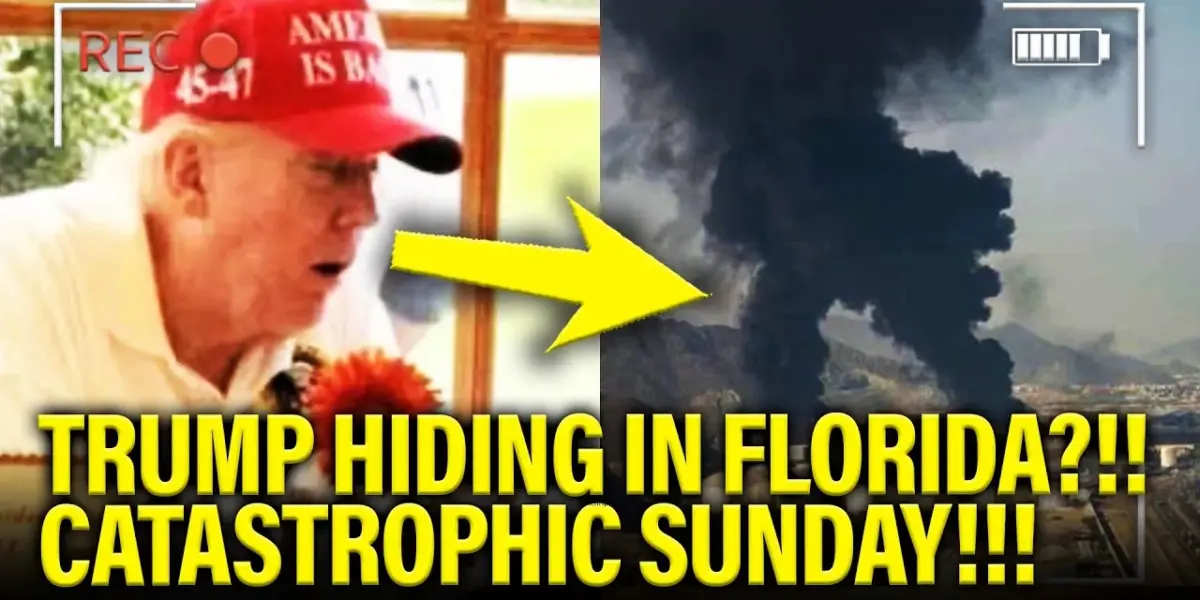
As a conflict in the Middle East escalates, former President Donald Trump has adopted a conspicuous silence, spending his weekend golfing and fundraising while the global economic landscape faces unprecedented turmoil. The unfolding crisis, characterized by escalating tensions and disruptions to vital energy markets, stands in stark contrast to the pronouncements of success from Trump’s allies, painting a picture of a world grappling with instability while its former leader appears disengaged.
A Leader’s Silence Amidst Chaos
While the Middle East burns and global markets react with alarm, Donald Trump’s social media presence has gone quiet. His weekend activities, as described, consisted of golfing at his Palm Beach club, attending fundraisers for his MAGA, Inc. super PAC, and posing for photographs. This period of apparent inactivity stands in sharp contrast to the urgent pronouncements from Iranian officials and the palpable anxiety rippling through international markets. The narrative emerging from the transcript suggests a dangerous disconnect between the gravity of the situation and the perceived response of a key global player.
Iran’s Assertions and the Epstein Connection
Adding a layer of intrigue and controversy, an Iranian national security advisor, Ali Larajani, reportedly posted on social media about a supposed conspiracy involving Epstein’s network to stage a 9/11-like incident and blame Iran. Larajani’s statement, asserting Iran’s opposition to such schemes, is presented in the transcript as an example of Iranian propaganda, juxtaposed against Trump’s silence. The analysis further draws a controversial parallel by mentioning Mar-a-Lago, Trump’s Florida estate, as a location where Jeffrey Epstein allegedly engaged in sex trafficking, citing the case of Virginia Giuffre. This connection, while not directly linked to the current conflict’s origins, is used to frame Trump as a “morally compromised” figure, a “predator,” and a “lifelong loser” whose actions have led to the current crisis.
Shifting Geopolitical Reliance: Iran Over the US?
The transcript highlights a significant shift in global perceptions of reliability, with some major oil buyers in the Middle East reportedly finding Iran a more dependable entity than the United States. A Reuters report cited by the transcript details a letter from Saudi Aramco to its oil buyers, expressing uncertainty about April export ports. This uncertainty, coupled with Iran’s actions, has led to a situation where, according to one buyer, “I might as well call Iran to find out when this war ends so I can get my oil.” This sentiment underscores a perceived loss of American influence and a growing reliance on Iran’s actions to stabilize energy markets, a direct challenge to the United States’ traditional role.
Economic Fallout and Market Tremors
The repercussions of the conflict are extending far beyond the immediate region, triggering significant economic instability. The Strait of Hormuz, a critical chokepoint for global oil transport, has been impacted, leading to surging oil prices. Disruptions are also affecting aluminum and fertilizer markets, with a major aluminum smelter in Bahrain initiating production shutdowns. The transcript warns of a “catastrophic week for the markets,” suggesting that the conflict could plunge the global economy into a “great recession, if not a depression.” This dire economic outlook is directly attributed to the decisions made by Donald Trump, who is accused of unleashing “hell around the world” through “horrible decisionmaking and his maliciousness.”
The New York Times is quoted as mirroring these concerns, with a headline stating, “War sends more tremors through a shaken world economy. Fallout from prolonged conflict with Iran could bring catastrophic consequences.” This convergence of analysis between independent media and established news outlets amplifies the severity of the economic crisis.
Contrasting Narratives: MAGA Republicans vs. Ground Truth
While the economic realities appear grim, allies of Donald Trump are presenting a starkly different picture. Dave McCormick, a MAGA Republican senator, is quoted as calling the military operation a “smashing success” and claiming that “things have been incredible.” Similarly, Kevin Hassett, Trump’s former economic adviser, dismisses the idea that Iran can significantly impact the US economy, asserting that America’s domestic oil production puts it in a strong position. Chris Wright, the Energy Secretary, also downplays the disruption, stating that the world is “abundantly supplied with oil” and that the mission has been “superbly executed.”
These assertions are directly challenged by the transcript’s analysis, which presents them as “delusional” and a deliberate attempt to hide the reality from the public. The use of Ground News, a media bias tracking platform, is highlighted as a tool to expose these discrepancies, showing how right-wing media allegedly undercovers or ignores the escalating conflict and its economic consequences.
Iran’s Perspective: War Crimes and Lack of Trust
The transcript delves into Iran’s official stance, featuring statements from its foreign minister, Aragchi. Aragchi refutes any claims of seeking a ceasefire or negotiation, stating that Iran is prepared to defend itself “as long as it takes.” He directly criticizes Donald Trump’s past remarks about “having fun bombing” Iranian targets, labeling such statements as war crimes. This perspective suggests that Trump’s rhetoric has not only escalated tensions but also provided Iran with grounds to justify its actions and undermine any potential for dialogue. Aragchi also indicates that while Iran is not actively seeking talks with the US due to past negative experiences, it is open to discussing safe passage for vessels with other countries, implying a willingness to engage on a case-by-case basis with different nations.
Geopolitical Chess: Ukraine’s Technology and Red Sea Concerns
In a complex geopolitical maneuver, Ukrainian President Zelensky is presented as offering drone interceptor technology to the US, technology developed by Ukraine in response to Iranian-supplied drones used by Russia. This offer comes amidst Trump’s continued criticism of Zelensky and Ukraine. The transcript notes that despite Trump’s attacks, Ukraine has not received drone interceptors from the US, but rather Patriot missiles, and that Middle Eastern partners have utilized more Patriot missiles than Ukraine has received. This highlights a potential area where Ukraine could assist the US, while also pointing to the significant reliance of both Ukraine and Middle Eastern allies on US military aid.
Finally, the transcript raises concerns about the Red Sea and the potential for Iran to further activate Houthi rebels in Yemen. If both the Strait of Hormuz and the Bab el-Mandeb Strait in the Red Sea were to be closed, the economic consequences could be catastrophic, potentially driving oil prices to $200-$300 per barrel. This scenario underscores the fragility of global energy supplies and the cascading effects of regional conflicts.
Why This Matters
The unfolding situation, as depicted in the transcript, raises critical questions about leadership, international relations, and economic stability. The perceived silence of a former US president during a period of intense global crisis, coupled with conflicting narratives from his allies and the stark realities presented by market disruptions and international statements, highlights a profound disconnect. The potential for a prolonged conflict to trigger a global recession demands serious attention, underscoring the interconnectedness of geopolitical events and economic well-being. Furthermore, the erosion of trust in US reliability among key global players and the potential for alternative powers, like Iran, to influence energy markets signal a significant shift in the international order. The narrative also probes the role of media in shaping public perception, urging a critical examination of sources and an understanding of how political narratives can obscure or amplify the truth.
Implications, Trends, and Future Outlook
The implications of this conflict are far-reaching. The trend of shifting geopolitical alliances and the increasing assertiveness of regional powers like Iran suggest a multipolar world order where traditional US dominance is being challenged. The economic vulnerability exposed by disruptions to oil supplies indicates a need for greater energy diversification and resilience. The future outlook remains uncertain, contingent on de-escalation efforts, diplomatic resolutions, and the strategic decisions made by global leaders. The transcript implicitly suggests that a return to stable global markets and peace will require a more engaged, consistent, and perhaps less inflammatory approach from key international actors.
Historical Context
While the transcript focuses on recent events, the tensions in the Middle East have deep historical roots, involving complex geopolitical rivalries, resource competition, and ideological conflicts. The Strait of Hormuz has long been a strategic linchpin, and its potential closure has been a recurring concern in international security discussions. The involvement of non-state actors like the Houthis, often backed by regional powers, adds another layer of complexity, reminiscent of proxy conflicts seen throughout history. The current crisis can be viewed as an escalation within this ongoing historical narrative of regional power struggles and their global ramifications.
Source: Trump GOES MUTE on SUNDAY as WAR CRIPPLES US!! (YouTube)

Related Articles
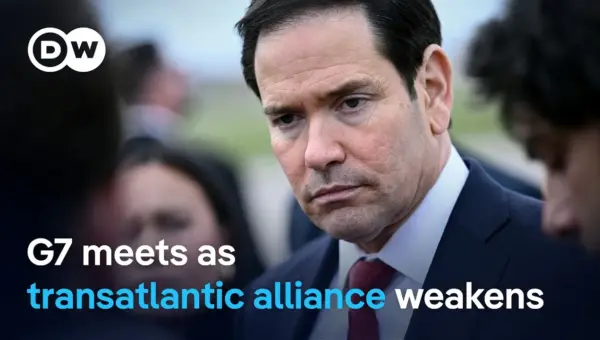
G7 Allies Clash Over Iran War Strategy, Urge Focus on Russia
G7 foreign ministers met in Paris, revealing deep divisions over the U.S. war with Iran. European allies urged the U.S. to pressure Russia, linking its actions to the conflict and fearing support for Ukraine will wane.
Iran Blocks China Ships, Exposing Beijing’s Weak Grip
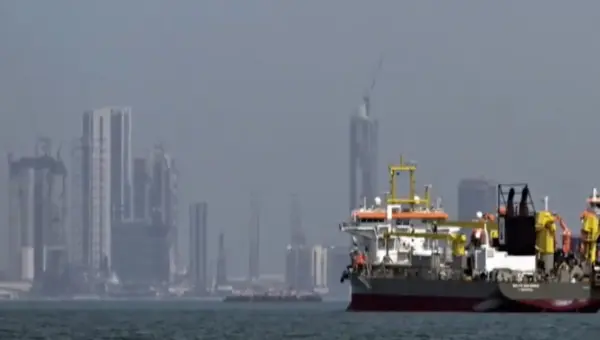
Iran's recent decision to block Chinese ships at the Strait of Hormuz is exposing the limits of Beijing's influence in the Middle East. This action is causing delays and cancellations for Chinese manufacturers, turning a perceived geopolitical win into an economic strain.
Trump’s “Walk Away” Tactic Signals Tougher Stance on China
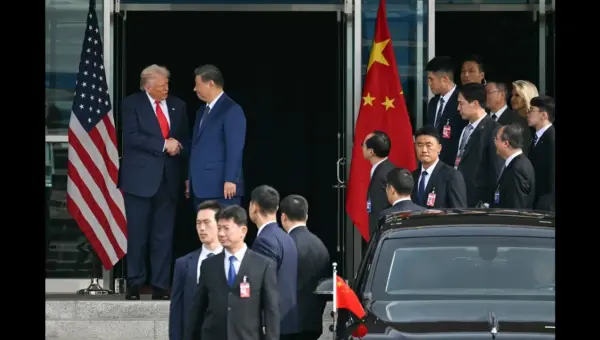
Retired Air Force Brigadier General David Stillwell believes President Trump's strategy of being willing to walk away from negotiations puts pressure on China. This tactic, combined with US global actions and strengthened alliances, signals a more assertive American foreign policy.