Murdoch’s WSJ Challenges Trump on Hidden Epstein Files
Rupert Murdoch's Wall Street Journal has cast doubt on the Justice Department's handling of the Jeffrey Epstein files, alleging that crucial documents referencing Donald Trump were withheld. This reporting challenges official narratives and raises concerns about transparency and accountability.


Murdoch’s WSJ Challenges Trump on Hidden Epstein Files
In a significant development that has sent ripples through the political landscape, Rupert Murdoch’s Wall Street Journal has published a report raising serious questions about the selective release of documents pertaining to the Jeffrey Epstein investigation. The report alleges that tens of thousands of Epstein-related records, including FBI witness interviews referencing Donald Trump, were withheld from public disclosure, directly contradicting previous assurances of transparency from the Justice Department.
The Allegations of Withheld Documents
The core of the controversy lies in the Journal’s finding that a substantial portion of the Epstein files remained offline, with several FBI interview memos that specifically mentioned Donald Trump being excluded from the public release. This selective disclosure has fueled accusations that the Justice Department is not only failing to comply with the law mandating the publication of these documents but is actively engaged in a cover-up. One source, who visited the DOJ file search room, confirmed the absence of documents that should have been present according to the manifest.
The Justice Department, in response to the scrutiny, stated that it is reviewing files flagged by the public and will release any documents found to have been improperly tagged or responsive to the law. However, critics argue this response is insufficient and points to a willful violation of the law that Donald Trump himself signed.
The Significance of the Source: The Wall Street Journal
What elevates this story beyond a mere procedural dispute is the source of the reporting: The Wall Street Journal. As part of Rupert Murdoch’s media empire, which also includes Fox News, the Journal has often been perceived as a platform sympathetic to Donald Trump. Therefore, a critical report from the Journal on this matter carries significant weight and credibility, making it more difficult for Trump and his allies to dismiss the allegations as partisan attacks or “fake news.” The report’s publication suggests a potential shift or at least a divergence of opinion within Murdoch’s media holdings regarding Trump.
Broader Implications and Historical Context
The withholding of these documents, if true, has profound implications. It raises questions about the extent to which powerful individuals may be shielded from public scrutiny. The Epstein case, involving allegations of sex trafficking and abuse of minors, has cast a long shadow, implicating numerous high-profile figures. The selective release of files fuels speculation about what these withheld documents might reveal and why certain individuals, particularly Trump, appear to be treated differently in the disclosure process.
Historically, transparency in government and the handling of sensitive information have been recurring themes in political discourse. The debate over the Epstein files echoes past controversies where accusations of government overreach, cover-ups, and the protection of elites have surfaced. The current situation is further complicated by the fact that Donald Trump, as a former president, is himself a subject of interest within these files, with allegations of sexual assault dating back decades made against him.
Political Maneuvering and Distractions
The narrative surrounding the Epstein files has become entangled with broader political battles. Critics argue that the focus on figures like Hillary Clinton, who are mentioned in the files but whose direct involvement is less pronounced than Trump’s, serves as a deliberate distraction. The transcript highlights the irony of deposing individuals like Clinton while allegedly withholding documents directly implicating Trump, who is mentioned more frequently in the files than many others.
Furthermore, there are allegations that the Trump administration actively sought to impede the release of these documents. Reports suggest that efforts were made to pressure lawmakers, including offering prestigious job opportunities to stall legislation that would have forced the DOJ to release all Epstein-related documents. Specific instances cited include alleged pressure on Congressman Thomas Massie and Congresswoman Lauren Boebert to withdraw support from petitions aimed at releasing the files. These allegations paint a picture of a concerted effort to control the narrative and limit damaging revelations.
The Role of Melania Trump and Family
The selective focus of investigations is also evident in the questioning of public figures. While Republicans on the House Oversight Committee have sought to subpoena figures like Hillary Clinton, the transcript points out the apparent exemption of Melania Trump. Emails allegedly exist within the Epstein files showing communication between Melania Trump and Ghislaine Maxwell, and historical accounts suggest she may have had knowledge of Epstein’s activities through her then-husband, Donald Trump. The disparity in focus, questioning former figures with less direct ties while seemingly overlooking current family members with potential connections, is presented as a significant inconsistency.
Why This Matters
This situation is critical because it touches upon fundamental principles of justice, transparency, and accountability. The selective release of government documents, especially those related to serious allegations of abuse and trafficking, erodes public trust. The involvement of a major media outlet like The Wall Street Journal in questioning the Justice Department’s actions adds a layer of seriousness that cannot be easily dismissed. It forces a reckoning with the potential for political influence over the justice system and the dissemination of information. The implications extend to how the public perceives the integrity of government institutions and the commitment to uncovering the truth, regardless of who might be implicated.
Trends and Future Outlook
The ongoing saga of the Epstein files highlights a broader trend of intense political polarization and the weaponization of information. As more documents are released or their withholding is brought to light, the pressure on governmental bodies to be fully transparent will likely increase. The role of investigative journalism, particularly from established outlets, will remain crucial in holding power accountable. The future outlook suggests continued legal challenges, public pressure, and political maneuvering surrounding these sensitive documents. The outcome will likely shape public perception of both the individuals involved and the institutions responsible for managing these investigations.
Source: OMG! Murdoch FLIPS ON TRUMP over 50,000 HIDDEN EPSTEIN FILES! (YouTube)

Related Articles


Noem Fired After Lavish, Self-Promoting Ad Campaign
Former DHS Secretary Kristi Noem was fired after a $220 million self-promoting ad campaign featuring her on a horse sparked controversy. Allegations of corruption and ego-driven politics are cited as reasons for her dismissal.


Nikole Hannah-Jones: Trump’s Vision Echoes Founding Fathers’ Intent
Pulitzer Prize winner Nikole Hannah-Jones argues that Donald Trump's definition of American identity aligns with the original vision of the nation's white founders. Speaking on "Clock It with Symone and Eugene," she suggests this historical continuity challenges notions of Trump's politics being a radical departure from American tradition.
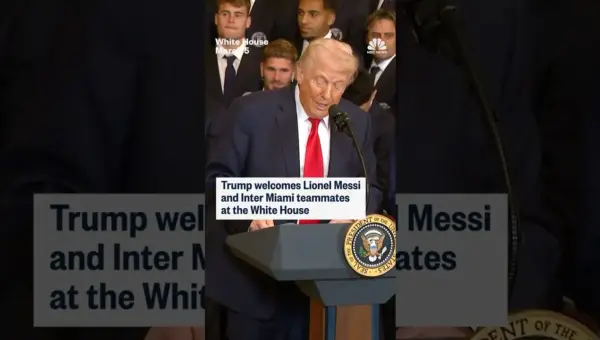
Trump Honors Messi, Inter Miami at White House Ceremony
Former President Donald Trump hosted Lionel Messi and Inter Miami at the White House to celebrate their 2023 MLS Cup victory. Trump lauded Messi's ability to perform under immense pressure, calling his championship win 'very unusual' and an 'amazing tribute.' The event highlights soccer's growing influence in the United States.