MTG’s GOP Meltdown: Cults, Cash, and Conservative Chaos
Marjorie Taylor Greene's call to "burn the GOP to the ground" and her critique of the Trump "cult" reveal deep divisions within the Republican Party. While her analysis of donor influence is debated, it highlights the significant role of corporate money in politics and the potential fracturing of the conservative movement.

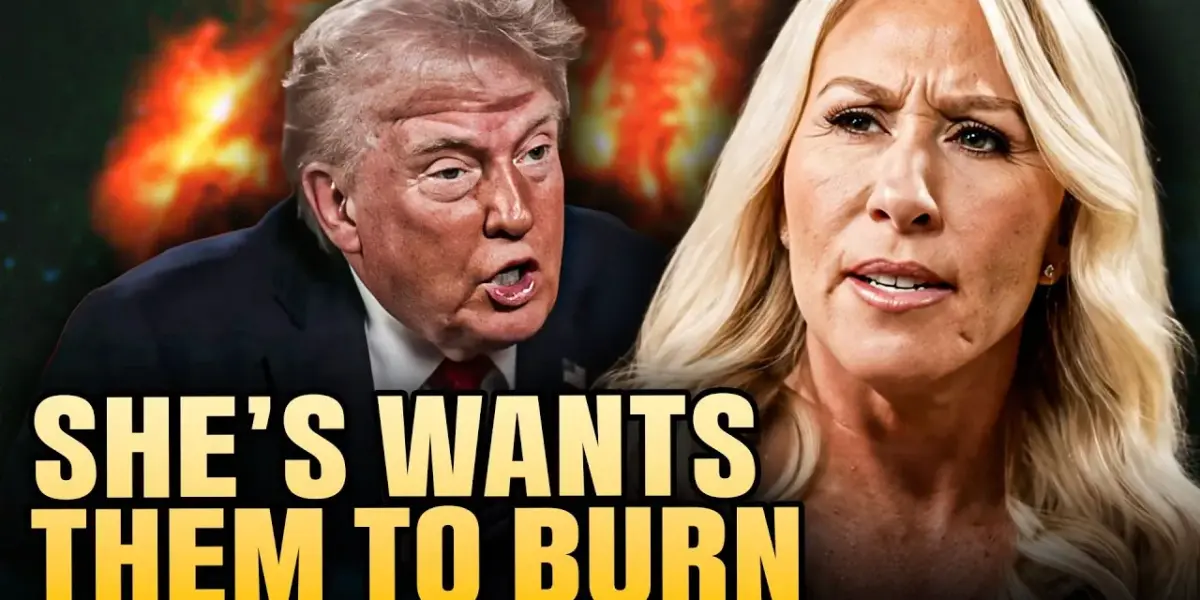
MTG’s GOP Meltdown: Cults, Cash, and Conservative Chaos
Marjorie Taylor Greene recently appeared on Alex Jones’s podcast, making a bold statement: the Republican Party (GOP) should be “burned to the ground.” This strong language signals deep divisions within the party, and the speaker largely agrees with the sentiment, though not always the reasoning.
A Party in Crisis?
Greene argued that the Republican Party is no longer the same as it was when many, including herself, supported Donald Trump. She suggested that supporters need to “open their eyes and deal with reality” because the movement has become a “cult” demanding “cultlike worship.” The speaker, however, points out that this cultlike behavior isn’t new; it’s always been present, and Greene is only now seeing it clearly.
The Cult of Personality
The core of the critique is that Trump and his inner circle foster an environment of unquestioning loyalty. While Greene’s observation that the movement has become a cult is seen as largely accurate, the speaker emphasizes that this has been the case from the start. Trump is viewed as the leader of this devoted following. The idea that the party needs to be dismantled is supported, as it’s suggested that the GOP is beyond saving.
Beyond the Base: Blaming Donors
Greene then shifted her focus to who controls the government, claiming that elected officials are not controlled by the American people but by donors with a singular interest in Israel. She specifically mentioned the “secular government of Israel, not Jewish people,” and called for supporting candidates who refuse money from pro-Israel lobbying groups like AIPAC. The speaker acknowledges that Greene is not entirely wrong about donor influence but argues she oversimplifies the issue.
Corporate Power Over Foreign Policy
The analysis suggests that the US government’s actions are not solely dictated by AIPAC or Israeli leadership. Instead, it’s the powerful corporations, especially defense contractors like Boeing and Lockheed Martin, that truly pull the strings. Israel’s status as a major arms buyer makes it profitable for these American companies. Therefore, the argument is that the US isn’t beholden to Israel or Saudi Arabia specifically, but to the corporations profiting from relationships with these nations. If these corporations weren’t making money, the US would likely change its stance quickly.
The Real Culprit: Money in Politics
The underlying problem, according to this perspective, is the vast amount of corporate money influencing politics. These corporations fund politicians, and their profits are tied to international dealings. Greene’s near-miss insight is that it’s the corporate cash, not just foreign influence, that dictates policy. The speaker agrees that the GOP might be beyond repair and that Trump’s followers are indeed in a cult, but Greene’s broader analysis falls short by not fully grasping the depth of corporate control.
Cracks in the Conservative Movement
Despite Greene’s flawed reasoning, the speaker finds value in her public statements. They see these pronouncements as creating significant cracks within the conservative movement. The current state of the right – encompassing MAGA supporters, regular conservatives, and moderates – is described as a self-created mess over the past 50 years. Now, this powerful movement is beginning to fracture as more people realize its ineffectiveness.
A History of Broken Promises
The critique extends to the historical performance of conservatives. For decades, they have allegedly catered to the wealthy elite and corporations. Voters have been distracted by culture war issues that have little impact on their daily lives. The infighting within the conservative ranks is seen as a sign that they are incapable of effectively running the country, appearing as “whiny, petulant little children.”
Why This Matters
Marjorie Taylor Greene’s controversial statements, however imperfectly articulated, highlight a growing internal conflict within the Republican Party. Her call to “burn the GOP to the ground” and her critique of the “cult” surrounding Donald Trump reflect a deeper dissatisfaction. More importantly, her focus on donor influence, while misdirected in part, touches on a critical issue: the outsized role of corporate money in American politics. The ensuing infighting and public airing of grievances within the conservative movement could signal a significant realignment or weakening of the political right, forcing voters to question the effectiveness and true priorities of their representatives. This internal turmoil is not just a spectacle; it’s a symptom of a larger political system grappling with the influence of money and the loyalty of its base.
Implications and Future Outlook
The fragmentation within the GOP, as evidenced by Greene’s remarks, suggests a potential shift in the political landscape. If the party continues to be consumed by internal conflict and identity crises, it could lose its ability to effectively govern or appeal to a broad base of voters. The focus on corporate donors as the primary puppet masters, while debatable in its exclusivity, points to a broader concern about accountability in politics. As voters become more aware of how money influences policy, they may demand greater transparency and reform. The future outlook for the Republican Party appears uncertain, potentially facing a period of significant change or decline if these internal divisions are not addressed.
Historical Context
The current divisions within the Republican Party echo historical moments of ideological struggle. Throughout American history, political parties have undergone periods of intense debate and reinvention. The rise of Donald Trump and the MAGA movement itself represented a significant break from traditional Republicanism. Greene’s current stance, while extreme, can be seen as part of an ongoing evolution or fracturing of conservative ideology, questioning the party’s past successes and future direction. The debate over donor influence and corporate power also has deep roots, dating back to the Progressive Era and continuing through various reform movements aimed at curbing the power of big business in politics.
Source: MTG Declares War On Republicans (YouTube)

Related Articles


Snyder: Trump’s ‘Genocide’ Talk Sullies US, Leads to Losing
Historian Timothy Snyder warns that Donald Trump's rhetoric about destroying civilizations, regardless of intent, carries grave consequences. He argues such language normalizes dehumanization and echoes tactics used in past genocides, ultimately sullying the nation and leading to strategic failures.

Trump Vows to Clear Strait of Hormuz, Cites Oil Shipments to US
Former President Donald Trump announced the U.S. is clearing the Strait of Hormuz, citing a need to help allied nations and noting oil ships are heading to the U.S. This comes as peace talks involving Vice President JD Vance are underway in Pakistan.

Trump Attacks Allies, Then Begs Them for Help
Donald Trump is reportedly publicly attacking NATO and European allies while privately begging them for help with the Iran situation. This conflicting approach raises questions about trust and the effectiveness of international diplomacy. Allies are reportedly considering their own solutions rather than caving to demands.