Motorola’s Remarkable Comeback: From Mobile Pioneer to Tech Giant
Motorola, once a dominant force in mobile, has staged a remarkable comeback. The company now thrives as a leader in public safety communications through Motorola Solutions, while its smartphone division, Motorola Mobility, is also experiencing significant growth and innovation.


Motorola’s Remarkable Comeback: From Mobile Pioneer to Tech Giant
Once a household name synonymous with mobile phones, Motorola faded into relative obscurity for many. However, the company has staged a remarkable comeback, not just in smartphones but as a dominant force in public safety and critical communications. With a current valuation of $60 billion, Motorola has undergone a significant pivot, redefining its identity and securing a thriving future.
A Legacy of Innovation
Motorola’s history is deeply intertwined with technological milestones. The company provided the communication equipment for the Apollo moon landings, famously carrying Neil Armstrong’s first words from the lunar surface. More significantly, Motorola invented the world’s first handheld mobile phone. Dr. Martin Cooper of Motorola led the charge, defying established telecommunications giants like Bell Labs who were focused on improving car phone infrastructure. Cooper envisioned a truly portable, personal communication device, leading to the development of the DynaTAC 8000x. In a legendary move, Cooper made the first public mobile phone call to none other than Bell Labs, announcing his achievement.
Beyond mobile phones, Motorola was a pioneer in microprocessors. The Motorola 68000, launched in the late 1970s, was a groundbreaking processor that powered a generation of video games and early computers, including the first Apple Macintosh. Its advanced capabilities, such as multitasking and virtual memory, were years ahead of competitors like Intel.
The Rise and Fall of a Mobile Icon
The commercial launch of the DynaTAC 8000x in 1983, despite its hefty 2.5 lb weight and $12,000 price tag (in today’s money), signaled the dawn of the mobile era. Motorola sold hundreds of thousands of units, proving the demand for portable communication.
The 1990s and early 2000s saw fierce competition in the mobile market. While Nokia dominated with reliable, durable phones like the 3310, and BlackBerry became a status symbol for business professionals, Motorola struggled to maintain its lead. The release of the Motorola RAZR in 2004 marked a resurgence. Its sleek, ultra-thin design and metallic finish made it a cultural phenomenon, selling over 130 million units globally and becoming a symbol of cool for everyday consumers.
However, this success was short-lived. The advent of the smartphone era, spearheaded by Apple’s iPhone in 2007, blindsided many established players. While Nokia and others recognized the threat, Motorola’s RAZR was quickly becoming obsolete, and its newer devices failed to capture market share. The company faced significant financial losses, leading to layoffs and a strategic split into Motorola Solutions and Motorola Mobility. Google acquired Motorola Mobility in 2012, primarily for its patent portfolio, and later sold it to Lenovo in 2014. It appeared that Motorola’s era of mobile dominance was over.
Motorola Solutions: A Public Safety Powerhouse
While its consumer mobile division struggled, Motorola had been quietly cultivating a different business: public safety and enterprise communication. Under the leadership of CEO Greg Brown, Motorola Solutions focused on its core strengths, particularly in providing mission-critical equipment for first responders. This strategic shift, initiated around 2008, proved to be a masterstroke.
Today, Motorola Solutions is a leader in providing rugged, reliable communication devices like walkie-talkies for firefighters, police officers, and paramedics. Their offerings extend to advanced systems like Command Central CRS, which uses AI to automatically identify caller locations and dispatch resources efficiently. The company also develops integrated video security solutions, including in-car video systems and body cameras that leverage AI to detect threats and alert dispatchers. These systems are designed to work seamlessly together, enhancing situational awareness and response times. Motorola’s security products are also finding significant traction in schools, hospitals, and event venues, utilizing AI to detect suspicious behavior and improve safety.
Motorola Solutions has achieved remarkable financial success, generating over $10 billion in revenue and significantly outpacing competitors like Axon. This success, while beneficial for the company, also highlights a concerning trend: the booming market for critical response and surveillance equipment.
Motorola Mobility: A Second Act in Smartphones
In a surprising turn of events, Motorola’s smartphone division, Motorola Mobility, is also experiencing a revival. Following its acquisition by Google and subsequent sale to Lenovo, the division has undergone a three-phase recovery plan. The initial phase focused on stemming financial losses by exiting unprofitable market segments. The second phase involved stabilizing and growing the business while fostering innovation, including making the first 5G call on a Motorola device and re-entering key markets.
The current third phase, dubbed ‘acceleration,’ aims to double the business within three to four years. Recent financial reports show significant year-on-year growth, with a 27% increase in overall business and a 43% jump in revenue. The latest Motorola RAZR, a modern take on its iconic foldable predecessor, has been well-received and is considered a strong contender in the foldable smartphone market, competing directly with devices like Samsung’s Galaxy Z Flip series. Motorola is also regaining market share in regions like India, Saudi Arabia, and the UAE.
Why This Matters
Motorola’s story is a testament to adaptability and strategic vision in the fast-paced tech industry. The company’s successful pivot to public safety demonstrates how established brands can leverage their core engineering expertise to find new, vital markets. The resurgence of its smartphone division, particularly with innovative form factors like foldable phones, shows that even a brand perceived as a has-been can reclaim relevance.
However, the success of Motorola Solutions also raises important societal questions about the increasing reliance on surveillance technology and the growth of industries focused on security and response in a world facing complex challenges. The revival of Motorola’s mobile division offers consumers more choice in a competitive smartphone landscape, particularly in the evolving foldable market.
Motorola’s journey from a pioneering mobile phone inventor to a near-collapse and subsequent dual resurgence as a public safety giant and a revitalized smartphone player is one of the most compelling comebacks in tech history. It underscores the importance of innovation, strategic pivots, and the enduring power of a brand name when backed by solid execution.
Source: Motorola – The Greatest Comeback of All Time (YouTube)

Related Articles


Austin Bar Shooting Claims 3 Lives in Early Morning Violence
At least three people were killed and several others injured in a shooting at a bar in downtown Austin early Saturday morning. Law enforcement is currently investigating the incident, which occurred in a busy entertainment district, and urging anyone with information to come forward.

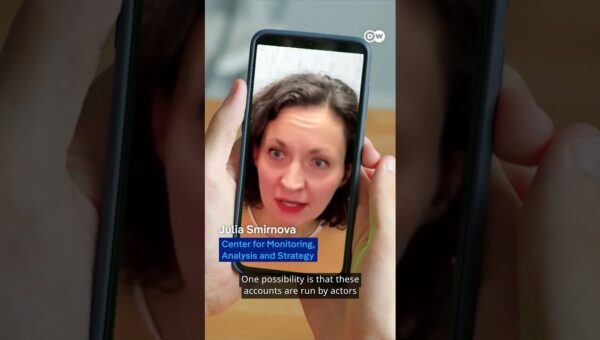
Germany’s Fake Laws: AI Disinformation Campaign Exposed
Viral AI-generated videos falsely claim Germany has enacted absurd laws, including fines for flushing toilet paper. Experts reveal a disinformation campaign aiming to portray Germany as chaotic, with potential commercial or political motives behind the fabricated content.


Google’s Reddit Deal Fuels Marketer Shift
Google's exclusive data access deal with Reddit, reportedly worth hundreds of millions, is transforming search results by prioritizing authentic user discussions. This strategic move positions Reddit content at the forefront of Google searches and AI answers, creating new opportunities and challenges for marketers.