Moscow’s Cash Squeeze: Iran Crisis Fuels Russian War Woes
Escalating tensions in the Gulf are creating a severe cash squeeze for Russia, impacting its war machine in Ukraine. Economic pressures, coupled with internal dissent and disrupted supply chains, are weakening the Kremlin's ability to wage war. The situation suggests Russia is facing a multi-faceted crisis that could hasten its defeat.

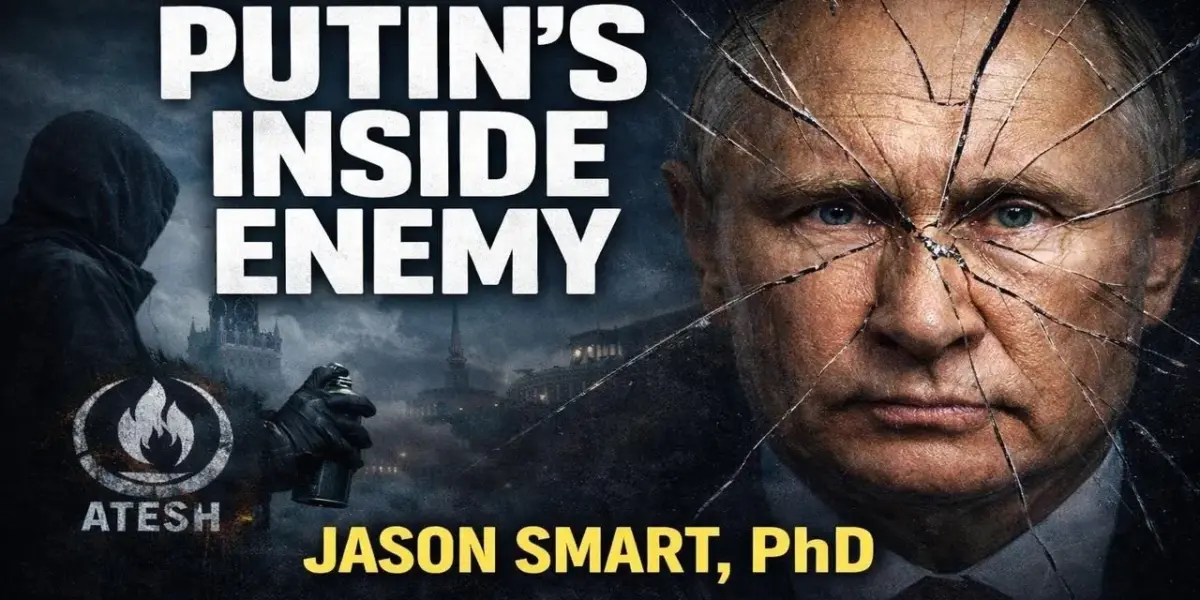
Iran Tensions Ripple Through Russia’s War Machine
Recent escalations in the Gulf, while drawing global attention to Iran, are increasingly revealing a critical vulnerability for Russia’s war effort in Ukraine. The ripple effects of rising tensions, from increased insurance premiums and altered shipping routes to soaring fuel and freight costs, are contributing to significant inflationary pressures. These economic strains are translating directly into political pressure on the Kremlin, complicating Russia’s ability to procure essential components, machine tools, and logistics services needed for its long-range strike campaigns and drone production.
Russia’s Strategic Overreach and Internal Dissent
Dr. Jason Smart, a special correspondent and national security advisor, highlights that Russia’s current situation is far from robust. The nation faces multifaceted challenges encompassing economic instability, military strain, demographic decline, and escalating political tensions. “The leadership in Russia is at each other’s throats,” Dr. Smart observes. “They realize that things are not going well, that the window of opportunity to make money is closing every single day.” This internal discord is exacerbated by a perceived lack of faith within the Russian population regarding future prospects, with many anticipating worsening conditions.
The ‘Fourth World War’ Narrative and Shifting Alliances
Dr. Smart posits that Russia views its conflict not merely as a war with Ukraine, but as a broader confrontation with the West, which it perceives as the “fourth world war.” In this narrative, Russia aligns with allies such as North Korea and Iran. However, the effectiveness of these alliances is questionable, with Iran and Venezuela offering limited contributions and Cuba on the brink of instability. This isolation limits Russian President Vladimir Putin’s options and emboldens internal opposition.
Sabotage Within Russia: A Growing Threat
The transcript sheds light on internal opposition movements within Russia, such as the group ‘Aesh,’ which has been actively targeting Russian railways. Dr. Smart emphasizes the strategic significance of these attacks, stating, “they’re attacking the logistics of Russia which is a strategically wise move.” Disruption to rail networks directly impedes the movement of tanks, soldiers, and artillery to the front lines in Ukraine. The existence and actions of groups like the Rosaria, the Russian National Guard, tasked with suppressing such dissent, underscore the persistent threat of internal sabotage, despite the totalitarian regime’s efforts to maintain control.
Parallels with Iranian Opposition and Ideological Bonds
A fascinating parallel is drawn between the internal dissent in Russia and that within Iran. The transcript mentions groups like the ‘Mujahedin-e Khalq’ (MEK) in Iran, an opposition movement seeking to establish a secular, democratic state. The text notes the MEK’s distinct operational system and their recent attempts to infiltrate Ayatollah’s residences with weapons, highlighting their serious organizational capacity. Dr. Smart suggests that despite apparent ideological differences – Iran’s Islamic fundamentalism versus Russia’s kleptocratic nature – both regimes find common ground in their shared struggle against Western sanctions and their need to operate within black markets. This shared need for survival, rather than genuine ideological alignment, forms the basis of their cooperation.
The Economic Fallout: Sanctions, Laundering, and a Weakening Ruble
The economic implications of the current geopolitical landscape are severe for Russia. The transcript details Russia’s precarious debt situation, having exhausted its annual debt allowance by January. With dwindling financial reserves, the cost of acquiring necessary war materials, including components and parts, becomes prohibitive. The disruption to Iran’s shipping capabilities, particularly its role as an expert in global money laundering for black markets, poses a significant challenge to Russia’s ability to secure liquidity. “For the Russians, getting more liquidity is going to be a challenge,” Dr. Smart explains. The weakening Russian economy, heavily reliant on military spending (approximately 7.9% of GDP, or $186 billion annually), faces an existential threat if it cannot sustain this expenditure.
Oligarch Exodus and the Implosion Threat
The discomfort within Russia’s oligarchal class is a clear indicator of the regime’s deteriorating position. A telltale sign of instability in dictatorial regimes, according to Dr. Smart, is the exfiltration of the elite. “First, they send off their relatives and then they send off their money and finally they’re the last ones to leave.” This exodus signals a loss of faith in the regime’s long-term viability. Simultaneously, the Russian government is implementing stricter capital controls, limiting ATM and bank withdrawals to less than $300 per day. This move, intended to prevent capital flight, risks creating a domestic banking crisis and widespread public panic if citizens are unable to access their funds.
Shifting Battlefield Objectives and the War’s Unsustainable Trajectory
The strategic calculus for Russia appears to be shifting. The acknowledgement by high-ranking officials, such as the head of the presidential administration, that Russia has no intention of capturing Kyiv, renders its extensive military operations and immense human cost increasingly perplexing. The transcript suggests a grim reality: if the war were to end prematurely due to a lack of essential components—partly due to Iran’s strategic withholding of drone technology—the Russian economy, heavily propped up by military spending, could implode. This grim outlook may be driving rumors of Putin’s willingness to consider a peace deal, not out of a desire for peace, but from a position of increasing desperation.
Looking Ahead: Crackdowns and Continued Instability
In the coming days, Dr. Smart anticipates intensified crackdowns within Russia as the Kremlin attempts to monitor the elite and prevent further capital flight. The government’s increasingly restrictive financial policies, designed to staunch the flow of money out of the country, could inadvertently destabilize the regime by fueling public discontent and a potential run on banks. Events in seemingly distant regions, such as the attacks in Iran or the killing of a cartel leader in Mexico, are presented not as isolated incidents, but as interconnected factors that ultimately benefit Ukraine’s cause. “Every aspect of what we see going on right now in Iran… all of these things directly fit together and all these things are beneficial to Ukraine,” Dr. Smart concludes, suggesting that “today we’re yet one day closer to victory.”
Source: Moscow Cash Squeeze Sparks Crisis (YouTube)

Related Articles


Drapes Over Diplomacy: Trump’s Priorities Under Fire
Donald Trump's focus on drapes and building aesthetics over the human cost of military action against Iran has drawn sharp criticism. The lack of a consistent narrative from his administration regarding foreign policy raises concerns about leadership priorities and accountability.

Pentagon Hints at Iran Ground Troops: ‘Go As Far As We Need’
Defense Secretary Pete Hegseth has refused to rule out deploying U.S. ground troops into Iran, stating "We'll go as far as we need to go." The ambiguous comment from the Pentagon raises concerns about potential military escalation in the volatile Middle East region.
Trump Predicts Iran Operation Lasting Weeks, Cites Rapid Progress
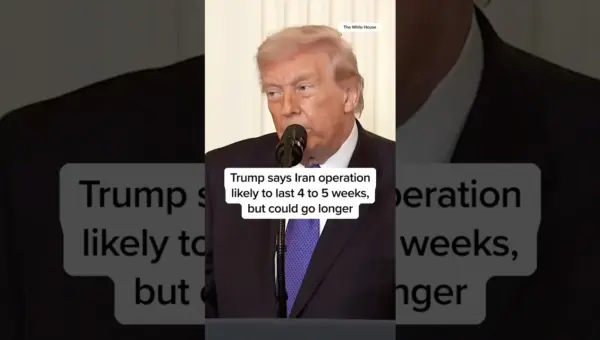
President Donald Trump stated that the U.S. military operation in Iran is progressing ahead of schedule and is likely to conclude within four to five weeks. He emphasized the nation's capability to extend the operation if necessary, signaling flexibility in strategic planning.