Moon as Lunar Gateway: Your Next Spaceport?
The Moon offers a pragmatic stepping stone for deep space exploration, providing a crucial training ground before ambitious journeys to Mars. Innovative technologies like sand batteries and a deeper understanding of cosmic phenomena like rogue black holes and galactic redshift are shaping our future in space.

Moon Over Mars: A Strategic Stepping Stone for Space Exploration
The age-old question of whether humanity’s future lies on the Moon or Mars has a compelling new argument: the Moon might not be a distraction, but rather the optimal launchpad for our interplanetary ambitions. While Mars captures the imagination with its Earth-like appearance, a closer look reveals that our nearest celestial neighbor, the Moon, offers a more pragmatic and achievable stepping stone for deep space exploration.
The Moon: A Practice Ground for the Cosmos
At a mere 400,000 kilometers away, the Moon presents an unparalleled opportunity to hone the skills necessary for venturing further into the solar system. Traveling to the Moon takes only a couple of days, allowing astronauts to practice crucial aspects of deep space flight. This includes operating outside Earth’s protective magnetosphere, necessitating the development of effective radiation mitigation strategies. Astronauts can spend weeks in this environment, testing life support systems, closed-loop recycling of water and air, and ensuring a steady supply of food.
Furthermore, the Moon’s solid surface provides a challenging yet manageable environment for practicing landings and extravehicular activities. Crucially, any emergencies, whether medical or technical, can be addressed with relatively swift resupply missions from Earth. This proximity drastically reduces the risks and logistical complexities associated with long-duration missions, making the Moon an ideal training ground.
Bridging to Mars: The Lunar Gateway Concept
Once proficiency is established on the Moon, strategic locations around it, such as Lagrange points, can serve as ideal staging areas for missions to Mars. These points offer gravitational stability and are essentially halfway points for interplanetary travel. Concepts like the Lunar Gateway, a planned space station in orbit around the Moon, exemplify this vision. Such a station could house astronauts and serve as a hub from which to launch expeditions to Mars, significantly reducing the direct transit time and complexity from Earth.
Mars: The Allure and the Harsh Reality
Mars, often romanticized as a second Earth, presents a stark contrast. While it possesses surface features and a day length (approximately 24 hours) conducive to solar power, its advantages are overshadowed by significant challenges. Mars has an extremely thin atmosphere, offers little protection from radiation, and is profoundly hostile to human life.
The journey to Mars itself is a monumental undertaking, requiring approximately nine months of travel each way, plus an extended stay on the surface. This extended isolation and exposure to the harsh Martian environment amplify the risks considerably. The notion that Mars is simply an ‘Earth desert’ is a misconception; it is a world that demands extensive technological solutions for survival.
Innovative Lunar Habitation: Sand Batteries and Lava Tubes
The Moon’s extreme temperature fluctuations, with days reaching 200°C and nights plunging to -200°C, present unique power challenges. However, innovative solutions are being explored. The concept of ‘sand batteries,’ already employed on Earth for thermal energy storage, could be adapted for lunar use. By heating vast quantities of regolith during the 14-day lunar day using solar energy, this stored heat could then be used to maintain habitable temperatures and generate electricity via Sterling engines or thermocouples throughout the equally long lunar night.
While lava tubes have long been considered as potential shelters, the sand battery concept offers an alternative or complementary approach to thermal management, potentially requiring less complex excavation and infrastructure.
Rogue Black Holes: Gravitational Warnings from Afar
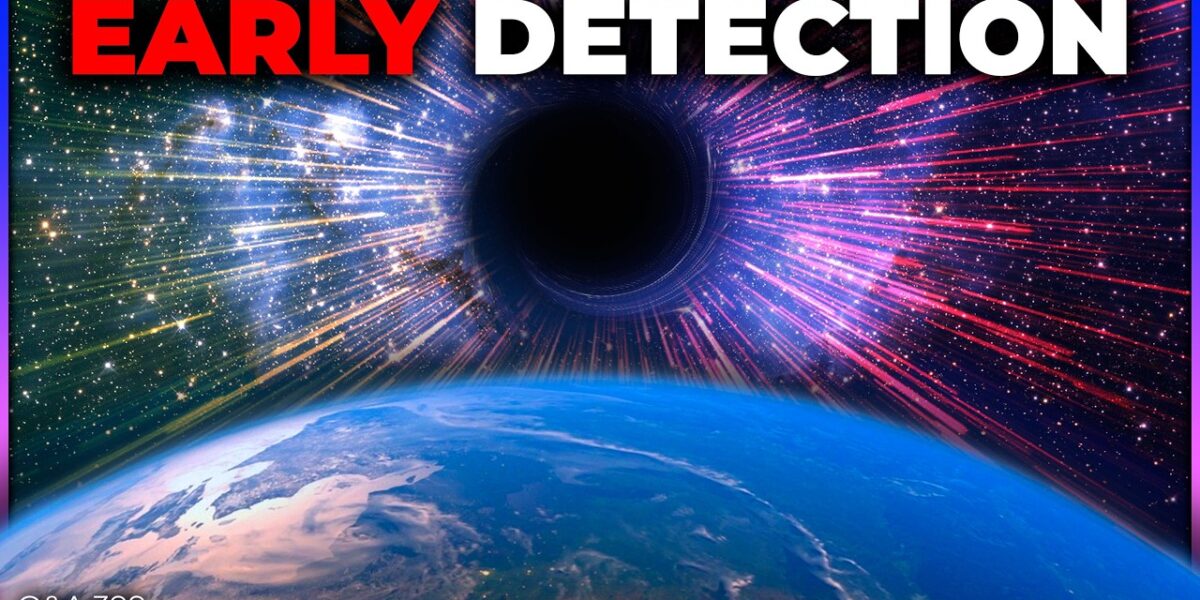
The possibility of a rogue black hole venturing into our solar system, while a dramatic scenario, is not one that would catch us entirely unawares. Even without an accretion disk to signal its presence visually, a stellar-mass black hole would exert a detectable gravitational influence from thousands of Astronomical Units (AU) away. Its immense gravity, potentially equivalent to that of several stars, would begin to perturb the orbits of distant Kuiper Belt Objects and planets.
As it drew closer, its gravitational dominance would surpass that of the Sun, potentially pulling planets into orbit around it, causing collisions, or ejecting them from the solar system. This gravitational disruption would manifest over years, providing ample warning as celestial mechanics visibly unravel. The stability of our solar system over the past 4.5 billion years suggests that such catastrophic encounters with rogue black holes have been exceedingly rare.
Decoding Black Holes: More Than Just a ‘Hole’
Black holes, often misconstrued as literal holes, are in fact regions of spacetime with such extreme gravity that nothing, not even light, can escape. They are not ‘black’ in the sense of being empty; rather, they absorb all electromagnetic radiation that falls upon them, making them invisible to direct observation. They are also not ‘holes’ because matter falling into them is added to their mass, increasing their size and gravitational pull. While the nature of what lies beneath the event horizon remains a mystery—potentially a singularity or an object of unknown properties—their mass and spin can be calculated through their gravitational effects.
The Asteroid Belt: A Failed Planetary Formation
The asteroid belt is not the remnant of a shattered planet, but rather a collection of material that never coalesced into a single celestial body. The immense gravitational influence of Jupiter, and to a lesser extent Mars, continuously disrupted the accretion process. Even if these fragments had managed to clump together, the total mass of the asteroid belt is estimated to be only about 5% of the Moon’s mass, insufficient to form a substantial planet. The dwarf planet Ceres, which constitutes about 38% of the belt’s mass, is the closest it came to forming a significant planetary object.
Oort Clouds: Elusive Icy Realms
The Oort Cloud, a theoretical spherical shell of icy objects surrounding our solar system, is incredibly difficult to observe directly. Its constituent bodies are extremely distant from the Sun, receiving minimal illumination. This makes any reflected light from these icy objects too faint to detect with current technology. However, astronomers have successfully detected the presence of similar ‘mega-Kuiper belts’ around other star systems, confirming the existence of such distant, icy reservoirs in other planetary systems.
Galactic Distortions: A Glimpse Through Time
When we observe distant galaxies, such as Andromeda, we are indeed looking back in time. Andromeda, located 2.5 million light-years away, spans approximately 200,000 light-years. This means the light reaching us from its leading edge is 200,000 years younger than the light from its trailing edge. While this temporal disparity does create a slight distortion in our perception of the galaxy’s shape, the effect is minimal because galaxies move at speeds far slower than the speed of light. The visual lag is negligible in terms of distorting our overall understanding of the galaxy’s structure.
Redshift Beyond Radio: The Infinite Spectrum
The electromagnetic spectrum is continuous, with radio waves representing the longest wavelengths. Photons that have undergone extreme cosmological redshift will continue to be detectable as radio waves, albeit with wavelengths that could extend to meters, kilometers, or even light-years. There is no ‘beyond’ the radio spectrum; these extremely long-wavelength photons simply require increasingly larger and more sensitive instruments, like radio telescopes, to be detected. If current instruments cannot detect them, they remain invisible to us, but they still exist in the universe.
This article is based on a Q&A session covering topics from lunar exploration and Martian challenges to black holes, asteroid belts, and cosmological phenomena.
Source: Approaching Rogue Black Holes, Moon VS Mars, Other Oort Clouds | Q&A 399 (YouTube)

Related Articles

Earth’s Planetary Status Questioned, Figure-8 Orbits Debunked
Exploring Earth's planetary status, the impossibility of figure-8 orbits, the ongoing debate about dark matter's composition, and the future of human spaceflight.

Milky Way’s Center: Black Hole or Dark Matter Mystery?
New research proposes that Sagittarius A*, the supermassive object at the Milky Way's center, might not be a black hole but a dense concentration of dark matter. Future observations of its photon ring could reveal the truth.
Humans May Return to the Moon by 2030, Experts Predict
As humanity gears up for a return to the Moon by 2030, new technologies promise unprecedented broadcast experiences. Meanwhile, scientists ponder the survival of planets near supernovae and the intriguing possibility of 'shadow life' deep within Earth.