Molecular Motor Revolutionizes Understanding of Life’s Origins
Scientists have unveiled high-resolution details of the bacterial flagellar motor, a complex molecular machine that drives bacterial movement. This discovery deepens our understanding of biological mechanics and reignites debates about the origin of life.

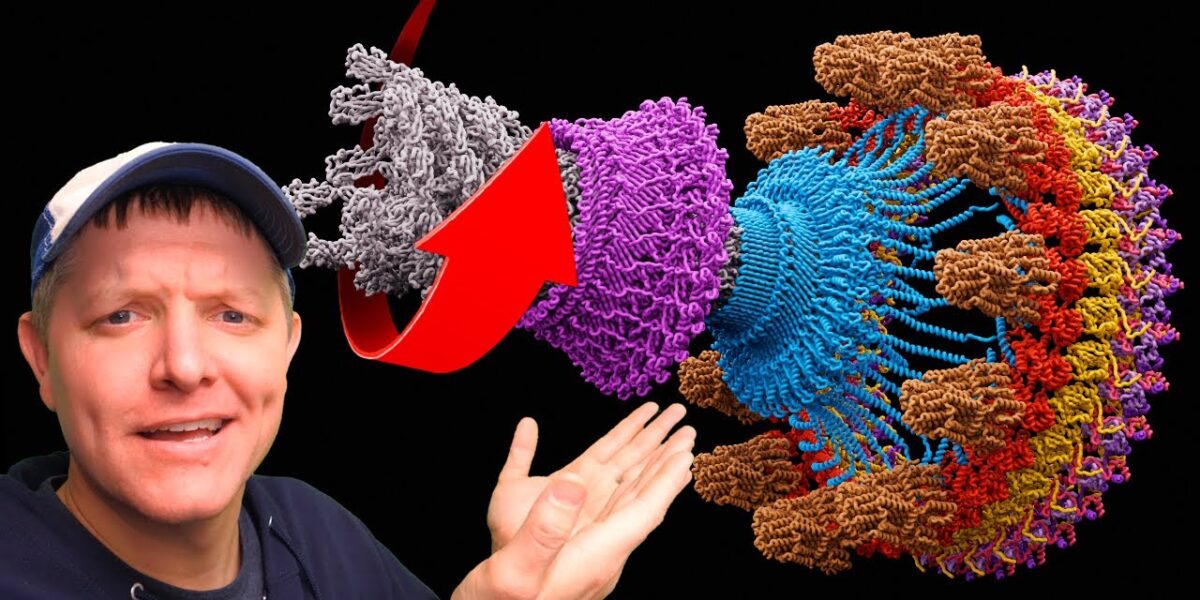
Nature’s Incredible Rotating Motor: A Microscopic Marvel
In a groundbreaking exploration of biological machinery, scientists have unveiled unprecedented high-resolution details of the bacterial flagellar motor, a complex molecular engine that drives bacterial locomotion. This discovery, detailed in a recent publication in Nature Microbiology, not only illuminates the intricate mechanics of life at its smallest scales but also reignites profound philosophical debates about the origin and complexity of life itself.
The Bacterial Submarine: A Propulsion System Like No Other
Imagine a microscopic submarine, a bacterium, navigating its environment. This organism possesses a unique propulsion system: the flagellum. Often described as a whip-like appendage, the flagellum’s primary role is to provide locomotion, enabling bacteria to move towards resources or away from threats. However, what was not fully understood until recently is the sophisticated motor that powers this ‘propeller’.
Researchers at Vanderbilt University, led by Dr. Tina Iverson and Senior Research Associate Prashant Sing, have delved deep into the structure and function of this flagellar motor. The motor is embedded within the bacterial cell envelope, which consists of two membranes. Between these membranes lies a high concentration of protons (hydrogen ions), creating an electrochemical gradient—akin to the potential energy stored behind a dam.
This gradient is the power source. As protons flow from the high-concentration area to the low-concentration area inside the bacterium, they pass through specific protein channels within the motor. This controlled flow of protons is what drives the rotation of the flagellum, propelling the bacterium forward. The process is remarkably efficient, harnessing the inherent energy of this ion gradient.
A Sophisticated Operating System: Sensing, Signaling, and Steering
The bacterial flagellar motor is not merely a passive spinning mechanism; it’s an active component of a complex biological ‘operating system’. Bacteria possess sensors on their outer surface that detect chemical signals in their environment. When a favorable signal (like a food source) or an unfavorable one (like a toxin) is detected, a cascade of internal signals is triggered. A key player in this signaling pathway is a protein known as CheY.
When CheY binds to a specific part of the motor, it influences the direction of rotation. In its default state, the motor spins counterclockwise. This causes multiple flagella on the bacterial surface to bundle together, forming a single, larger propeller that allows the bacterium to swim in a straight line. This directed movement is crucial for chemotaxis, the process by which bacteria navigate towards attractants and away from repellents.
However, when the signaling protein CheY binds, it causes the motor to switch to clockwise rotation. This change in direction causes the flagellar bundle to unravel. The bacterium then tumbles erratically, effectively pausing its forward progress to re-evaluate its surroundings. This ‘tumble’ behavior, combined with periods of straight swimming, results in a ‘biased random walk,’ a surprisingly effective strategy for finding resources in a complex environment.
Unraveling Molecular Architecture: From Blurry Images to Atomic Precision
For decades, scientists had a general understanding of the flagellar motor’s components, often visualized as blurry blobs or low-resolution structures. The breakthrough achieved by the Vanderbilt team lies in their ability to visualize this motor with unprecedented detail, down to the atomic level. This was accomplished using advanced cryo-electron microscopy (cryo-EM) techniques.
The process involves several intricate steps. First, bacterial cells are genetically modified to overproduce the flagellar motor proteins. These proteins are then purified. The purified samples are rapidly frozen in a thin layer of vitreous ice, preserving their native structure. These frozen samples are then imaged using electron microscopes, where a beam of electrons is transmitted through the sample. Thousands of images of individual motor components are captured from various angles.
Sophisticated computational algorithms are then employed to sort these images, classify them based on their orientation, and reconstruct a highly detailed three-dimensional model of the motor. This process allows researchers to identify individual amino acids and their precise arrangement within the motor’s complex structure. The team identified specific protein components, such as the MoT-AB complex, which interacts with the proton flow, and the FliG protein, which enables the motor to pivot and change direction.
Implications for Science and Philosophy: The Origin of Complexity
The sheer complexity of the flagellar motor has profound implications, particularly concerning the origin of life. The motor comprises numerous distinct protein parts, each essential for its function. This has led to philosophical questions: how could such a complex, interdependent system arise through gradual evolutionary steps? If each part is necessary for the whole to function, did all parts have to appear simultaneously? This line of questioning is central to debates in evolutionary biology and the philosophy of science.
Scientists are exploring connections to other molecular systems, such as the Type III secretion system, which shares some structural similarities but operates differently. Understanding the evolutionary pathways that led to the flagellar motor could provide crucial insights into the fundamental processes that govern the emergence of biological complexity.
Looking Ahead: New Avenues for Therapeutics and Understanding
The detailed structural knowledge of the flagellar motor opens up new possibilities. By understanding its precise mechanics, scientists could potentially develop novel therapeutic agents. Disrupting the motor’s function could inhibit bacterial movement, thereby preventing infections or aiding in their eradication. This approach could offer an alternative to traditional antibiotics, which face increasing challenges from antibiotic resistance.
Furthermore, the ability to visualize and understand such intricate molecular machines at the atomic level represents a significant leap in scientific capability. It underscores the power of technological advancement in pushing the boundaries of our knowledge, allowing us to observe and comprehend the fundamental building blocks of life in ways previously unimaginable. The ongoing research promises to deepen our understanding of cellular function, evolution, and the very nature of life itself.
Source: Nature's Incredible ROTATING MOTOR (It’s Electric!) – Smarter Every Day 300 (YouTube)

Related Articles


Asteroid Bennu Sample Reveals Life’s Building Blocks
NASA's OSIRIS-REx mission returned samples from asteroid Bennu, revealing a surprising abundance of life's building blocks, including amino acids and nucleobases. This discovery offers crucial insights into the early solar system and the potential for extraterrestrial life.


New Law of Nature Hints at Universe’s Drive for Complexity
Scientists propose a new law of nature, beyond entropy, suggesting a universal drive towards increasing information and complexity. This theory has implications for mineralogy, astrobiology, and even cancer research.


Earth’s Rare Chemical Balance Key to Life’s Origin
New research suggests Earth's habitability stems from a rare, precise balance of phosphorus and nitrogen, influenced by early oxygen levels. This unique chemical composition may make life as we know it exceptionally uncommon elsewhere in the universe.