Moderates Surge in Illinois, Challenging Progressive Dominance
Moderate Democrats have scored significant victories in Illinois primaries, defeating progressive candidates in four congressional races. The results raise questions about the effectiveness of progressive messaging and its appeal to a broader electorate. This shift could signal a strategic reevaluation within the Democratic Party.


Moderates Surge in Illinois, Challenging Progressive Dominance
Illinois Democrats recently experienced a significant shift in their primary elections, with moderate candidates defeating progressive contenders in four key congressional races. This outcome suggests a potential turning point for the Democratic Party’s left wing. The results highlight a growing debate within the party about how to connect with voters on issues beyond core progressive platforms.
Key Races Signal a Trend
In the 9th Congressional District, progressive influencer Kat Abu Gazala, who had support from groups like Justice Democrats and the Sunrise Movement, lost to Daniel Biss, the mayor of Evanston. Biss represented a more moderate wing of the party. Similarly, in the 8th District, progressive candidate Junaid Ahmed was defeated by Melissa Bean. Bean, a former representative, received backing from the pro-Israel lobby group AIPAC. Progressive candidates also lagged behind their moderate counterparts in the 2nd and 7th districts.
The Progressive Platform Questioned
Abu Gazala’s concession speech, though gracious, underscored the core messages that defined her campaign. She stated, “I’m sorry that this sucks, but Trump ice free Palestine and I love you all.” The phrasing of her message raises questions about its effectiveness in broader electoral appeal. The question arises: is it possible that voters desire more than just anti-Trump sentiment and a call for a free Palestine to win their support? The emphasis on these specific, albeit important, issues may not resonate with all segments of the electorate, particularly working-class voters.
Motivations and Interests
The moderate candidates often focused on more traditional Democratic priorities, potentially appealing to a broader base of voters. Their campaigns may have emphasized economic issues, healthcare, or other concerns that have wider appeal. For instance, Melissa Bean’s backing from AIPAC indicates a focus on foreign policy, specifically the relationship with Israel, which is a significant issue for many voters. The progressive groups supporting candidates like Abu Gazala and Ahmed are driven by a desire for significant policy changes, including addressing climate change and advocating for social justice causes. However, the election results suggest that in these specific races, these messages did not translate into enough votes.
Historical Context
The Democratic Party has historically encompassed a wide range of ideologies, from conservative Democrats to staunch progressives. The current tension between moderate and progressive factions is not entirely new. However, the rise of highly visible progressive figures and movements in recent years has amplified this internal debate. These primary results could signal a return to a more centrist approach in certain districts, especially in areas where moderate voices have traditionally held sway. The party’s ability to unite its diverse factions will be crucial for its success in future elections.
Economic and Social Considerations
While the transcript doesn’t detail specific economic policies, the success of moderate candidates often correlates with an appeal to economic stability and practical solutions. Progressive platforms, while aiming for systemic change, can sometimes be perceived as more idealistic. The focus on issues like a “free Palestine” or opposition to Trump, while deeply felt by many, may not directly address the immediate economic anxieties of some voters. The challenge for progressives is to articulate how their broader goals translate into tangible benefits for everyday people, such as job creation or lower living costs.
Future Scenarios
One possible future scenario is that the Democratic Party will recalibrate its messaging, seeking a balance that energizes the progressive base while appealing to moderate and independent voters. This could involve incorporating more pragmatic economic policies into progressive platforms. Another scenario is that progressives will double down on their core messages, believing that these are the future of the party and that these losses are temporary setbacks. They might focus on grassroots organizing and continue to push for systemic change, hoping to build momentum over time. A third possibility is increased fragmentation within the party, with moderate and progressive wings operating with less cohesion.
Global Impact
The outcomes in Illinois are not just a local story. They reflect a broader conversation happening within progressive movements globally about how to achieve political power. When a major party struggles to translate its most passionate supporters’ views into electoral victories, it signals challenges in coalition building. This could influence how other progressive movements around the world frame their messages and strategies. It also affects international relations, as the emphasis on foreign policy issues like the Israeli-Palestinian conflict can be a significant factor in domestic politics, influencing a nation’s stance on global events.
Why This Reshapes the World Order
The internal dynamics of a major political party in a global superpower like the United States have ripple effects worldwide. If the Democratic Party shifts towards a more moderate stance, it could impact U.S. foreign policy, trade relations, and international agreements. Conversely, a continued push by progressives, even in the face of setbacks, could signal a long-term ideological battle that eventually shapes U.S. policy on issues ranging from climate change to global security. The struggle to balance ideological purity with electoral pragmatism is a challenge faced by political movements everywhere, making these Illinois primaries a microcosm of larger global trends.
Source: Major progressive Democrat losses in Illinois primaries: Batya (YouTube)

Related Articles


House Funds DHS Short-Term, Senate Stalemate Looms
The House has passed a short-term bill to fund the Department of Homeland Security, but the Senate is expected to reject it. This temporary measure highlights ongoing political divisions and the challenges in reaching long-term budget agreements in the U.S. Congress.

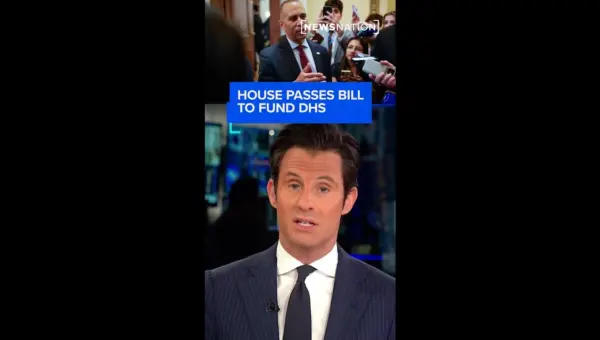
Congress Stalemate Threatens Border Security Funding
The U.S. House passed a temporary funding bill for the Department of Homeland Security, but Senate Democrats are expected to block it. This recurring stalemate highlights deep divisions over border policy and funding, potentially impacting national security and international perceptions of U.S. stability.

Americans Rally for Democracy Amidst War and Economic Woes
Thousands of Americans are participating in "No Kings" rallies nationwide, demanding accountability from leaders and drawing parallels to historical movements that spurred significant change. The protests occur amidst a controversial war with Iran, economic uncertainty, and a partial government shutdown. Organizers emphasize solidarity, joy, and the power of collective action in defending democracy.