Mixed Signals: Trump’s Iran Stance Fuels War & Negotiation Chaos
Conflicting messages from Donald Trump regarding Iran's Strait of Hormuz threats and subsequent negotiation claims create diplomatic chaos. Expert analysis highlights the importance of autonomy in negotiation and warns against arbitrary deadlines, while the core question of U.S. involvement in such conflicts remains.

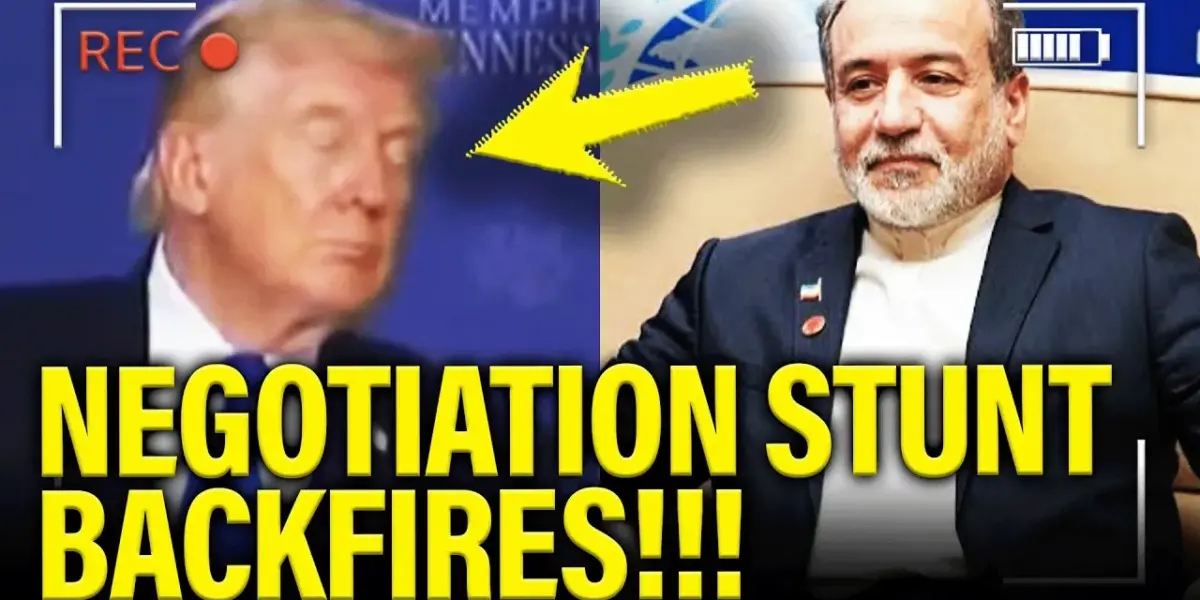
Trump’s Iran Policy: A Tale of Conflicting Messages
The situation between the United States and Iran has been marked by confusing and contradictory messages, especially concerning negotiations and potential military action. For instance, on March 22nd, 2026, former President Donald Trump issued a stark warning on his social media. He stated that if Iran did not fully open the Strait of Hormuz without threat within 48 hours, the U.S. would “hit and obliterate their various power plants.” This was a clear threat of military force.
However, just 24 hours later, Trump’s tone shifted dramatically. In an announcement made just before the stock market opened, he declared that the U.S. and Iran had engaged in “very good and productive conversations” over the previous two days, aiming for a “complete and total resolution of our hostilities.” Consequently, he instructed the Department of War to “postpone any and all military strikes against Iranian power plants.” This rapid change from threat to apparent de-escalation left many observers bewildered.
Iran’s Perspective: Market Manipulation and Defeat
Iran’s response to these mixed signals was swift and critical. Their Foreign Minister, Abbas Aragi, stated that no negotiations were actually taking place. He viewed the talk of negotiations as an “admission of defeat” by the U.S., especially after previous U.S. demands for unconditional surrender. Iran asserted its control over the Strait of Hormuz, allowing passage for friendly nations like China, Russia, India, Iraq, and Pakistan, but not for its perceived enemies.
Iran’s stance was that enemies must learn a lesson and not dare to attack again, demanding full compensation for damages. They emphasized that their own internal strength provided the best guarantee against war, not international agreements. Iran’s Foreign Ministry insisted that no negotiations had occurred and that a ceasefire without guarantees would simply lead to a repeat of the conflict. Regional foreign ministers had contacted Tehran, and Iran maintained its principled and firm position.
Claims of Victory and the Reality of War
Amidst this diplomatic confusion, Donald Trump also made claims of having already won the war. On March 24th, 2026, he stated, “It’s over. We’ve won it. It’s ours.” He criticized the media, calling reports that the war was ongoing “fake news,” arguing that Iran had no navy or air force and that U.S. planes were flying over Tehran. Later, at a cabinet meeting, Trump elaborated, saying the Iranian regime was admitting to its people that it was facing a “disaster” and was defeated, which is why they were talking to the U.S.
This narrative of victory clashes sharply with the ongoing military movements mentioned, such as thousands of Marine Expeditionary Units heading to the Strait of Hormuz and discussions of a potential ground invasion. These actions suggest a conflict that is far from over, raising serious questions about the true state of affairs.
Expert Insights on Negotiation and Autonomy
Chris Voss, a renowned negotiation expert and author of “Never Split the Difference,” offered a different perspective on the situation. He noted that much of the public messaging from both sides is aimed at supporters and allies rather than the opposing party. This makes it difficult to interpret statements accurately without understanding the behind-the-scenes conversations.
Voss highlighted that the distinction between “negotiations” and mere “conversations” is often a matter of face-saving and public perception. He explained that true negotiation involves understanding what truly matters to the other side, emphasizing that autonomy is often more important than survival. People want to feel they made a choice to be at the table, not that they were forced.
The Danger of Arbitrary Deadlines and Coercion
Voss cautioned against setting arbitrary deadlines that cannot be met, especially when coupled with threats of force. He used the example of threats to bomb, followed by immediate deadlines, as counterproductive. He also pointed out the danger of removing the other side’s autonomy by threatening them while simultaneously asking to talk.
The transcript also touched upon historical events, like the U.S. and Israel allegedly killing a key Iranian figure involved in purported talks. This action, from the Iranian perspective, would understandably make starting negotiations incredibly difficult. The role of mediators, like the Oman Foreign Minister, was also discussed. While a mediator might believe a deal is close, their ego can sometimes lead them to push for any agreement, even if it’s not workable, making them susceptible to being misled.
Collaboration vs. Transactional Outcomes
A key point of discussion was the nature of collaboration in negotiations. The current U.S. president, as described, is interested in collaboration regardless of the other side’s form of government, focusing on a two-way street. This is contrasted with a hypothetical scenario where a negotiator might collaborate with a hostage-taker to profit from the situation, rather than focusing solely on the safe release of hostages.
The conversation explored whether negotiations should be based on values and principles or solely on transactional outcomes. The analogy was made to hostage negotiations, where the primary goal is for everyone to live. This requires finding common ground and mutual benefit, rather than forcing a resolution.
Avoiding Chaos and Understanding Negotiation Types
Voss introduced the concept of “7enters,” or high-risk indicators, suggesting that some parties are never going to make a deal. He emphasized the importance of recognizing whether a negotiation falls into one of three categories: deals that should be made, deals that shouldn’t be made, and deals that will never be made. Identifying the latter early is crucial for reassessing the situation.
The discussion also drew parallels between Venezuela and Iraq. Taking out an entire regime, as happened in Iraq, can lead to chaos, anarchy, and the rise of extremist groups like ISIS. The debathification of Iraq, which removed all government structures, created a vacuum that the region has struggled to recover from. Avoiding such “black holes” of chaos in places like Venezuela might be a more prudent approach, even if it means working with existing leadership.
The Enduring Question: Should We Be Involved?
Ultimately, the discussion raised a fundamental question: Should the U.S. be involved in these conflicts in the first place? If the goal is to remove one leader only to potentially replace them with someone more extreme, or if actions lead to unintended negative consequences like the rise of ISIS, it prompts a re-evaluation of U.S. foreign policy objectives and methods.
The idea that giving the other side what they ask for might simply be seen as a “down payment” rather than a final settlement highlights the challenge of negotiating with parties who may have endless expectations and no intention of truly giving up their exploitative strategies. This creates an “endless game” where the U.S. might be perpetually giving without achieving a stable resolution.
Why This Matters
The conflicting messages and actions surrounding U.S.-Iran relations create instability and increase the risk of miscalculation, potentially leading to wider conflict. Understanding the nuances of negotiation, the importance of clear communication, and the long-term consequences of foreign policy decisions is crucial for global security. The analysis suggests that a focus on transactional outcomes without regard for principles or the potential for unintended consequences can be detrimental. It also raises questions about the effectiveness of current U.S. foreign policy in the Middle East and its impact on both regional stability and America’s standing in the world.
Implications, Trends, and Future Outlook
The trend of contradictory messaging in high-stakes diplomacy is concerning, as it erodes trust and complicates de-escalation efforts. The emphasis on collaboration, regardless of political systems, represents a shift in U.S. foreign policy, but its effectiveness remains to be seen, especially when juxtaposed with military threats. The potential for sanctions relief to inadvertently reward adversaries is another trend that warrants careful consideration.
Looking ahead, the situation highlights the need for more consistent and transparent communication in international relations. The long-term outlook will depend on whether diplomatic efforts can move beyond bluster and brinkmanship towards genuine dialogue and mutually beneficial agreements. The risk of prolonged conflict, economic instability, and humanitarian crises remains significant if a clear and coherent strategy is not adopted.
Historical Context
The U.S.-Iran relationship has a long and complex history, marked by periods of tension, proxy conflicts, and shifting alliances since the Iranian Revolution in 1979. The Strait of Hormuz has historically been a critical chokepoint for global oil supplies, making any threat to its security a matter of international concern. Previous U.S. administrations have pursued various strategies, from sanctions and diplomatic isolation to attempts at direct negotiation, with mixed results.
The discussion also touches upon the aftermath of the Iraq War and the rise of ISIS, serving as a cautionary tale about the unintended consequences of regime change and the destabilizing effects of power vacuums in the Middle East. Understanding these historical precedents is vital for evaluating current policies and their potential future impacts.
“The report found serious problems and suggests new rules that would affect all holders.”
The Debate Over Trump’s Approach
There is a clear division in how Donald Trump’s approach to foreign policy, particularly concerning Iran, is perceived. Supporters might view his directness and willingness to use strong rhetoric as a sign of strength and a necessary tool for negotiation. They might point to potential de-escalation or the avoidance of larger conflicts as positive accomplishments, even if they are difficult to quantify.
Critics, however, see his contradictory statements as reckless and damaging to U.S. alliances and global standing. They argue that such tactics create chaos, undermine diplomatic efforts, and can lead to unintended negative outcomes, potentially making the U.S. weaker. The question of whether the U.S. should be involved in such conflicts, and if so, through what means, remains a central point of contention.
Source: Trump suffers FATAL BLOW in WAR NEGOTIATION!!! (YouTube)

Related Articles

Iran Escalates, US Sends Third Carrier Amidst Mideast Turmoil
Iran has launched a major ballistic missile and cluster munition attack on Israel, while also striking Bahrain and the UAE. The US is responding by increasing its bombing campaign and deploying a third aircraft carrier to the Middle East. The Houthi group has also joined the conflict, firing missiles at Israel.

GOP Speaker’s Tantrum Exposes Party’s Dysfunction
Speaker Mike Johnson's recent public display of frustration and blame-shifting highlights a deep dysfunction within the Republican party. Following Donald Trump's directive, Johnson blocked a bipartisan funding bill, leading to a government shutdown. This action, coupled with misleading statements about Democrats, exposes a party struggling with competence and prioritizing political loyalty over governing.

MN AG Blasts Trump’s ‘Wicked’ Insults Amid ‘No Kings’ Protests
Thousands protested President Trump's policies nationwide, with Minnesota AG Keith Ellison condemning his "wicked" and "corrupt" nature. Ellison also discussed a state lawsuit against the federal government over withheld evidence in officer-involved shootings.