Missing Transponder Fueled LaGuardia Near-Disaster
A fire truck lacking a crucial transponder was involved in a near-collision at LaGuardia Airport. The NTSB is investigating this and other issues, highlighting potential gaps in ground vehicle safety protocols. This incident serves as a stark reminder of the importance of technology in preventing airport accidents.

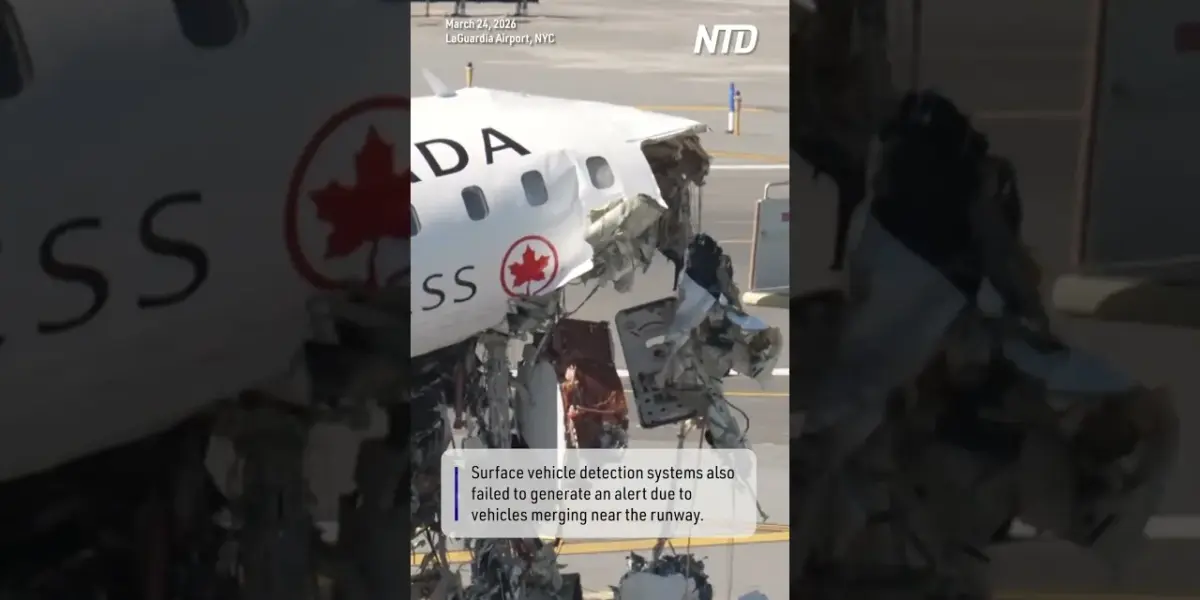
Missing Transponder Fueled LaGuardia Near-Disaster
A near-deadly crash at New York’s LaGuardia Airport is under intense investigation. The National Transportation Safety Board (NTSB) is looking into multiple problems that nearly caused a terrible accident. The key issue highlighted so far is a critical piece of safety equipment missing from a fire truck involved in the incident. This missing equipment made it harder for air traffic control to keep track of the vehicle.
Jennifer Homendy, the chair of the NTSB, stated that the fire truck involved in the collision did not have a transponder. A transponder is like a small radio transmitter on an aircraft or vehicle. It sends out signals that air traffic controllers can see on their radar screens. Without this signal, the fire truck was much harder to spot and track, especially during busy airport operations.
What Happened at LaGuardia?
The incident involved a fire truck and an aircraft on the runway at LaGuardia. Details of the exact sequence of events are still being pieced together by investigators. However, the lack of a transponder on the fire truck is a major point of focus. This absence meant the control tower had limited visibility of the truck’s position. This limitation could have played a significant role in how close the truck and plane came to a catastrophic collision.
Imagine trying to drive in thick fog without your headlights on, and no one else can see your car. That’s similar to the situation air traffic control faced with the fire truck. They rely on technology to see everything moving on the airport grounds, especially around active runways where planes are taking off and landing.
The Role of Transponders in Airport Safety
Transponders are vital safety tools in aviation and airport operations. For aircraft, they provide crucial data like altitude, speed, and identification. On the ground, especially for emergency vehicles like fire trucks, they help air traffic controllers manage the movement of all vehicles safely. This prevents conflicts between planes and ground equipment.
The absence of a transponder on an emergency vehicle like a fire truck raises serious questions. Why was this safety device not functioning or not installed? Was it a mechanical failure, a maintenance issue, or a procedural oversight? The NTSB will be looking into these possibilities.
Broader Implications for Airport Safety
This incident brings to light potential weaknesses in ground vehicle safety protocols at airports. While aircraft are equipped with advanced tracking systems, the same level of technology might not be universally applied to all ground vehicles, especially emergency response units. The NTSB’s investigation will likely examine whether current regulations adequately cover the tracking of all essential vehicles operating on airport property.
It’s important to remember that airports are complex environments with constant movement. Multiple planes are landing and taking off, while ground vehicles like baggage carts, fuel trucks, and emergency vehicles are also active. Effective communication and tracking systems are essential to prevent accidents in this busy setting.
Why This Matters
The safety of air travel is paramount. While major accidents are rare, close calls like this serve as critical warnings. They highlight areas where safety procedures or technology might need improvement. The NTSB’s findings will not only explain what happened in this specific incident but could also lead to changes that improve safety at airports nationwide and possibly globally.
Every safety regulation and piece of equipment exists for a reason. When a critical component like a transponder is missing, it creates a vulnerability. Understanding how and why this happened is crucial to preventing similar risks in the future. The goal is always to make the skies and the ground around them as safe as possible for everyone.
Looking Ahead: Future Outlook
The NTSB’s investigation is ongoing, and it will likely take time to release a full report. However, the initial focus on the missing transponder suggests that updated regulations or stricter enforcement regarding ground vehicle equipment might be on the horizon. Airports may need to review their protocols for ensuring all vehicles, particularly emergency ones, are equipped with functioning tracking devices.
This event underscores the continuous need for vigilance in aviation safety. Technology evolves, and so must the safety measures that protect us. The NTSB’s work is vital in ensuring that lessons are learned from near misses, leading to a safer travel experience for all passengers and personnel.
Source: NTSB Investigating ‘Many, Many’ Issues That Went Wrong Before LaGuardia Crash (YouTube)

Related Articles

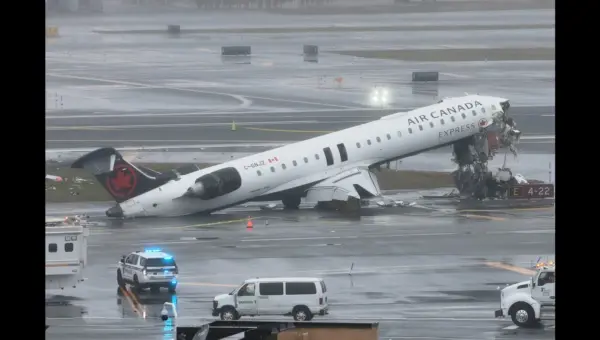
LaGuardia Runway Reopens After Deadly Crash, Safety Lapses Exposed
LaGuardia Airport's main runway has reopened after a fatal crash involving an Air Canada Express jet and a fire truck. The incident, which killed two pilots, exposed critical failures in airport safety systems, including ground surveillance and transponder use.


Iran War Talks Ignite, Airport Chaos Deepens
President Trump confirms peace talks with Iran are underway, while US airports face ongoing chaos due to the DHS shutdown. Investigations into a fatal LaGuardia crash reveal systemic safety issues, with experts citing controller fatigue and staffing shortages. Meanwhile, the search for a missing elderly woman continues in harsh desert terrain, highlighting diverse challenges facing the nation.
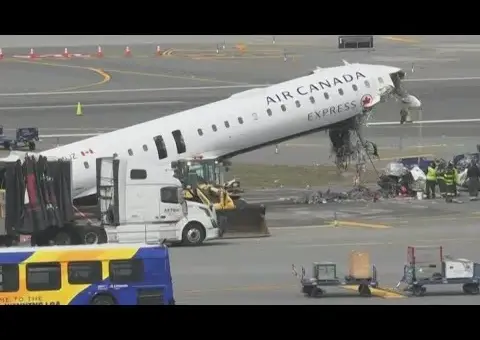
Air Safety Fears Soar After Deadly Crash
A fatal crash at LaGuardia Airport has triggered a national review of air safety, revealing a pattern of close calls and communication issues at U.S. airports. Investigators are examining technology and staffing, as calls grow for urgent safety upgrades.