Misfits Who Became Icons: Unsung Heroes
Discover the incredible true stories of individuals who defied convention and faced widespread disbelief, only to be proven right. From medical breakthroughs to exposing fraud, these unsung heroes changed the world.


From Outcast to Oracle: The Unsung Heroes Who Proved Everyone Wrong
History is often written by the victors, but it’s also shaped by the visionaries who dared to think differently, even when the world called them crazy. From groundbreaking scientific discoveries to exposing monumental fraud, these individuals faced ridicule, disbelief, and even professional ruin, only to emerge as prophets of their time. Their stories are a powerful testament to perseverance and the often-uncomfortable truth that groundbreaking ideas can come from the most unexpected places.
The Doctor Who Saved Millions by Saying No
Dr. Frances Oldm Kelsey, a reviewer for the Food and Drug Administration, became a quiet hero in 1960 when tasked with approving thalidomide for expectant mothers suffering from morning sickness. Despite immense pressure from the pharmaceutical company, Meril, who relentlessly lobbied for approval and painted Kelsey as “stubborn and nitpicking,” she stood firm. Her gut feeling and meticulous research revealed a terrifying potential for birth defects. Her caution was tragically validated a year later when thousands of infants worldwide were born with severe deformities. Kelsey’s integrity not only prevented a greater tragedy in the U.S. but also led to a fundamental shift in drug review processes, making her a celebrated figure by 1962.
The Astronomer Who Saw Stars Differently
In 1925, Cecilia Payne-Gaposchkin, a graduate student at Radcliffe College, posited a revolutionary idea based on extensive research at the Harvard College Observatory: stars were primarily composed of hydrogen and helium. This directly challenged the prevailing scientific consensus, which held that stars were made of heavier elements. Established astrophysicists dismissed her findings as “clearly impossible.” However, years later, further studies confirmed Payne-Gaposchkin’s hypothesis, proving her groundbreaking work correct. Her contribution was eventually acknowledged, with astronomer Henry Norris Russell crediting her discovery years later.
The Mother Who Fought a Nation’s Accusation
Lindy Chamberlain’s life took a horrific turn in 1980 when her infant daughter, Azaria, disappeared from their tent during a camping trip. Lindy insisted a dingo was responsible, but authorities, fueled by public suspicion and media frenzy, accused her of infanticide. Despite her unwavering claims, she was convicted in 1982 and sentenced to life imprisonment. It wasn’t until 1986, when more of Azaria’s remains were found, corroborating Lindy’s story, that she was released. True vindication came in 2012 when a coroner officially declared a dingo attack as the cause of death, finally clearing Chamberlain’s name after decades of wrongful accusation.
The Baseball Star Who Exposed a Dirty Secret
In 2005, Major League Baseball player José Canseco rocked the sports world with his tell-all book “Juiced.” In it, he detailed his own use of performance-enhancing drugs and named several teammates who also used them. The immediate reaction was denial and character assassination, with many painting Canseco as a liar. However, the release of the Mitchell Report in 2007, a comprehensive investigation into steroid use in baseball, corroborated many of Canseco’s claims, naming dozens of players who had used banned substances. His honesty, though initially met with scorn, ultimately proved vital in exposing the widespread doping scandal.
The Analyst Who Warned of Government Surveillance
In 2005, intelligence analyst Russ Tye sounded the alarm, claiming the U.S. government was conducting widespread surveillance on its citizens. His suspicions, which began in 2003 when he felt he was being tracked, led him to believe that “all communications” were being monitored, regardless of location or foreign connections. His concerns resulted in a psychological evaluation and ultimately, his termination in May 2005. Tye’s warnings were tragically confirmed years later, first by President Bush’s admission in 2005 of authorizing NSA surveillance, and then more definitively by Edward Snowden’s revelations in 2013, cementing Tye’s foresight as accurate.
The FBI Agent Who Foresaw 9/11
John O’Neill, a former FBI counter-terrorism expert, became increasingly convinced of an impending major terrorist attack following the 1993 World Trade Center bombing. He meticulously gathered intelligence on terrorist cells and their motivations, issuing repeated warnings about the possibility of another devastating attack, even amassing significant video evidence on Osama bin Laden. Despite his expertise and persistent warnings, his concerns were largely dismissed by the authorities. O’Neill tragically lost his life on September 11, 2001, while helping others escape the World Trade Center, a horrific event that could have potentially been mitigated had his warnings been heeded.
The Scientist Who Revolutionized Food Safety
In the 1860s, Louis Pasteur observed that wine was spoiling due to microorganisms. His groundbreaking research led him to deduce that heating these liquids could eradicate the harmful organisms – a process now known as pasteurization. Initially, the scientific community, particularly sommeliers, scoffed at his findings, dismissing the impact on taste as worse than the risk of illness. Pasteur’s theory was largely disregarded for decades until the early 20th century, when widespread diseases contracted from contaminated milk highlighted the critical need for his method. Mass pasteurization led to a significant drop in such illnesses, proving Pasteur’s revolutionary insight correct.
The Environmentalist Who Sounded the Alarm on DDT
Rachel Carson, a conservationist, faced intense backlash in 1962 with the publication of her book detailing the devastating effects of the pesticide DDT on humans and the environment. She argued that the indiscriminate and excessive use of synthetic pesticides was disrupting the delicate balance of nature. Her work was met with vicious personal attacks and parodies, with industry groups launching a propaganda campaign to discredit her findings. However, years of further testing proved Carson’s warnings accurate. DDT was officially banned in the United States in 1972, a decade after her initial, prescient warning about its dangers.
The Whistleblower Who Exposed Bernie Madoff
Harry Markopolos, a financial analyst, repeatedly tried to warn the Securities and Exchange Commission (SEC) about Bernie Madoff’s massive Ponzi scheme. As early as 2000, Markopolos identified numerous red flags in Madoff’s investment portfolio, but his complaints were ignored. He filed a second complaint, and later a final memo in 2005, all to no avail. Markopolos persevered despite knowing the personal risks involved. It wasn’t until Madoff’s $50 billion fraud collapsed in 2008 that Markopolos’s warnings were taken seriously. He eventually testified, becoming a celebrated whistleblower for his courage in confronting one of Wall Street’s most notorious financial crimes.
The Scientist Who Saw Continents Drift
In 1912, geologist Alfred Wegener proposed the theory of continental drift, suggesting that all continents were once part of a single supercontinent, Pangaea, which later broke apart and drifted to their current positions. His evidence included the similarity of life forms on opposite sides of the globe and the jigsaw-like fit of continents. However, his theory was largely ridiculed by the geological community due to a lack of precise evidence at the time. Decades later, accumulating geological and paleontological data began to strongly support Wegener’s radical idea, confirming his early understanding of plate tectonics.
The Military Maverick Who Championed Air Power
Brigadier General Billy Mitchell was a fervent advocate for the importance of air power in warfare long before it was widely accepted. Throughout the 1920s, he relentlessly warned his military superiors that aircraft would revolutionize combat and that the U.S. Navy was vulnerable. To prove his point, he famously bombed a captured battleship from the air. His outspokenness led to a court-martial for insubordination, with prosecutors labeling him an “ambitious opportunist.” Frustrated, Mitchell resigned. His predictions were tragically validated 15 years later when Japanese planes attacked Pearl Harbor, sinking battleships just as he had foreseen.
The Mother Who Fought for Her Missing Son
In 1928, Christine Collins’s 9-year-old son vanished in Los Angeles. Despite her desperate search and pleas, the LAPD, months later, presented her with a boy claiming to be her son. When Christine protested that it wasn’t him, she was forcibly committed to a psychiatric ward under a “Code 12” – a hold for inconvenient individuals. The boy was indeed an imposter, part of a police cover-up for their incompetence in finding her real son, who was never found. Collins spent years fighting for justice, a testament to a mother’s unwavering belief in the face of systemic obstruction.
The Doctor Who Saw Cancer in Infections
William Coley, a surgeon in the late 19th century, proposed a radical idea: that infections could potentially cure cancer. His contemporaries dismissed his theories as insane, but Coley observed that patients whose tumors shrank after contracting infections seemed to benefit. He began injecting cancer patients with a mixture of weakened bacteria, aiming to stimulate their immune systems. While the results were inconsistent, he achieved remarkable remissions in some cases. The medical establishment largely ignored his work in favor of surgery and radiation. Today, Coley is recognized as a pioneer of immunotherapy, a vital frontier in cancer treatment.
The Actress Who Spoke Truth to Power
Rose McGowan was one of the first prominent actresses in Hollywood to publicly accuse Harvey Weinstein of sexual misconduct, doing so long before the #MeToo movement gained widespread traction. Instead of support, she faced gaslighting, blacklisting, and smear campaigns orchestrated by powerful PR machines, with Weinstein allegedly hiring private investigators to dig up dirt on her. While many remained silent, McGowan continued to speak out, her persistent accusations forcing the industry to confront its deep-seated issues. Her bravery and persistence were finally recognized in 2018.
The Physician Who Revolutionized Understanding of Blood Circulation
For centuries, medical dogma held that blood was created in the liver and simply soaked into the body. In the 17th century, William Harvey challenged this deeply ingrained belief, proposing that the heart acted as a pump, circulating blood in a closed loop. His revolutionary idea was met with widespread mockery and accusations of heresy from his colleagues, who clung to the teachings of ancient physicians like Galen. Harvey, however, persisted, meticulously documenting his findings through dissection and observation. It took decades, but his model of blood circulation eventually became the cornerstone of modern physiology, found in every medical textbook today.
The Scientist Who Drank Bacteria to Prove a Point
In the 1980s, Australian physician Barry Marshall challenged the prevailing medical belief that stomach ulcers were caused by stress or spicy food. He hypothesized that a bacterium, *Helicobacter pylori*, was the true culprit. Facing years of ridicule from the medical establishment, Marshall took an extraordinary step: he deliberately infected himself with *H. pylori*, developed gastritis, and then cured himself with antibiotics. This audacious act proved his theory correct and earned him a Nobel Prize, fundamentally changing the treatment of ulcers and benefiting millions worldwide.
The Physicist Who Championed the Atomic Theory
In the 19th century, Ludwig Boltzmann was a proponent of a then-controversial idea: that atoms were real. His work involved complex mathematical equations to describe the behavior of particles, laying the groundwork for modern statistical mechanics. However, Boltzmann was largely derided by his contemporaries, who viewed his theories as speculative or even heretical. Despite facing immense skepticism, his persistent research and advocacy for atomic theory eventually laid the foundation for our current understanding of matter and energy.
Source: 30 Crazy People Who Were Proven RIGHT (YouTube)

Related Articles
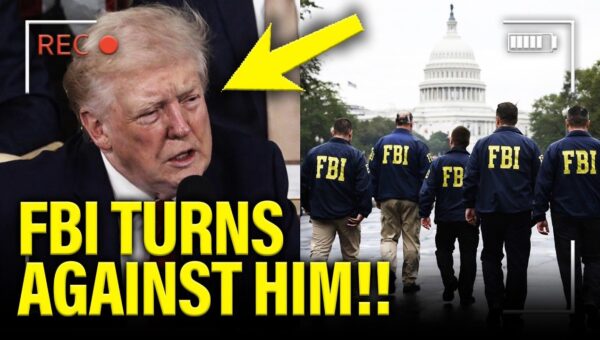
FBI Agents Reportedly Leaking Information Amidst Trump Investigations
Allegations of FBI agents leaking information regarding the Trump administration, including details about the Epstein files and misuse of FBI aircraft by Cash Patel, have emerged. Former FBI official David Sunberg expressed concerns over the agency's direction and erosion of public trust.
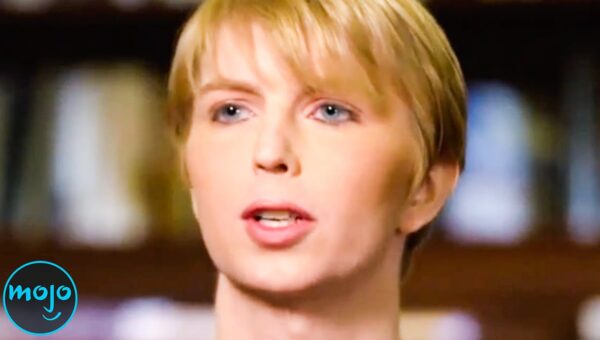
Everyday Heroes Who Exposed Major Scandals
From the Teapot Dome scandal to the opioid crisis, discover the ten everyday heroes who bravely exposed major cover-ups and corruption, changing the course of history. Their stories highlight the power of individual courage.


Hollywood’s Unfair Takedowns: Stars Who Deserve More
From Winona Ryder's shoplifting scandal to Britney Spears' conservatorship battle, this article delves into the unfair career downfalls of celebrities who faced disproportionate backlash, industry retaliation, or predatory media scrutiny, highlighting their resilience and deserving comebacks.