Ministers Accused of Neglecting Child Safety for Social Media Consultation
UK ministers are facing backlash for their social media child safety consultation, accused of prioritizing delay over action. Critics argue the government's justifications for children's online access are weak, citing risks of exploitation and violence over trivial pursuits like dance videos. Bereaved parents and experts are demanding immediate legislative measures to ban under-16s from platforms, comparing the current inaction to past failures with dangerous products.

Ministers Under Fire for Social Media Consultation Over Child Safety
The UK government is facing sharp criticism for its approach to child safety on social media, with accusations that ministers are prioritizing a lengthy consultation process over decisive action. A recently published government document, intended as an “urgent consultation” on social media use for under-16s, has been slammed as inadequate and a “delay tactic” by critics. The core of the criticism lies in the document’s apparent indecision on implementing a ban for under-16s, instead posing the question of whether such a ban should occur at all.
Laura Tr, speaking to Times Radio, expressed profound disappointment with the government’s stance, calling the minister’s statement of acting decisively “once they’ve decided what to do” as “absolutely preposterous” and failing to meet the “scale of the challenge.” This sentiment is echoed by bereaved parents whose children have tragically lost their lives due to social media, a group that is reportedly growing.
“This is not a danger which is just posed to children who already have problems. This is a danger to every child up and down the country because if people saw what was on these social media feeds, they’d be out protesting in the streets.”
Questionable Justifications for Children’s Social Media Use
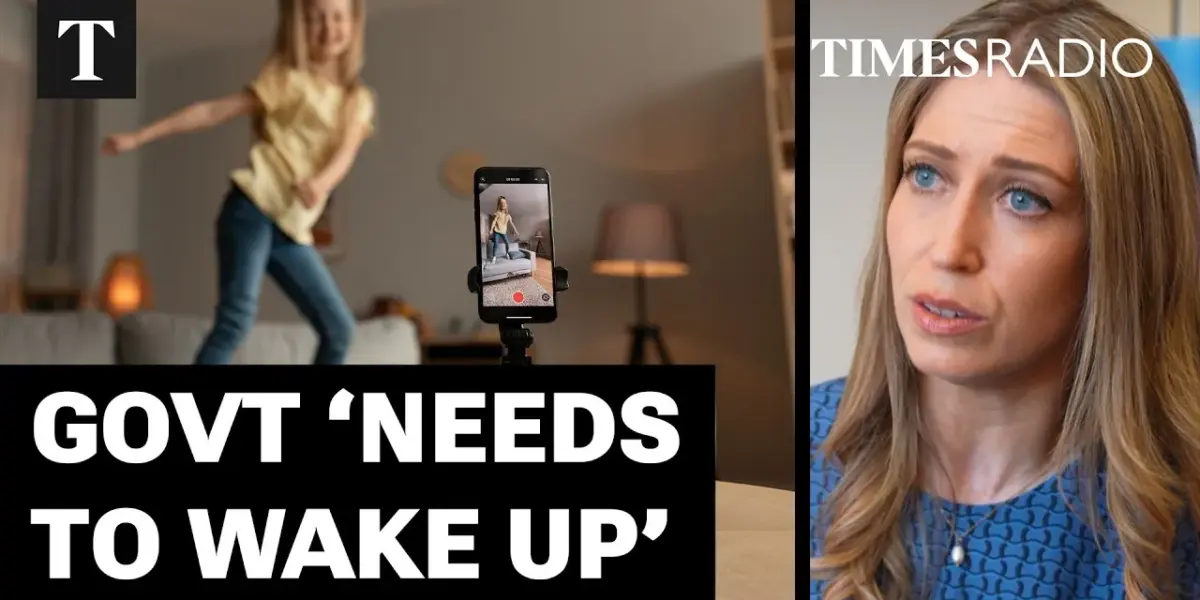
A particularly galling aspect of the consultation document, according to critics, is the justification offered for allowing children access to social media. The document reportedly suggests that children might use platforms for “dance videos,” a notion dismissed as a gross underestimation of the real dangers lurking online. “The reasons that they have in there to say that children should be on social media because they might want to do some dance videos, they can actually go to dance lessons,” Tr stated, highlighting the perceived absurdity.
The actual dangers, as outlined by Tr and other concerned individuals, include the risk of children being approached by strangers, being subjected to sexual exploitation, offered drugs, exposed to violence, or encountering pornography. These are not abstract threats but “very real documented dangers that we have too much evidence of,” with “too much real-world harm has taken place.” The argument is made that if any other product regularly used by children caused such widespread harm, it would be immediately withdrawn from the market. The current approach, focusing on consultation rather than immediate action, is seen as a failure to protect the most vulnerable.
Social Media as the Next Great Social Experiment?
The comparison of social media’s long-term impact to that of cigarettes has been drawn by educators, a sentiment with which Tr strongly agrees. The campaign to get children off social media has been ongoing, with a push for a vote in the House of Commons scheduled for March 9th. However, the government has indicated it will push back this vote, a move described as “fundamentally wrong” and an attempt to “delay action.”
The government’s stated position of waiting to decide on a course of action, despite having a legislative vehicle available, is seen as a critical failure. “We have a legislative vehicle in front of us. We should get children off social media. Not next year, not the year after that. We could legislate for it right now,” Tr argued, emphasizing the urgency required.
Lessons from Abroad and the Harrowing Reality of Online Dangers
The experience of Australia, which has implemented a ban on social media for under-16s, is cited as evidence that such measures can be effective. While acknowledging that no ban is perfect, the Australian model is presented as a deterrent and a strong signal that social media poses significant risks to young people. Social media companies, after initial resistance, reportedly complied with the Australian ban, suggesting that implementation is feasible.
Closer to home, recent events involving “school wars” on social media, encouraging children to bring weapons to school, serve as a stark and appalling example of the real-world dangers. The incident, which led to police operations and children being sent home early from school due to fear, underscores the immediate and tangible threats posed by online platforms. The argument is stark: the enjoyment some children derive from TikTok dances cannot justify exposing all children to such violence and harm.
Policing Age vs. Policing Content
In response to the social media companies’ claims of removing harmful content, critics argue that this approach has not worked. The focus, it is contended, should shift from policing content to policing age. By ensuring no children are on these platforms, the devastating consequences of belated content removal can be avoided.
The government’s efforts are deemed insufficient, with accusations of being too heavily influenced by the tech industry. The existing Online Safety Act, while credited with some successes like reducing access to pornography sites for young people, has demonstrably failed to adequately protect children on social media platforms. Therefore, the call is for a new approach: policing age, which is seen as an effective and established precedent.
The Urgency of Restoring Childhood
The overarching concern is that precious childhoods are being “robbed” by social media. These platforms are blamed for taking away children’s innocence, impacting their physical health (contributing to increased short-sightedness), and reducing opportunities for reading and other developmental activities. Parents are described as “crying out for help,” and the current situation is seen as “utterly wrong” and “ruinous.”
The urgency is amplified by the experiences of parents of younger children, who are actively seeking to prevent their offspring from enduring the same negative impacts seen in teenagers. The desire is to protect a childhood free from online violence and viciousness, a state that can be achieved through decisive government action. The removal of phones from schools is also highlighted as a policy that brings “relief” to young people, freeing them from the constant pressure of online engagement and allowing them to reconnect with real-world interactions.
The argument is made that implementing such protective measures does not require significant cost but rather political will. The call to action is clear: the government must act now to protect children from the pervasive dangers of social media and restore a sense of normalcy and safety to their formative years.
Source: Ministers Accused Of Prioritising TikTok Dances Over Safety For Children (YouTube)

Related Articles

Rife Slams TikTok: “Poisonous” Platform Kills Stand-Up Reach
Matt Rife has publicly blasted TikTok, calling it "poisonous" and accusing the platform of deliberately suppressing stand-up comedy content. Despite amassing nearly 20 million followers, Rife claims the algorithm now prevents him from reaching his audience, forcing a choice between viral trends or obscurity.


Rife Hates TikTok: “Poisonous” Platform Killed His Reach
Comedian Matt Rife expressed his disdain for TikTok, calling it "poisonous" and revealing how the platform's algorithm shift cut off his reach despite his 19.7 million followers. He also discussed the financial transformation of his career and the importance of genuine standup talent over viral trends.

Alysa Liu Reveals Olympic Instagram Strategy
Olympic figure skater Alysa Liu revealed her curated strategy for selecting and ordering Instagram posts after competitions. She emphasized prioritizing medal moments and celebrating with fellow athletes and coaches, while often excluding personal, off-ice interactions from public view.