Mind Control Tech Frees Man From ALS Paralysis
A groundbreaking brain implant from Neuralink has enabled Brad Smith, who lost his ability to speak due to ALS, to communicate and control computers using only his thoughts. The technology allows him to type, play games, and even have his AI-cloned voice speak for him, significantly improving his quality of life and independence.


Mind Control Tech Frees Man From ALS Paralysis
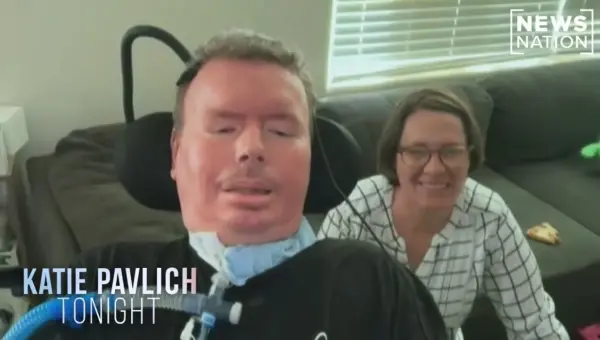
A revolutionary brain implant is giving a man with ALS a new way to communicate and live. Brad Smith, diagnosed with Amyotrophic Lateral Sclerosis (ALS) at age 37, had become completely unable to speak. ALS is a disease that damages nerve cells controlling muscles. This leaves people unable to move, talk, or even breathe on their own. But now, Smith is using technology to regain control of his life. He received a Neuralink implant, a small device placed in the brain. This implant allows him to control a computer using only his thoughts.
Smith described the implant as the size of five stacked quarters. Tiny threads, thinner than a human hair, were placed into his brain by a robot. These threads go just a few millimeters deep, avoiding blood vessels to minimize bleeding. He can now type and control a computer cursor simply by thinking about movements. This is a massive improvement over his previous method, which relied on eye-tracking technology. That system was slow, tiring, and unreliable, especially in low light.
Regaining Independence and Connection
Before the implant, Smith was quadriplegic and completely non-verbal. His mind remained sharp, but he had no voluntary control over his body. He depended entirely on family and caregivers for basic needs like eating and moving. Travel was difficult, and simple tasks like typing a quick message were impossible. He kept his mind active by watching videos and writing, even completing a book. But his physical world had shrunk dramatically.
The Neuralink implant has changed everything for Smith. Within weeks of the surgery, he could control a computer cursor directly with his thoughts. His typing speed increased greatly. He can now watch videos, play video games like Mario Kart with his children, and go on trips. He feels he has regained a significant part of his life and his ability to contribute. This technology has transformed his daily interactions. He can now join conversations quickly, share movie quotes, and play games with his kids in real-time. He feels more present and involved in his family’s life.
How the Technology Works
Smith controls the computer cursor by imagining movements with his tongue. The implant is in the part of his brain that controls hand movement, but ALS had damaged his hand signals. So, he trained the system using his tongue instead. He found this method felt natural after a short adjustment period. The cursor became smooth and precise, allowing him to control it faster and more intuitively than ever before. To click, he imagines clenching his jaw. The system recognizes this thought as a command to click. All of this is done with pure thought, requiring no physical movement.
AI Recreates Lost Voice
Beyond controlling a computer, Smith can now speak again using an AI-powered voice. The voice heard in his video is an AI clone of his original voice before ALS progressed. The AI was trained on recordings of his speech. This allows the AI to speak words he types using his own tone, patterns, and inflections. He no longer sounds like a robot. This technology lets him sound like himself again, a significant step in regaining his identity and connection with others.
Global Impact and Future Possibilities
This development represents a major leap in brain-computer interface technology. It shows the potential for such implants to help people with severe paralysis and communication disorders. While the technology is still new and primarily focused on medical applications, it opens doors to future possibilities. The integration of AI to recreate voices further enhances the potential for restoring full communication. This could dramatically improve the quality of life for millions worldwide affected by conditions like ALS, stroke, or spinal cord injuries. It also raises important questions about the future of human-AI interaction and the definition of communication itself.
Source: Neuralink brain chip allows nonverbal man to talk using AI | Katie Pavlich Tonight (YouTube)

Related Articles

Brain Chip Restores Voice, Frees Man From ALS Prison
A Neuralink brain implant has dramatically improved the life of Brad Smith, who lost his ability to speak due to ALS. He can now control computers with his thoughts and communicate using an AI-generated version of his own voice, regaining independence and connection with his family.


OpenAI CEO Sam Altman’s Truthfulness Questioned in New Report
A new profile in The New Yorker raises serious questions about OpenAI CEO Sam Altman's truthfulness and leadership. The report, based on interviews with over a hundred sources, details allegations of deception and conflicting business practices. This scrutiny comes as OpenAI's influence grows in a largely unregulated AI industry, prompting calls for greater transparency and accountability.


AI Models Can Now Learn Like Humans Do
New AI models can now learn and adapt like humans, building on past knowledge without forgetting. This "continual learning" avoids the costly retraining needed for current AI and promises more versatile and efficient AI systems for various applications.