Miller’s ‘Annihilation’ Claim: Iran’s Resilience Exposes US Policy Flaws
Stephen Miller's claim of Iran's 'annihilation' under Trump is challenged by the regime's sustained strength, raising questions about US policy effectiveness and rhetoric. The analysis suggests a disconnect between bold claims and the complex reality of geopolitical adversaries.


Miller’s ‘Annihilation’ Claim: Iran’s Resilience Exposes US Policy Flaws
Stephen Miller, a prominent figure from the Trump administration, recently asserted that Iran has experienced a “total asymmetric one-sided annihilation” under President Trump’s leadership. This bold claim suggests a complete dismantling of Iran’s military and leadership capabilities, including its navy, missile programs, and the Islamic Revolutionary Guard Corps (IRGC). Miller further implied a coordinated effort with Israel to eliminate Iran’s “sinister leadership and command structure,” portraying the situation as a “complete wipeout of their capacity to unleash violence on the world.” However, this narrative faces significant scrutiny when juxtaposed with the ongoing realities of the Iranian regime.
Deconstructing the ‘Annihilation’ Narrative
The assertion of Iran’s complete obliteration is a powerful rhetorical tool, designed to project strength and decisive victory. Miller’s language evokes a sense of finality, aiming to convince the public that the threat posed by Iran has been neutralized. The specific targets mentioned – the navy, missile capabilities, and the IRGC – represent key pillars of Iran’s military might. The alleged collaboration with Israel to remove leadership further amplifies the perceived effectiveness of these actions.
However, the transcript points out a critical flaw in this narrative: the claim of annihilation has been made before. “They said the same thing eight months ago. They said it was totally obliterated and annihilated.” This repetition suggests a pattern of overstatement, where the impact of actions is exaggerated to create an impression of success that may not align with the ground truth.
The Enduring Strength of the Iranian Regime
In contrast to Miller’s pronouncements, the transcript argues that the Iranian regime remains not only standing but also “very strong.” This resilience is attributed to the fundamental nature of the regime itself. The IRGC, described as Iran’s military, is composed of approximately one million individuals who are characterized as “very radicalized” and “very ideological.” These individuals, the argument goes, are deeply committed to the regime and willing to fight to the death, even at the cost of civilian lives. The transcript explicitly states, “They will die till the very last person for the regime. They will kill citizens. They do not care. They killed citizens by the tens of thousands. They still stand. The regime is still standing.”
This perspective challenges the notion that decapitating leadership or degrading specific military assets can unilaterally dismantle a deeply entrenched and ideologically driven regime. It suggests that the strength of the Iranian state lies not just in its formal military structures but also in the fervent commitment of a large segment of its population and security apparatus.
The Dual Nature of the Threat Perception
The analysis presented in the transcript highlights a perceived contradiction in Miller’s rhetoric. On one hand, Iran is portrayed as a formidable superpower, capable of posing a significant threat to global stability, thus justifying drastic actions. On the other hand, the success of these actions is exaggerated to the point of claiming total annihilation, which, if true, would render the superpower threat moot. This creates a disjuncture: if Iran is so easily annihilated, was it ever truly a superpower? Conversely, if it remains a significant threat, then the claimed annihilation is demonstrably false.
The transcript suggests that this approach serves to both “overplay overhype the threat of Iran” and then “downplay how much they still stand.” This tactic, it is argued, ultimately “lies to the American People” by presenting a distorted picture of both the threat and the effectiveness of US policy.
Historical Context and Precedents
The history of US-Iran relations is long and complex, marked by periods of intense hostility and proxy conflicts. Following the 1979 revolution, the US has consistently viewed Iran’s revolutionary government as a destabilizing force in the Middle East. Sanctions, diplomatic isolation, and covert actions have been recurring tools in the US foreign policy arsenal. The Trump administration’s “maximum pressure” campaign, of which Miller was a key architect, represented an intensification of these efforts, aiming to cripple Iran’s economy and compel a change in its regional behavior.
However, historical precedents suggest that deeply entrenched regimes, particularly those with strong ideological underpinnings and significant popular support (or at least a willingness to suppress dissent), are remarkably resilient to external pressure. The notion of achieving a complete “annihilation” of such a state through targeted strikes or economic sanctions alone has historically proven elusive. Regimes often adapt, find new avenues for influence, or double down on their existing strategies in the face of adversity.
Why This Matters
The discrepancy between the rhetoric of “annihilation” and the reality of Iran’s continued strength has significant implications for foreign policy decision-making and public perception. Firstly, it raises questions about the effectiveness and honesty of US foreign policy pronouncements. If declarations of total victory are premature or inaccurate, it can erode public trust and lead to miscalculations regarding the actual threat landscape.
Secondly, it impacts regional stability. A perception of Iranian weakness might embolden adversaries, while a clear understanding of Iran’s enduring capabilities, even if diminished in certain areas, is crucial for effective deterrence and diplomacy. Misjudging Iran’s capacity could lead to escalatory actions or missed opportunities for de-escalation.
Thirdly, the argument highlights the challenge of dealing with ideologically driven states. Military strikes and sanctions, while potentially degrading specific capabilities, may not fundamentally alter the regime’s will or capacity to pursue its objectives, especially if there is deep-seated commitment within the ruling elite and security apparatus.
Implications, Trends, and Future Outlook
The current situation suggests a continuation of a high-stakes geopolitical game between the US and Iran, characterized by cycles of escalation and rhetorical warfare. The trend indicates that simplistic narratives of decisive victory are unlikely to hold true in complex geopolitical environments. Instead, a more nuanced understanding of the adversary’s resilience, ideological motivations, and internal dynamics is required.
Looking ahead, the future outlook likely involves continued strategic competition. The effectiveness of US policy will depend on its ability to move beyond triumphalist rhetoric towards a strategy that acknowledges both Iran’s vulnerabilities and its enduring strengths. This might involve a combination of sustained pressure, diplomatic engagement, and a clear-eyed assessment of the risks and rewards associated with various policy choices. The challenge for policymakers, and for the public in evaluating their actions, is to discern between genuine strategic successes and mere rhetorical victories.
Source: Stephen Miller Claims Iran Was “Annihilated” #politics #fyp #new (YouTube)

Related Articles

Stocks Ignore War Risks, Focus on “Taco Moments”
Stock markets appear to be overlooking the severe supply chain risks stemming from the Iran conflict, focusing instead on potential diplomatic de-escalations. While the S&P 500 shows resilience, bond and commodity markets signal deep concern over disruptions to critical resources like LNG, helium, and fertilizers.

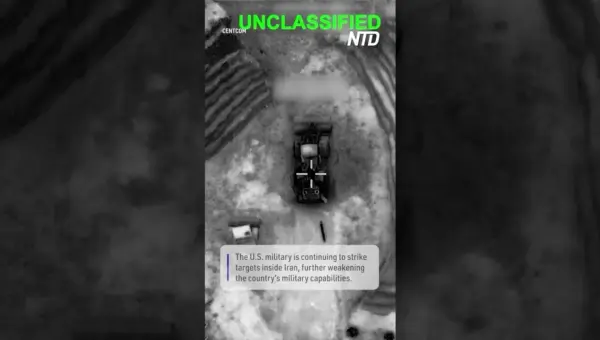
US Strikes Cripple Iran’s Military Might, CENTCOM Reports
U.S. Central Command reports ongoing strikes inside Iran are significantly weakening its military power. This direct action aims to reshape regional security dynamics, but carries risks of escalation. The long-term impact depends on Iran's response and ability to adapt.
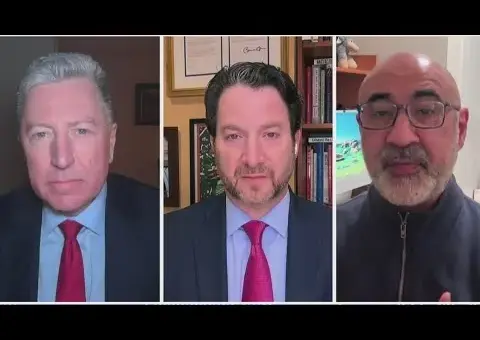
U.S. Iran Tensions Rise Amid Shifting Alliances
Rising tensions between the U.S. and Iran are creating a volatile geopolitical situation. With conflicting signals on de-escalation and potential shifts in alliances like NATO and U.S.-Israel relations, the path forward remains uncertain. The global economy and regional stability hang in the balance.